The Colorado River's Lake Mead hit historically low levels within the past few years and has only partially recovered. Across much of the interior West, per-household water bills have risen faster than general inflation for three consecutive years, according to recent utility rate filings tracked by regional water districts. A Washington Post opinion piece this week puts language to what millions of households already feel: drought is no longer a seasonal emergency. It is the baseline.
That shift matters for how families plan.
What's actually changing
Drought coverage tends to focus on reservoirs and agriculture — useful, but distant from the kitchen sink. The household reality is more granular and more expensive.
Municipal water rates in drought-stressed Western cities are rising structurally, not temporarily. When a utility loses supply volume, it still has to pay for infrastructure, so it spreads fixed costs across less water sold. Families who conserve — the responsible choice — can actually accelerate rate increases for everyone. This is called the "conservation paradox," and it is not a rumor; water utilities in Arizona, Nevada, and California have described it openly in rate-setting hearings.
Food prices add a second pressure. California's Central Valley produces a substantial share of U.S. lettuce, almonds, tomatoes, and stone fruit. Prolonged drought raises input costs for irrigated crops — costs that move, with a lag, onto grocery shelves. The lag makes the connection easy to miss. A dry spring in the San Joaquin Valley shows up in produce prices four to eight months later.
A third factor is often overlooked: home insurance and property risk. Homes in drought-prone areas face compounding exposure — fire risk rises when vegetation dries out, and some insurers have begun adjusting premiums or coverage terms in affected ZIP codes. If you own property in the interior West, your insurance renewal deserves a closer reading than it used to.
None of this is catastrophe. It is a slow, structural tightening that households can either respond to deliberately or absorb passively.
What we'd actually do
Audit your actual water use before the next rate cycle hits. Most municipal utilities offer a free online portal that shows monthly usage going back two or more years. Pull yours. Identify your highest-use months. In many households, outdoor irrigation accounts for 50 to 70 percent of summer consumption — which means it is also the easiest place to cut without affecting daily life.
Understanding your baseline is the first move. If you are already a low user and rates still rise, you want that data when appealing a bill or evaluating whether your utility is offering conservation credits you haven't claimed.
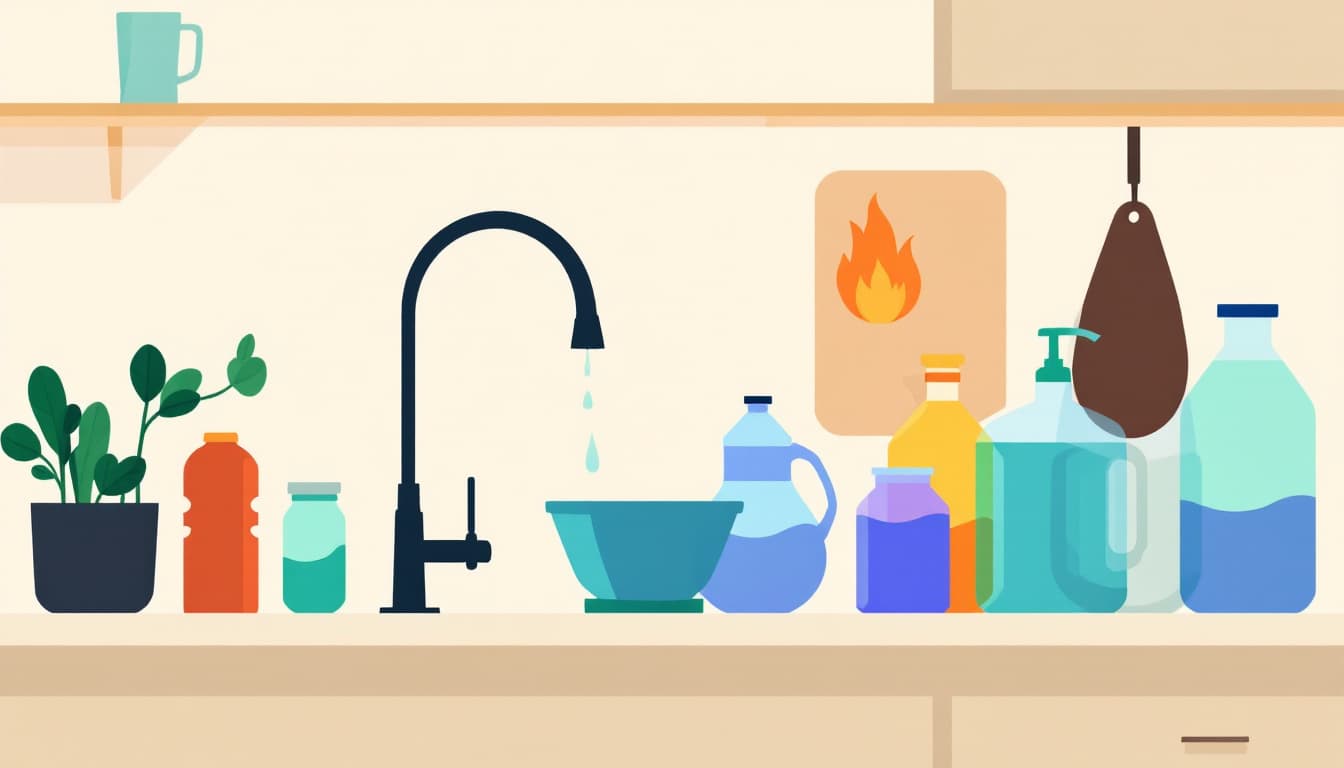
Put three to seven gallons of tap water in storage per person. This is not prepper theater. Municipal water systems under drought stress occasionally issue boil-water notices or face brief supply interruptions during high-demand heat events. Three gallons per person buys 24 to 48 hours of basic function without any scrambling. Food-grade containers from a hardware store run under $15 for a five-gallon jug. Rotate every six months.
Build a modest buffer in your grocery budget for produce price volatility. Not a stockpile — a budget line. Drought-linked produce price spikes tend to be sharp but temporary, lasting one to three months. Families with zero flex in their grocery budget get hurt the most during those windows. An extra $30 to $50 per month in a grocery float account lets you absorb spikes without switching entirely to processed food or going into card debt over vegetables.
Read your home insurance renewal documents, specifically the hazard and exclusion language. If your insurer has added drought, fire, or earth-movement exclusions, or changed your wildfire risk tier, you need to know before you need to file a claim. If language has changed, call your agent and ask specifically what triggered it — and what mitigation steps (defensible space, ember-resistant vents) could affect your rate.
Know your municipality's drought stage triggers. Most Western water utilities publish drought contingency plans listing Stage 1, 2, and 3 restrictions tied to specific reservoir or aquifer levels. These are public documents. Find yours, bookmark it, and know at what point outdoor watering, car washing, or pool filling becomes restricted in your jurisdiction. Families who are caught off-guard by Stage 2 restrictions typically scramble; families who saw them coming have already shifted habits.
The bigger picture
Drought in the West is not a crisis waiting to happen. It is a condition that has arrived and is being managed, imperfectly, across hundreds of jurisdictions with different resources and political will. What that means for a household is not that the taps will run dry next month — almost certainly they won't — but that water costs more, food from irrigated land costs more, and property in high-risk areas carries more financial exposure than it did a decade ago.
Durability, not disaster readiness, is the right frame. Families that quietly adjust their water habits, build a small grocery buffer, and stay informed about local water-stage levels are not preppers. They are just paying attention to conditions that have already changed.