A report this week from Pennsylvania Capital-Star covers something Eastern states are only beginning to grapple with: wildfire smoke arriving without warning, in places that have no cultural memory of it and no household infrastructure to handle it. Schools unprepared, residents confused about when to stay inside, air-quality alerts that land with no guidance on what to actually do.
Washington doesn't have that excuse.
The Cascades and Eastern Washington have been producing smoke events that degrade air quality across the entire state most summers since at least 2017. The Puget Sound Clean Air Agency and the Department of Ecology issue AQI alerts regularly from July through September. Eastern Washington cities like Yakima, Wenatchee, and Spokane routinely see days where outdoor air is genuinely harmful to breathe. Western Washington, shielded less than people assume by the Cascades, watches smoke pool in valleys and fill the Seattle basin when the winds shift.
Pennsylvania is surprised. Washington should be practiced. The uncomfortable truth is that most households here are not.
What's actually changing
The smoke season in Washington is not a fixed annual event with predictable start and end dates. It is a probability distribution that has been shifting. The National Interagency Fire Center tracks cumulative acres burned and active fire conditions, and recent years have pushed both metrics higher across the Pacific Northwest. More significantly, the sources of smoke affecting Washington have expanded: fires from British Columbia, Oregon, and as far as California and Idaho all contribute to degraded air days in the state.
The practical consequence is that a household can face AQI readings above 150 — the "Unhealthy" threshold — for multiple consecutive days, sometimes more than once per season. That's not an emergency you evacuate from. It's a slow, low-grade health grind that degrades sleep, worsens asthma and cardiovascular conditions, and makes outdoor work and childcare genuinely difficult. The people most affected are children, the elderly, and anyone with a respiratory or heart condition. That covers most extended families.
What hasn't kept pace is household readiness. Most Washington families have a rough evacuation plan for fire. Very few have a written plan for a week of staying in.
What we'd actually do
Check your home's actual filtration right now, before September. Most forced-air HVAC systems ship with fiberglass filters rated MERV 1-4, which do almost nothing for fine particulate matter (PM2.5), the health-relevant component of smoke. Pull your filter out and read the MERV rating on the frame. A MERV 13 filter in the same slot costs roughly $20-30 and captures a meaningful portion of PM2.5. If your system can't handle the static pressure of a MERV 13 (some older systems can't — check your manual or call an HVAC technician), a MERV 11 is a reasonable step up from a fiberglass baseline. Replace it before smoke season, not during.
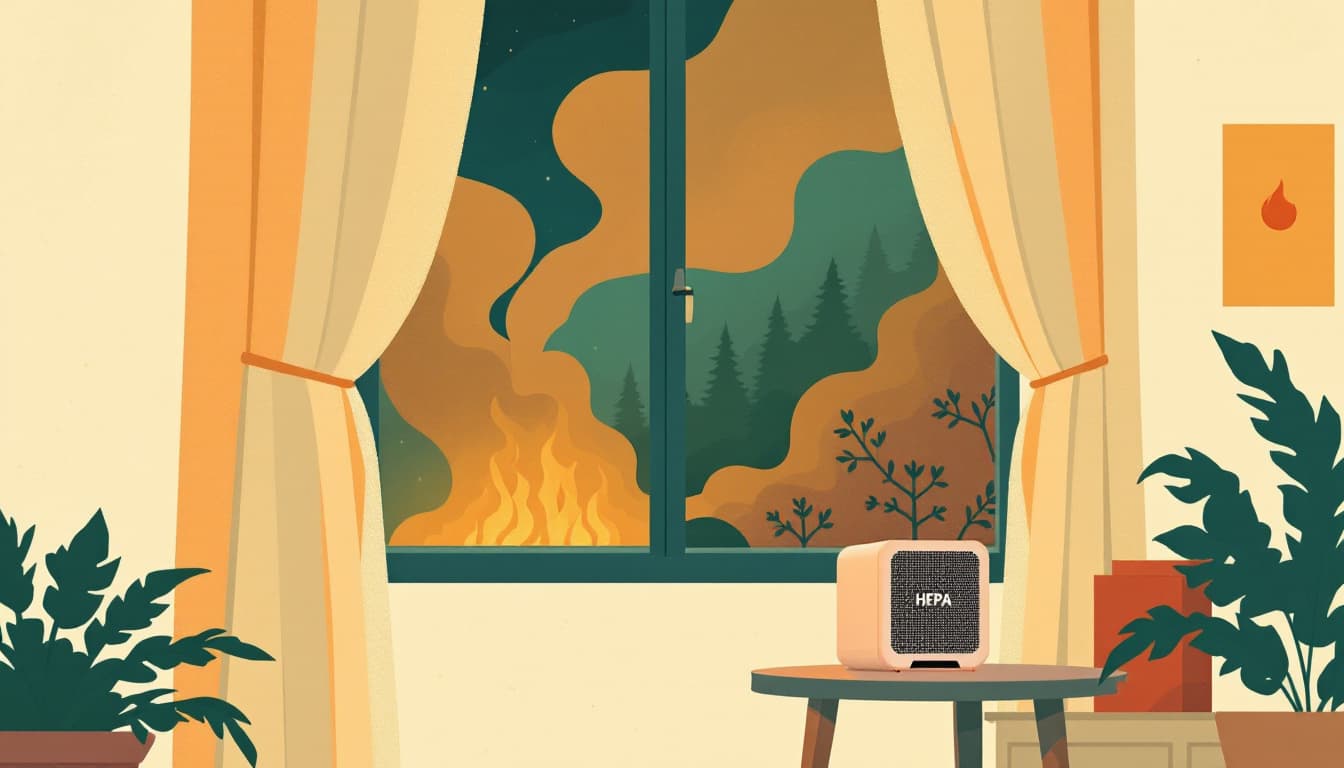
Build one real clean room. Sealing an entire house against outdoor smoke is impractical for most households. Sealing one room — typically a bedroom — is achievable. Choose a room with fewer windows and exterior doors. Get a portable air purifier with a true HEPA filter sized for the room's square footage, not optimistically oversized claims on the box. The Puget Sound Clean Air Agency has published low-cost DIY box-fan filter instructions using standard furnace filters (sometimes called Corsi-Rosenthal boxes) that perform measurably well in independent testing. This is where children, elderly family members, and anyone with asthma should spend the worst days.
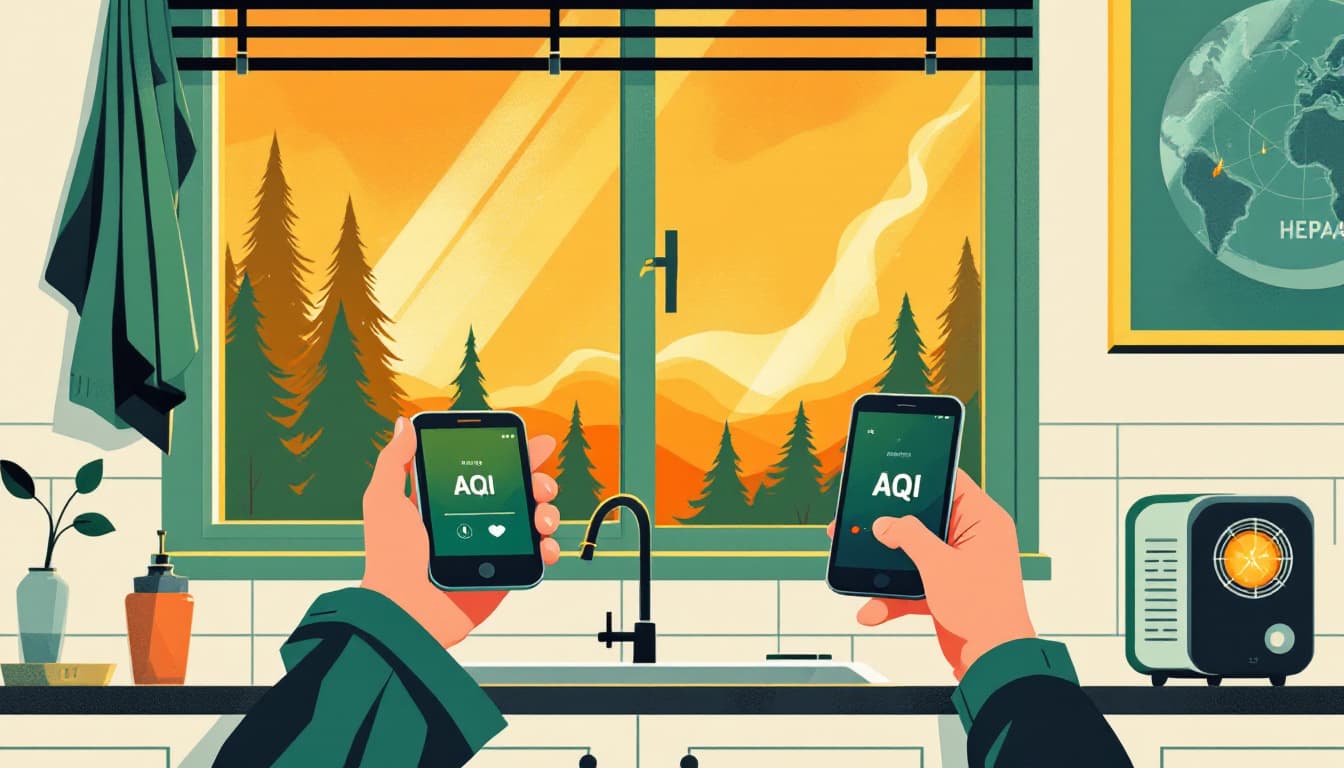
Download the app and set a threshold before you need it. AirNow.gov and the Washington Department of Ecology's air monitoring network both have notification tools. Set a personal threshold — not the government's "action" level, but your family's actual threshold based on who's in your house — and decide in advance what you'll do when it's crossed. Write it down. "Above AQI 100: kids stay inside, windows closed, purifier running" is a decision made once, not repeatedly under stress while you're trying to get everyone ready for school.
Stock N95s like a consumable, not emergency gear. An N95 respirator properly fitted to an adult face reduces PM2.5 inhalation substantially. It does almost nothing if it's loose. Keep a box of NIOSH-certified N95s in the house — not the car, not the garage — sized and fit-checked for each adult. Children's sizes are harder to find and fit worse; the clean room strategy matters more for kids. Rotate stock; N95 packaging degrades over several years.
Have a three-day indoor food and water plan. This is not survivalist theater. It is the practical recognition that a multi-day AQI event above 200 — which Spokane and Yakima have seen in recent summers — means minimizing time outdoors, including grocery runs. Knowing you have three days of food and water that don't require you to go outside removes one decision from a bad week.
The bigger picture
Pennsylvania is asking the questions Washington should have finished answering years ago. The honest read is that smoke season is a recurring, predictable feature of life in this state, not an anomaly. The households that handle it best are the ones that built low-cost infrastructure during a calm stretch and then didn't have to improvise under orange skies.
Durability isn't a bunker or a panic purchase. It's a MERV 13 filter and a plan written down before you need it.