On a clear July day you can see Mount Rainier from South Seattle. This week, much of Washington can't.
A report this week from The Guardian confirmed what anyone stepping outside already knows: wildfire smoke is again spreading across large portions of the United States, with air quality warnings in place from the Pacific Coast inland. Washington is not spared. The Olympic Peninsula, Puget Sound corridor, and Eastern Washington — where smoke originates from fires in the Okanogan Highlands and across the Cascades — are all cycling through unhealthy AQI readings. The Washington Department of Ecology's real-time monitoring at sites across the state shows this is not a brief event.
What's actually different about this smoke season
The frustrating truth for Western Washington residents is that the Puget Sound's marine influence, which historically pushed smoke out faster, is providing less reliable relief. Eastern Washington communities in the Yakima Valley and Spokane basin face longer duration events with fewer cooling windows. Neither side of the Cascades has a structural advantage anymore when a large fire complex ignites in a dry July.
The indoor/outdoor air quality gap matters more than most households realize. When outdoor AQI climbs past 150, even brief outdoor exposure — a 20-minute walk, unloading groceries — is measurable in lung tissue response for people with asthma, cardiovascular conditions, or pregnancy. Children and older adults are disproportionately affected. The Washington State Department of Health has published guidance consistent with EPA thresholds, but the practical household application of that guidance is rarely spelled out.
The other underappreciated issue: smoke infiltration into homes. A house that feels comfortable to breathe in may have indoor PM2.5 levels at 60-80% of outdoor levels within two to four hours of a smoke event, depending on how tight the building envelope is. Older Craftsman homes in Seattle's neighborhoods and manufactured homes east of the Cascades are the most vulnerable.
What we'd actually do
Get an indoor air monitor, not just a weather app. A $40-$70 particulate sensor placed in the room where your family spends the most time gives you real data on what you're actually breathing. Checking Purple Air or the Ecology Department's AirMonitor map tells you what's outside; only an indoor sensor tells you whether your mitigation is working. Place it away from cooking surfaces.
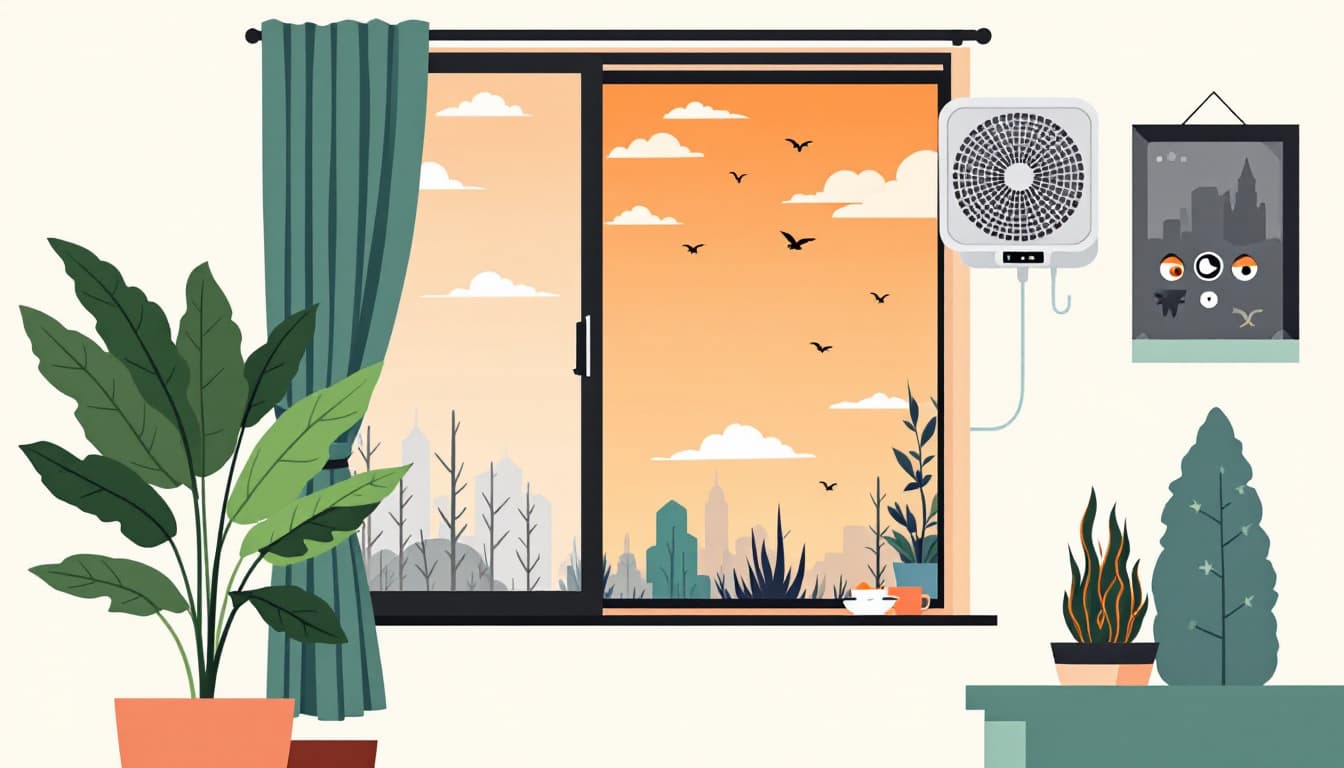
Build a filtered room now, before the next event. Choose one room in your home — ideally a bedroom — and identify how you would seal it during a smoke event. Weather stripping on the door, a towel at the base, and a box fan with a MERV-13 filter taped to the intake (the "Corsi-Rosenthal" box configuration) costs under $50 in materials and can meaningfully reduce PM2.5 in a 200-square-foot room. The Washington Department of Ecology has published DIY air cleaner guidance that covers this setup.
Check your HVAC filter and its rating. Most central air systems in Washington homes ship with MERV-8 filters, which capture large particles but pass significant amounts of fine wildfire smoke. Upgrading to MERV-13 during smoke season costs roughly $20-$30 more per filter and makes a measurable difference. Set your system to recirculate rather than draw outside air. If you have a heat pump — common in newer Western Washington homes — confirm the fresh-air intake can be manually closed.
Stock at least a two-week supply of critical medications. Smoke events are predictable in duration — they rarely clear in under a week when a large fire complex is burning. If anyone in your household uses a rescue inhaler, antihistamines, or cardiovascular medication daily, confirm you're not within three days of running out before the next red-flag period.
Know your clean-air refuge options. King, Pierce, Snohomish, and Spokane counties all operate designated clean-air shelters during smoke events — typically libraries and community centers with commercial filtration. Locate yours before you need it. If you have a family member who cannot tolerate extended indoor confinement at home, knowing the address and hours of the nearest shelter is the preparation that matters.
The bigger picture
Washington is a state where people move partly because of its environment — the green, the air, the mountains. Smoke season does not erase that, but it does require updating assumptions built on older climate patterns. The goal is not to build a bunker against wildfire. It is to extend the number of weeks per year that your household can stay healthy, comfortable, and functional without disrupting everything else.
Durability over catastrophe. That's the standard. A filtered room and a real indoor air sensor get you most of the way there.