A World Cup fan zone in Texas sent multiple attendees to the hospital this week. The cause wasn't a crush, a security failure, or bad food. It was the air. A report from Football Ground Guide described scenes of heat chaos as fans — many of them international visitors unacclimatized to Texas June — were rushed to medical tents and then to emergency rooms.
This is not a freak event. It is a preview of the next three months.
What's actually happening
Texas summers have always been dangerous. What's changed is the convergence of factors that turn a hot afternoon into a mass casualty incident: longer duration heat events, more people gathering outdoors for extended periods, and a growing share of the population — tourists, new residents, elderly attendees — who have no physiological history with this climate.
The human body begins losing its ability to cool itself efficiently once the heat index pushes past 103°F. In Dallas, Houston, and San Antonio, that threshold is crossed routinely from late May through September. The fan zone hospitalizations happened in full public view, with presumably some medical staff on site. Most heat emergencies in Texas happen in backyards, parking lots, and homes where the air conditioning has failed — with no one watching.
The Texas Division of Emergency Management tracks heat-related illness spikes each summer, and the pattern is consistent: the first major heat wave of the season produces the highest hospitalization numbers, because bodies haven't had time to acclimatize and households haven't yet shifted into heat-management mode.
That first wave is already here.
What we'd actually do
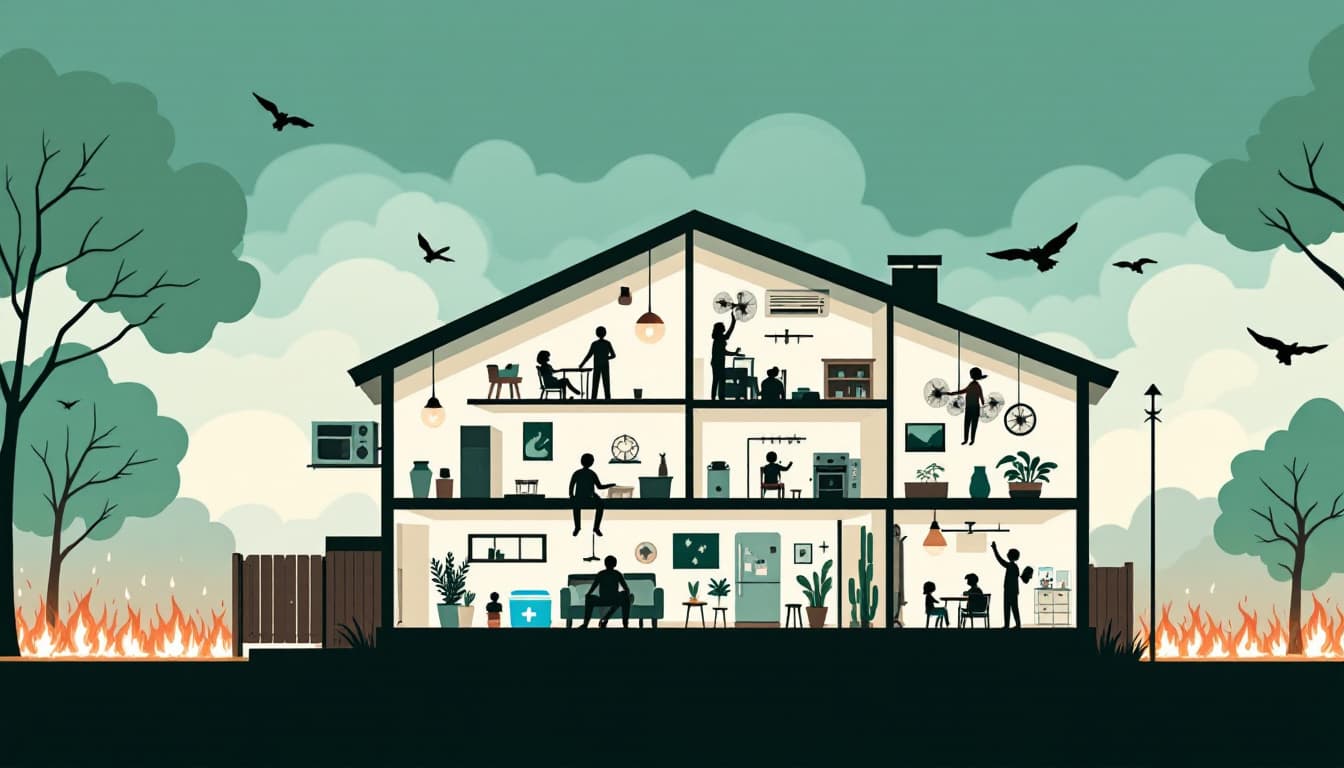
Audit your cooling redundancy this week, not in July. Most Texas households depend entirely on a single central AC unit. If it fails during a 105°F heat dome, you have hours before the interior of your home becomes dangerous for children and elderly family members. A single window unit — a used one costs $50–$100 on Facebook Marketplace — installed in one bedroom creates a survivable refuge. That room becomes your family's anchor during an outage.
Identify your nearest official cooling center before you need it. Every major Texas city operates a network of cooling centers during heat emergencies — libraries, rec centers, and community centers that are publicly listed by city emergency management offices. Pull up your city's list right now and save the address of the two closest ones in your phone contacts. When someone is symptomatic, you will not want to be searching a website.
Learn to distinguish heat exhaustion from heat stroke. Heat exhaustion presents with heavy sweating, weakness, and nausea — the person is still sweating, still conscious, still able to move. Move them to shade, give them water, apply cool wet cloths. Heat stroke is different: the skin is hot and dry or the person has stopped sweating, they are confused or unresponsive. Heat stroke is a 911 call, not a home treatment situation. The difference matters because one requires first aid and the other requires a paramedic.
Carry more water than feels necessary at outdoor events. The World Cup fan zone attendees who were hospitalized were almost certainly underhydrated before symptoms appeared. The standard guidance of eight ounces per hour is insufficient in direct Texas sun with high humidity. A reasonable floor for an adult in those conditions is 16–24 ounces per hour, with electrolyte replacement — a packet of oral rehydration salts, not just plain water — if you're sweating heavily for more than 90 minutes.
Check on your neighbors with a specific schedule. Not a vague "keep an eye out." If you have an elderly neighbor or someone without reliable AC, agree on a daily check-in time during heat events. A missed knock or unanswered text is your trigger to escalate.
The bigger picture
What happened at the World Cup fan zone is embarrassing for event organizers and heartbreaking for the fans involved. It is also a precise, public demonstration of what heat stress does to unprepared people in a compressed timeframe. Texas families are not tourists. You have time to build the habits, the supplies, and the local knowledge that make this summer survivable and unremarkable.
Durability is the goal. Not bunkers, not panic — just a household that handles a Texas summer the way it always has: with preparation that's so routine it barely registers as preparation at all.