On a June afternoon in Nashville, the feels-like temperature can push past 105°F before the official high is even recorded. That gap — between the number on the weather app and the temperature a human body is actually managing — is where heat emergencies live.
A report this week from Davidson County Source flagged rising dangerous temperatures across Middle Tennessee and offered general cooling advice. That's useful. What it doesn't cover is what a household with kids, elderly relatives, or a tight budget actually needs to think through before the worst days arrive.
What's actually changing
Tennessee summers have always been brutal. What's shifted is the duration and the overnight floor. When nighttime lows stay above 75°F for multiple consecutive nights, the body never fully recovers. That cumulative stress is what sends people to emergency rooms, not a single hot afternoon.
The Cumberland Plateau and East Tennessee ridges offer some relief, but the Nashville Basin, Memphis lowlands, and the corridor along I-40 through Jackson are heat sinks. Asphalt, limited tree canopy in lower-income neighborhoods, and older housing stock with inadequate insulation make urban heat a structural problem, not just a weather problem.
Grid strain is the less-discussed risk. On peak demand days, TVA and local distributors like Nashville Electric Service manage rolling pressure across the network. A prolonged heat event doesn't guarantee outages, but it raises the probability — and a power failure during a 100°F stretch is a different emergency than one in October.
What we'd actually do
Map who in your network is most vulnerable, and make contact before the heat peaks. This means elderly neighbors, anyone on medications that impair sweating (antihistamines, diuretics, some antidepressants), and households without reliable air conditioning. A text on a hot afternoon is too late. Call the day before a forecasted dangerous stretch, confirm they have a plan, and know their address if you need to send someone. Tennessee's 211 line can connect you to county cooling center locations if you need a resource to pass along.
Treat your air conditioner as critical infrastructure — not a convenience. Clean or replace the filter now, not when it starts struggling. Check that the unit is sized for your square footage; an undersized window unit running constantly is both inefficient and more likely to fail under sustained load. If your central HVAC hasn't had a professional check in over two years, a tune-up before July is cheaper than an emergency repair call in August. Keep the number of a local HVAC company in your phone before you need it, because their queue fills fast during heat events.
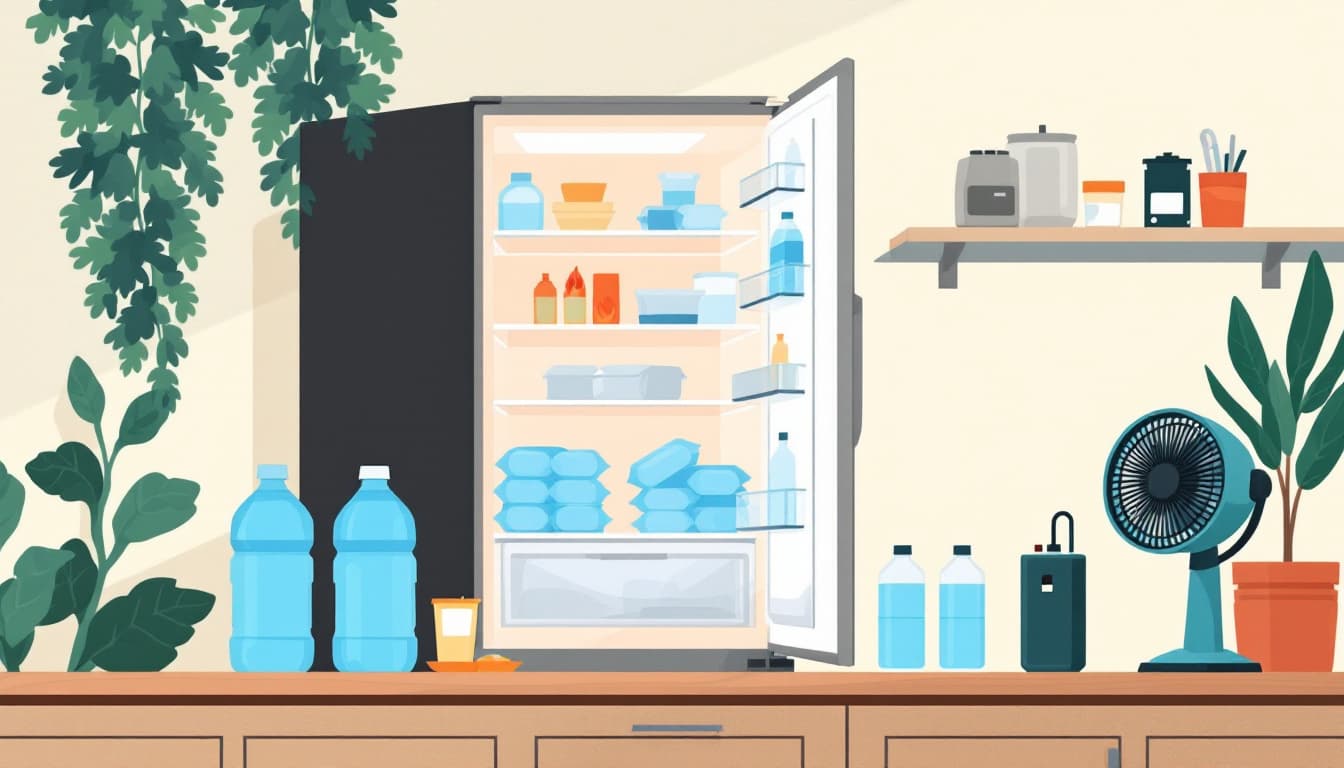
Build a 72-hour no-power plan that's actually realistic for Tennessee heat. A generator is one option, but not the only one. Identify the nearest 24-hour air-conditioned space — a grocery store, a Walmart, a library with extended hours — and know how long it takes to get there. If you have a car with working AC, that's a cooling resource during the day. Stockpile frozen water bottles now: they're free to make, and a chest freezer full of ice blocks buys meaningful time if power goes out. The goal isn't surviving indefinitely off-grid; it's bridging 24-48 hours without panic.
Store enough water to cover heat-level consumption, not just baseline needs. Recommended daily water intake roughly doubles during heavy heat exposure. A household of four that normally needs two gallons a day may need four or more during a high-heat stretch with outdoor exposure. Tennessee municipal water systems are generally reliable, but pressure can dip during peak demand. Thirty gallons stored in food-safe containers — rotated every six months — covers a week for most families and costs under $30 in containers.
Know the difference between heat exhaustion and heat stroke, and have it written down somewhere. Heat exhaustion (heavy sweating, weakness, nausea, cool/clammy skin) responds to moving to a cool space, hydration, and rest. Heat stroke (high body temperature above 103°F, hot/dry skin, confusion, possible unconsciousness) is a 911 emergency. That distinction matters when someone in your household is impaired or panicking. Write it on a card and put it on the fridge.
The bigger picture
Tennessee heat is not a fringe scenario or a prepper fantasy. It is a recurring annual event that sends real people to hospitals every summer, disproportionately in low-income neighborhoods and among people who are isolated. The families who come through it well are not the ones who stockpile the most gear. They're the ones who made two phone calls and changed their air filter before the worst week arrived.
Durability looks like boring preparation done early. Start now, while it's still manageable.