A WSMV report out this week confirms what anyone who stepped outside in Nashville already knows: extreme heat is locked in through the Fourth of July holiday. That's not a weather curiosity. For Tennessee households — particularly those with older adults, young children, renters without central air, or anyone whose power bill is already stretched — a multi-day heat event during a holiday weekend creates a specific cluster of risks that a standard weather forecast doesn't address.
What's actually changing
Holiday weekends compress everything that makes heat dangerous. Utility repair crews run on skeleton staff. Neighbors are traveling. Household routines are off. You're more likely to be outdoors longer than usual, eating and drinking differently, and less likely to notice when someone in your household is struggling.
Tennessee's grid has handled summer peaks before, but air conditioning load across the mid-state during a sustained heat event — particularly when overnight lows stay above 75°F and homes can't cool down — stresses distribution infrastructure at the neighborhood level, not just the transmission level. TVA and local distributors have historically issued conservation alerts during these windows. That's a real signal, not a formality.
Heat illness moves faster than most people expect. The progression from heat exhaustion to heat stroke can happen in under an hour without intervention. In Tennessee's humidity, the heat index routinely runs 10 to 15 degrees above the air temperature, meaning a forecast of 97°F can feel like 108°F or more in parts of the Cumberland Plateau and the Shelby County basin.
The households most at risk aren't usually the ones without air conditioning entirely. They're the ones with aging window units that can't keep up, renters who avoid running AC because of cost, and homes with poor insulation that absorb and hold heat through the night.
What we'd actually do
Check your window unit's filter and aim before the hottest days hit. A clogged filter can cut cooling efficiency by 20 percent or more. Pull it out, rinse it under the sink, let it dry, and reinstall. While you're at it, angle the unit slightly downward so condensation drains out rather than pooling inside. This costs nothing and takes ten minutes.
Identify one cool location outside your home that's open on July 4th. Many Tennessee libraries, malls, and community centers serve as informal cooling centers, but hours vary on holidays. Call ahead now — not on the day you need it. The Tennessee Department of Health maintains a list of designated cooling centers during heat emergencies; check with your county's emergency management office for the current roster. If you have elderly neighbors or relatives who live alone, this is the week to confirm they have a plan and a contact.
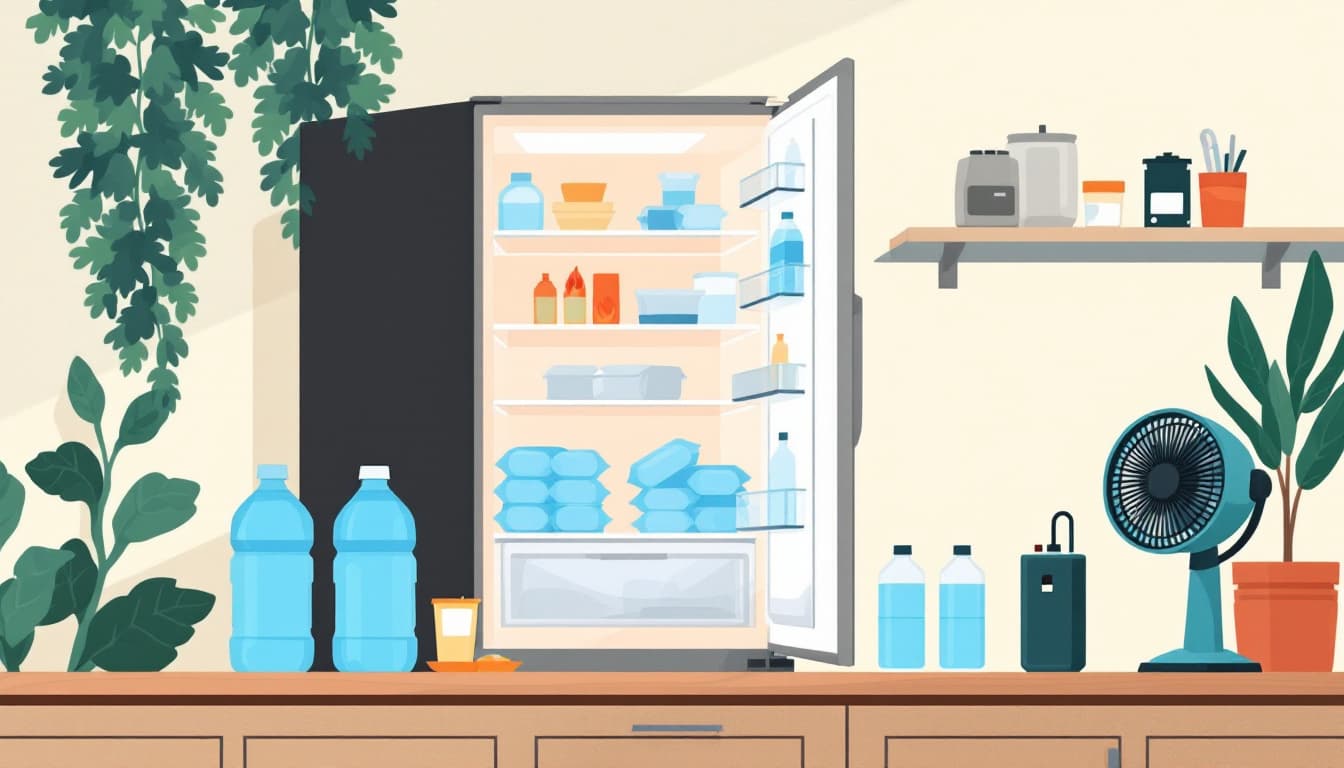
Fill your freezer partially with water bottles tonight. A full or near-full freezer maintains temperature longer during a power outage. Frozen water bottles do double duty: they extend your food safety window if power goes out and become cold packs for cooling people down quickly. Cost: whatever your tap water costs, which is effectively zero.
Pre-hydrate on the morning of July 4th before you feel thirsty. If you're planning to be outside for a cookout or fireworks, you're likely to underdrink during the event. Sports medicine guidance is consistent: by the time you're thirsty, you're already mildly dehydrated. A 16-ounce glass of water before you step outside, and one every 45–60 minutes after, keeps you ahead of it.
Know the difference between heat exhaustion and heat stroke. Heat exhaustion presents as heavy sweating, weakness, and nausea — move the person to a cool location, give water, apply cool cloths. Heat stroke is different: skin is hot and may be dry, the person may be confused or unconscious. That's a 911 call, not a wait-and-see situation. Share this with your household before the weekend.
The bigger picture
Tennessee summers have always been punishing. What shifts the calculus for households is the combination of duration, humidity, holiday timing, and a grid that's under load. None of this is cause for panic. It is cause for a Tuesday afternoon of small, low-cost preparations that make the rest of the week routine rather than reactive.
Durability is the point. A household that handles a five-day heat event without drama is a household that will handle the next disruption the same way. The goal is never to avoid discomfort entirely. It's to make sure that discomfort doesn't become a medical emergency.