A black bear in Tennessee just made a smarter heat decision than a lot of people will this summer. A USA Today report this week captured video of the animal cooling off with a river dive during the current heat wave rolling across the southeastern United States. It's a good clip. It's also a useful prompt.
The bear found water. Most Tennessee households haven't thought seriously about what they'll do if the grid buckles for 18 hours during a heat index above 105°F — which the National Weather Service has already flagged for parts of Middle and West Tennessee this week.
What's actually changing
Tennessee summers have always been brutal. What's shifted is the combination of factors arriving at the same time: aging residential infrastructure, grid load that peaks in ways utilities weren't designed for, and a housing stock where a significant share of lower-income and older residents rely on window units or no AC at all.
The Tennessee Valley Authority manages one of the largest power grids in the country, but peak-demand days still produce rolling stress. The TVA publishes real-time grid status, and it's worth knowing where that page lives before you need it. When demand spikes, voltage reductions and targeted outages are tools grid operators use. That's not fear-mongering — that's how the system works under load.
Heat illness is also faster than people expect. In humid Tennessee air, a healthy adult can move from discomfort to heat exhaustion in under two hours of moderate exertion without hydration. For adults over 65 or anyone on diuretics, beta-blockers, or antihistamines, that window is shorter. This is not a gear problem. It's a planning problem.
What we'd actually do
Know your county's cooling center locations before you need them. Tennessee Emergency Management Agency (TEMA) and most county emergency management offices publish cooling center maps each summer, but they don't push them hard. Look up your county's emergency management page this week — not when you're already overheated — and save the address in your phone. Knox County, Shelby County, and Davidson County each maintain separate lists. Rural counties often rely on a single library or community center.
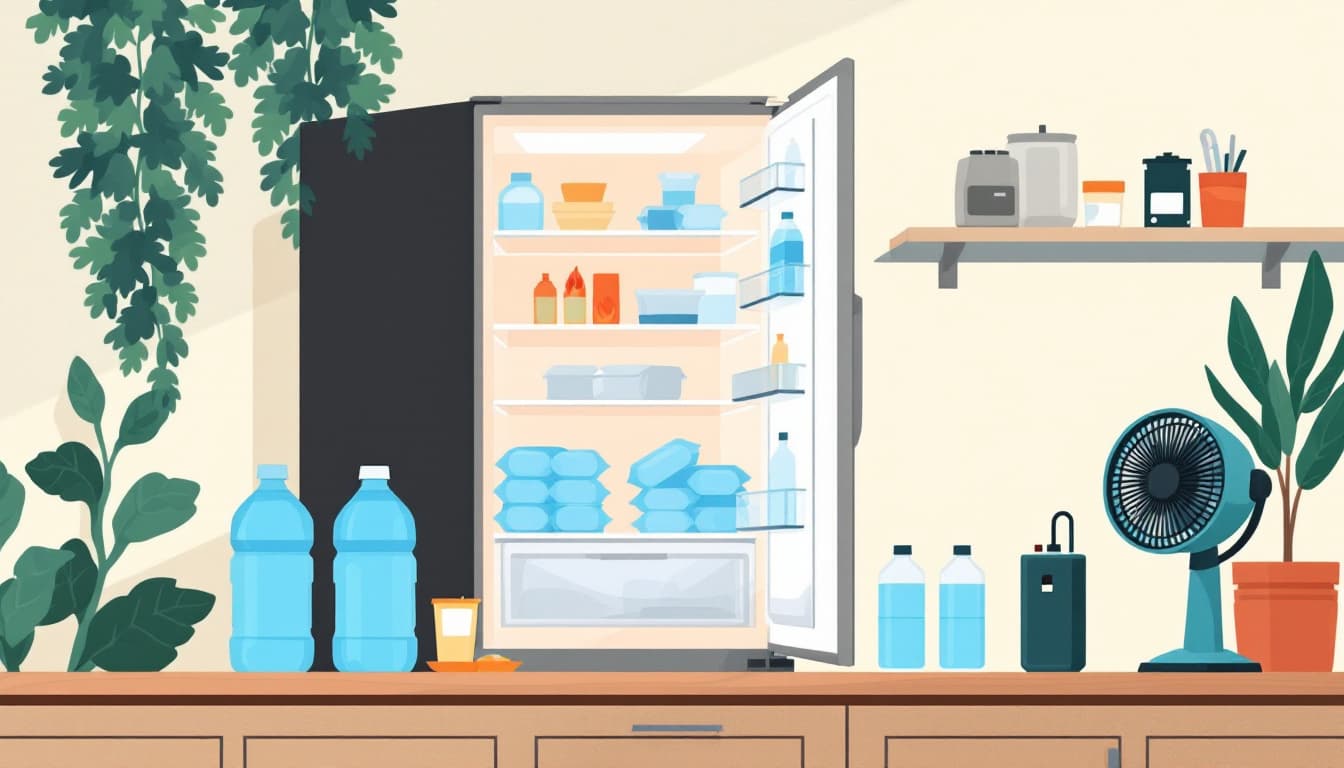
Audit your power-outage heat plan for the top-floor or west-facing rooms in your house. Upper floors of Tennessee homes can be 10 to 15 degrees hotter than ground level during a sustained outage. Walk your house today and identify the coolest room — typically a ground-floor interior room with minimal windows. That's your heat refuge. If you have elderly parents or young children, know whether they could shelter there safely for a full day. A battery-powered fan and a cooler with ice buys meaningful time.
Fill your car's gas tank and keep a case of water in the trunk through August. This sounds basic because it is. A car with working AC is a cooling resource. During a neighborhood-level power outage, driving to a cooled building — a library, a movie theater, a mall — is a completely reasonable response. You can't do that easily if you're already running on fumes. Keep a case of water in the trunk, rotate it monthly, and treat the car as part of your heat plan.
Check on one neighbor who lives alone. Heat deaths in Tennessee, as in every other state, are concentrated among people who are isolated. A 2023 review of heat fatality data from the Tennessee Department of Health found the majority of victims were alone when they died. You don't need a program or an app. You need a neighbor's phone number and a habit of using it when the heat index climbs above 100°F.
Set a temperature threshold that triggers action, not just discomfort. Decide in advance: if indoor temperature hits 85°F and the power has been out for more than two hours, you leave. Having the number removes the decision under stress. Post it on the refrigerator if that helps.
The bigger picture
The bear in that video wasn't panicking. It found a resource it already knew about and used it. That's the model. Resilience in a Tennessee summer isn't about stockpiling survival gear — it's about knowing your cooling options, your neighbors, and your own household's vulnerabilities before the heat index makes thinking harder.
The goal isn't to survive a catastrophe. It's to be the household that handles a rough Tuesday in July without ending up in an emergency room.