A report this week from KTLA confirmed what Los Angeles and Inland Empire residents already felt stepping outside: the hottest days of this Southern California heat wave have landed. Peak temperatures in the region are not a surprise at this point in the summer. The danger is what happens inside homes over the next 48 to 72 hours as building materials, pavement, and bodies absorb heat faster than they can shed it overnight.
That cumulative load is where people die. California's Department of Public Health data from past heat events consistently shows that heat-related deaths spike on day two and three of a wave, not day one. Your house cooled to 78°F on Tuesday night is holding 84°F by Wednesday morning before the sun is even fully up.
What's actually happening inside your walls
Older California housing stock — stucco construction, single-pane windows, and minimal ceiling insulation — retains heat far more efficiently than most homeowners realize. Apartments without cross-ventilation are particularly dangerous. Grid stress is also real: when millions of air conditioners run simultaneously across Southern California, voltage drops and rolling conservation notices from CAISO (the California grid operator) are a live possibility on peak days. An air conditioner running on degraded voltage cools less efficiently and can overheat its compressor.
The 2021 Pacific Northwest heat dome killed hundreds of people, the majority in their own homes, in dwellings assumed to be safe. Southern California is hotter, but households here are not automatically better prepared.
What we'd actually do
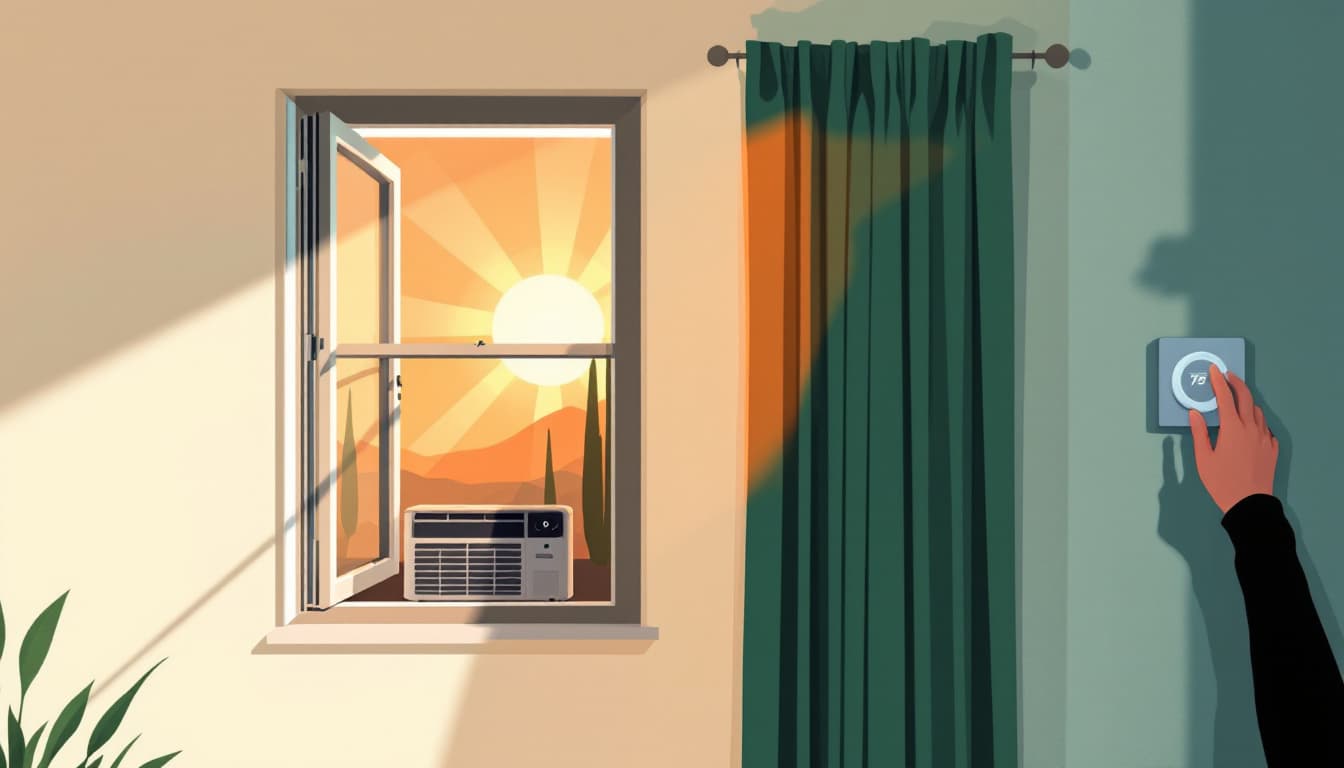
Pre-cool the house aggressively before 10 a.m. Run your AC or whole-house fan before the peak rate period and before outdoor temps climb. Drop the indoor temperature as low as tolerable in the morning hours. Thermal mass — walls, floors, furniture — holds that cold the way it holds heat. You're buying yourself two to three hours of buffer if power becomes unreliable in the afternoon.
Most California households on time-of-use utility plans (SCE, SDG&E, and PG&E all offer them) pay their highest rates between 4 p.m. and 9 p.m. Pre-cooling is not just a safety strategy; it cuts your bill during the hottest and most grid-stressed window of the day.
Identify your nearest cooling center now, before you need it. Los Angeles County, San Bernardino County, Riverside County, and San Diego County all publish cooling center locators online. Look it up now. The relevant question is not "do I need it today?" but "could my elderly neighbor, my kid, or I need it tomorrow afternoon if the AC fails?" Write the address down. Do not assume you will have the bandwidth to search for it at 4 p.m. on day three of a heat wave.
Check on anyone in your household or nearby who takes diuretics, beta-blockers, antipsychotics, or anticholinergics. These drug classes impair the body's ability to sweat and regulate core temperature. This is not a fringe concern — these are common blood pressure, psychiatric, and bladder medications. A neighbor in their 70s managing hypertension with common prescriptions is at meaningfully higher risk than their age alone suggests.
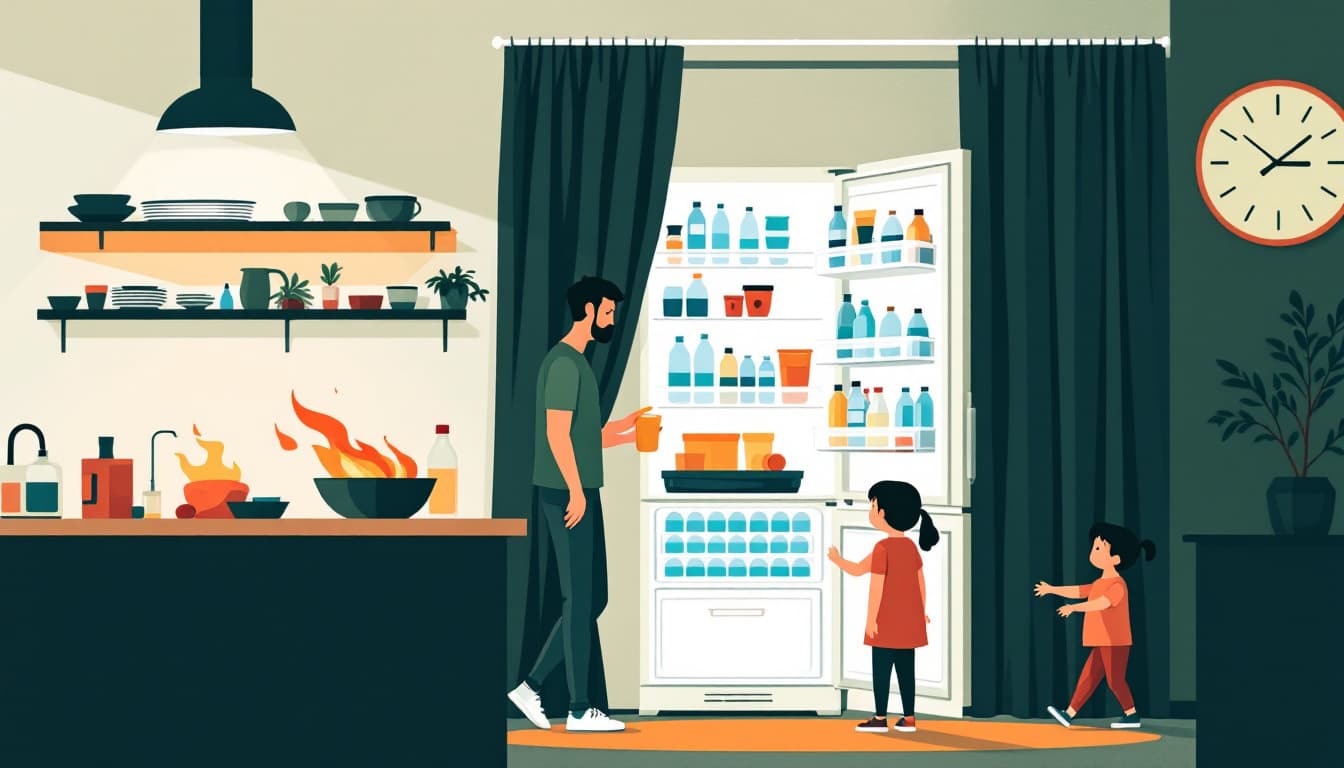
Freeze two or three water bottles tonight and put a damp sheet in the freezer. This costs nothing. A frozen sheet draped over you lowers skin temperature fast. Frozen bottles in a cooler with a little water give you cold drinking water if your refrigerator is struggling. These are not survival-movie tactics; they are what emergency physicians actually recommend for rapid cooling.
If your power goes out, leave within two hours. Do not wait to see if it comes back. California's grid restoration windows during peak heat events can stretch to four to six hours. Two hours is roughly how long a well-insulated home maintains a livable temperature before the indoor-outdoor temperature gap closes. A car with functioning AC is a valid cooling shelter. A library, a mall, a friend's house across town — these count.
The bigger picture
Heat is California's most lethal weather hazard, outpacing earthquakes and wildfires in most years in terms of direct mortality. It is also the most preventable. No special gear required. No bunker. No six-month supply of anything. The actions above take less than an hour total and cost almost nothing.
Durability through a heat wave is a planning problem, not a purchasing problem. Know your house, know your neighbors, know where cool air is available outside your home. That combination has saved more California lives than any piece of equipment.