A KCRA report this week on Northern California's heat wave covers the standard checklist: hydrate, check on elders, find a cooling center. That advice is accurate. It's also the floor, not the ceiling, of what households living through Sacramento Valley or foothills summers actually need to think through.
Here's the specific pressure California families are under right now.
What's actually different about California heat events
Most national heat safety guides assume your air conditioner runs until the heat passes. California's grid doesn't always cooperate. The California Independent System Operator (CAISO) issues Flex Alerts — voluntary conservation notices — when supply margins shrink during peak demand windows, typically 4–9 p.m. Rolling outages are uncommon but not hypothetical. The North Bay and Central Valley have both experienced them during sustained heat events in recent years.
The second California-specific issue is the urban heat island effect layered on top of wildfire smoke. When smoke pushes the Air Quality Index above 150, opening windows for nighttime cooling — the standard low-cost advice — trades heat risk for particulate risk. That tradeoff is real, and most national guides don't address it.
Third: older California housing stock. A large portion of homes built before 1990, especially in inland cities like Fresno, Stockton, and Sacramento, were designed with limited insulation and no expectation of 108°F ambient temperatures. Central air conditioning is common, but it doesn't perform the same in a house that's been absorbing heat for three consecutive days.
What we'd actually do
Map every high-risk person in your immediate network before the heat arrives, not during it. Your neighbor in her 70s, the relative without air conditioning, the family across the street with an infant — know who they are before a Flex Alert goes out. Heat kills more slowly than most people expect, and social isolation is a larger risk factor than equipment failure. A 10-minute check-in on day two of a heat wave matters more than a fan.
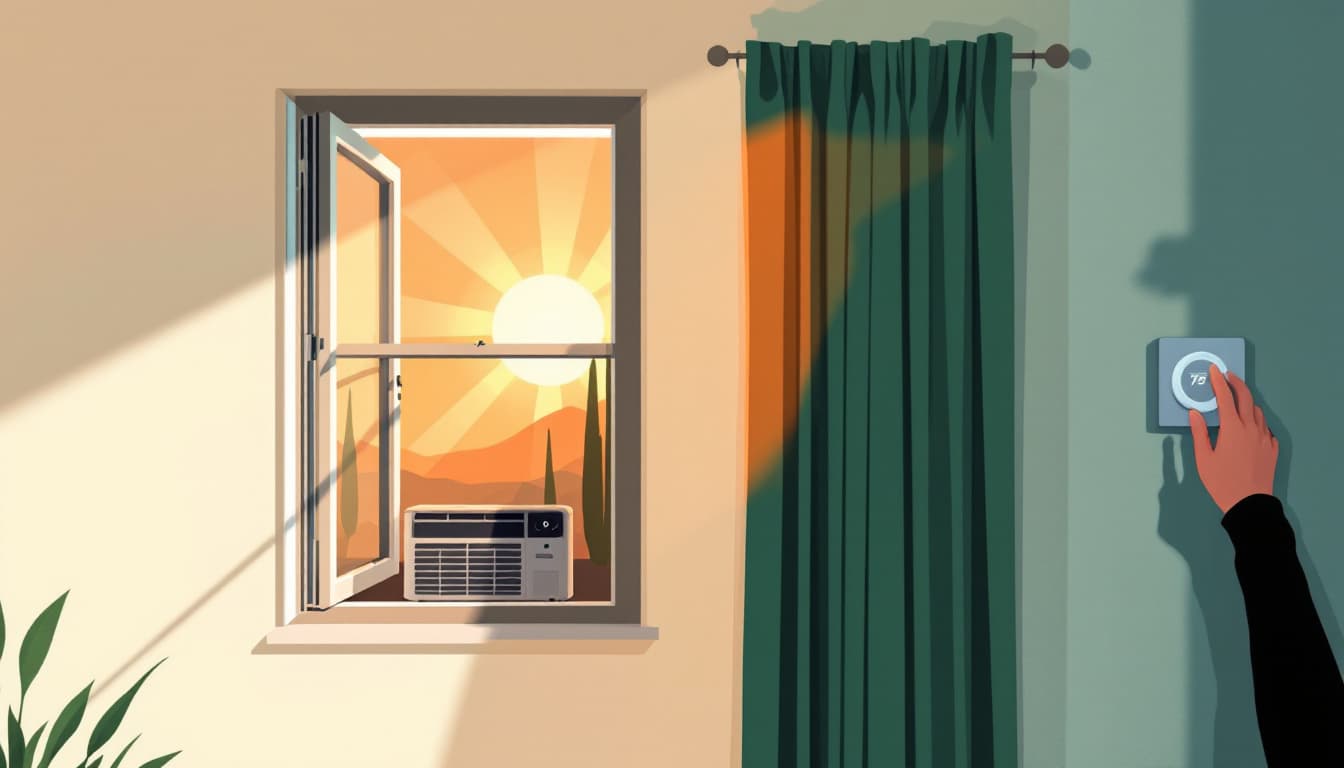
Set your thermostat to pre-cool the house before the 4 p.m. grid crunch. If you have central air, drop the house to 76–77°F by 3 p.m. and then raise the setpoint to 80°F during the Flex Alert window. Thermal mass in walls and furniture holds that coolness longer than you'd expect, and you've reduced your demand contribution during the highest-risk grid period. This costs almost nothing.
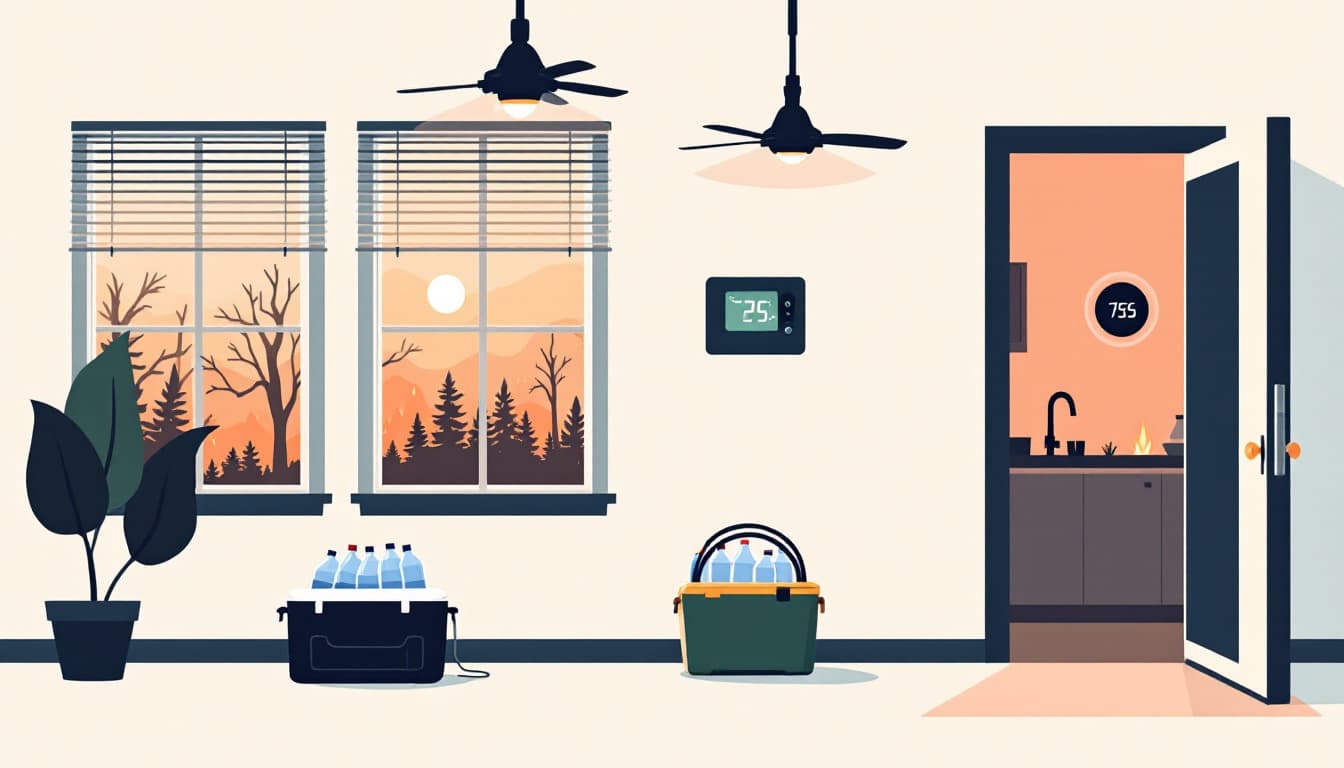
Own at least one window-mount or portable AC unit rated for a single room, fully functional and tested. Central systems fail. Knowing which bedroom becomes your household's "cool room" — and having the equipment to make it work independently — is a decision to make in June, not August. A unit capable of cooling a 250–350 square foot space runs under $300 and can be the difference between manageable and dangerous for vulnerable household members.
Keep a filled bathtub as a passive cooling reservoir on the first night of a sustained event. Water holds temperature. A tub filled with cool water in the morning retains that coolness into the afternoon and can be used for wet towels, foot soaks, or simply as a thermal sink in a small bathroom. This is not glamorous preparedness. It works.
Know the difference between a Flex Alert and a grid emergency — and what each actually requires. A Flex Alert is a request to voluntarily reduce consumption. A Stage 2 or Stage 3 grid emergency means rotating outages may be coming. CAISO posts its status at caiso.com. Sign up for your local utility's outage alerts (PG&E, SMUD, PacifiCorp depending on your area) separately — those are not the same as CAISO notifications, and they're more actionable at the household level.
The bigger picture
Heat is California's deadliest weather event, measured by fatalities per year. It generates less media urgency than wildfires or earthquakes, partly because it kills diffusely and partly because it's not photogenic. The households that handle it best aren't the ones with the most gear. They're the ones that made a few low-cost decisions in spring — a tested window unit, a mapped neighbor network, an understanding of how their local grid behaves — and didn't have to scramble.
Durability looks boring from the outside. That's the point.