A CBS News report this week put a specific label on what anyone who has lived through a Los Angeles basin summer already knows is coming: dangerous heat is building across Southern California and expected to intensify next week. The phrasing matters. "Dangerous" in a meteorological context means heat that kills people — primarily through hyperthermia in homes that lose cooling capacity faster than the grid can keep up with demand.
This is not a reason to panic. It is a reason to spend about two hours this weekend auditing the systems your household depends on when ambient temperature pushes past 105°F.
What actually goes wrong during a Southern California heat event
The risk is layered. First, Southern California's grid operator (CAISO) calls flex alerts when demand spikes — asking residents to reduce consumption between roughly 4 and 9 p.m. During severe events, rotating outages become possible. Second, many homes in the region — particularly in the Inland Empire, San Fernando Valley, and parts of Orange County — were built with single-pane windows and minimal insulation, which means interior temperatures can climb significantly even with an air conditioner running. Third, medications that must stay below 77°F (insulin, some liquid antibiotics, certain psychiatric medications) degrade quickly in a car, a garage, or an un-air-conditioned room. Most households don't know this is a problem until it is too late.
The heat itself is not a surprise. The failure points are the systems inside your home you haven't tested since last summer.
What we'd actually do
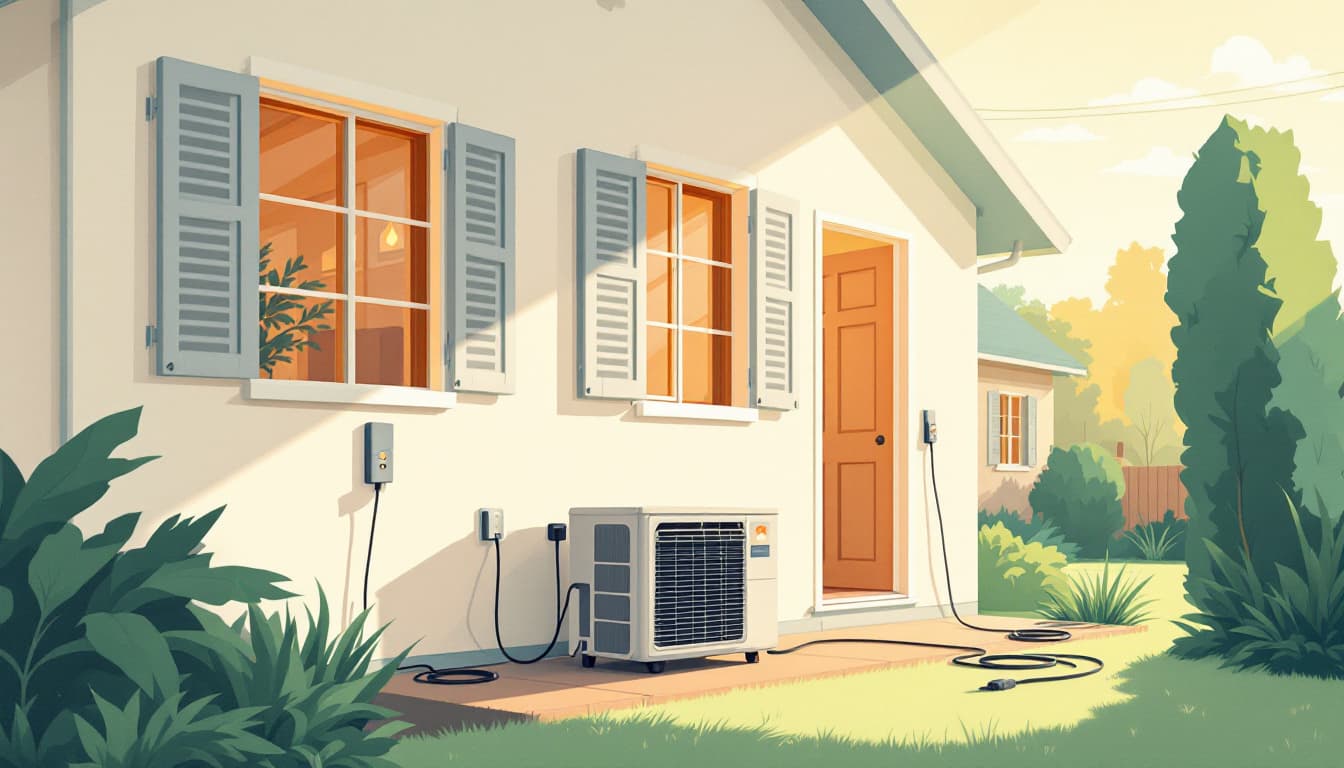
Check your AC filter and clear your condenser unit this weekend. A clogged filter can cut cooling efficiency by 15 percent or more, according to Department of Energy guidance. The condenser unit outside needs at least two feet of clearance and no debris packed against the coil. These two tasks take under 30 minutes and cost nothing.
Know your grid exposure before Monday. Sign up for CAISO flex alert notifications at caiso.com or through your utility's app — SCE, SDG&E, and LADWP all have text/email alert systems. If you get a flex alert, pre-cool your home to 72°F before 4 p.m. Your thermal mass (walls, furniture, flooring) will hold that temperature longer than the air will, buying you two to three hours of comfort with no AC running during peak demand.
Audit every medication in your household that has a temperature requirement. Pull them out, read the label, and write down the upper storage limit. Then identify where they actually live during a power outage. If your answer is "on the kitchen counter" or "in the car," you need a plan — a small insulated case and a few ice packs can bridge a 12-to-24-hour outage for most medications. If insulin is in the picture, look up the manufacturer's specific guidance; most modern analogs are stable at room temperature for 28 days once opened, but "room temperature" means below 77°F.
Identify your household's nearest public cooling center now, not during the event. LA County, San Bernardino County, and Riverside County all maintain cooling center locators online. The centers are often libraries, community centers, or senior facilities. If you have elderly neighbors who live alone, this is the week to knock on their door.
Fill your bathtub and a few large containers the night before a forecasted peak day. If a rolling outage takes out your well pump or drops municipal pressure, you'll want water for drinking, medication reconstitution, and cooling cloths. This costs nothing and takes three minutes.
The bigger picture
Heat events in California are no longer anomalies you prepare for once a decade. The state has tracked a clear trend toward longer and more intense summer heat periods, and the grid, while improving, still strains under peak demand. The goal of preparedness here is not to survive a catastrophe — it's to keep your household functional through a 72-hour disruption without spending money you don't have on gear you don't need.
Your AC filter, your medication drawer, and the phone number for your county's cooling center are the tools that actually matter this week. The rest is noise.