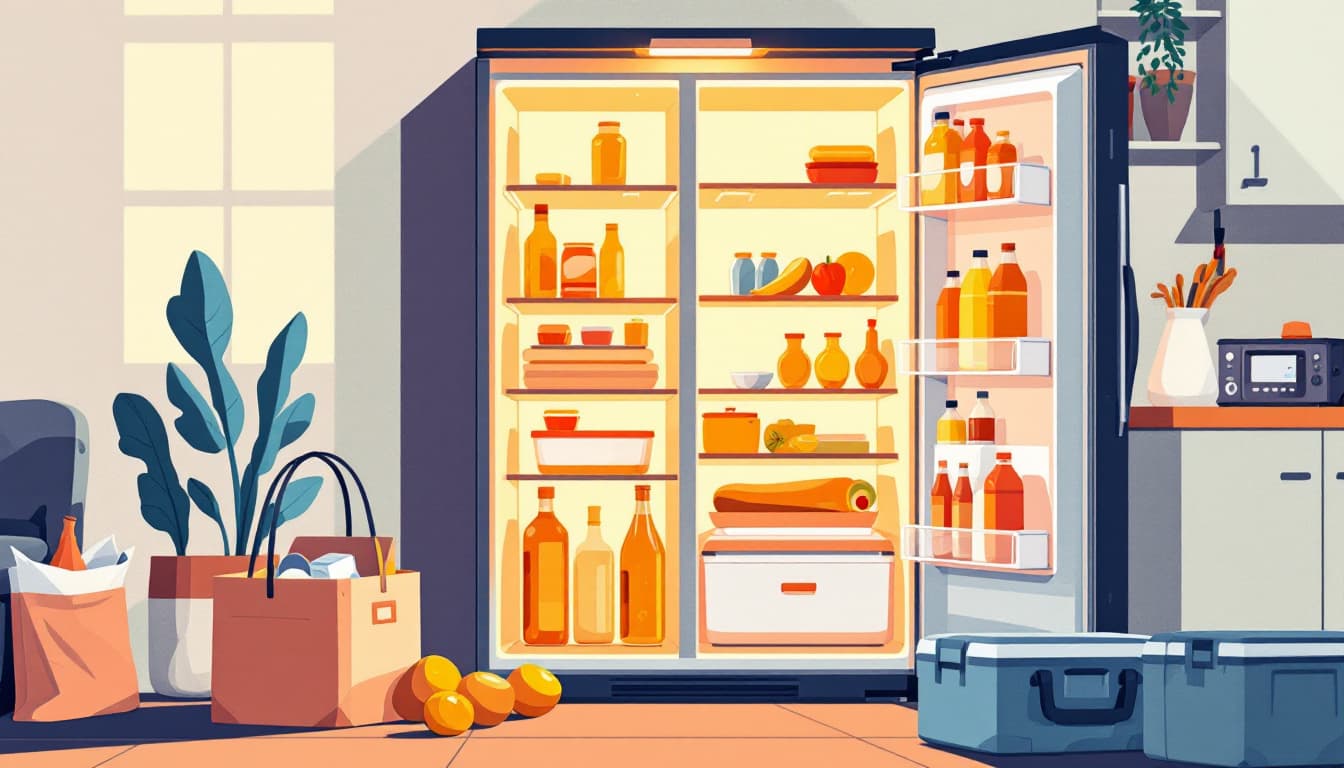
The refrigerator in your kitchen is the single most critical piece of emergency infrastructure most families own. It runs 24 hours a day, it's the first line of defense against food spoilage during a short power outage, and it's the reason a week's worth of groceries doesn't become a biohazard. So when policy changes touch the cold chain — from the commercial refrigeration units at your grocery store down to the compressor humming in your kitchen — it's worth paying close attention to what's actually shifting and what's noise.
A USA Today report this week detailed plans from the Trump administration to roll back Biden-era regulations governing hydrofluorocarbon (HFC) refrigerants, framing the move as a lever to reduce grocery costs. The refrigerant rules in question were designed to phase down HFCs, which are potent greenhouse gases, in favor of lower-emission alternatives. The argument for rollback: the transition has raised costs for commercial refrigeration equipment, and those costs flow downstream to retailers and consumers.
What's actually changing
The refrigerant story sits at the intersection of three overlapping pressures that families should understand separately.
Commercial refrigeration costs are real. Grocery stores run thousands of linear feet of refrigerated display cases. When regulations require a transition to new refrigerant chemistry, equipment manufacturers adjust pricing and supply chains adapt slowly. That cost is genuine, and it does pass through to retail margins. Whether rolling back the rules produces noticeable grocery savings — and over what timeline — is genuinely uncertain. Regulatory changes in equipment markets tend to move slowly; a policy shift announced today affects new equipment purchases, not the installed base already running on legacy refrigerants.
The consumer appliance market is a separate question. Home refrigerators sold in the U.S. already largely transitioned to more efficient refrigerant blends under a mix of regulatory and market pressures. Rolling back rules aimed at commercial refrigerants doesn't automatically mean your next home refrigerator gets cheaper or uses a different refrigerant. The two markets don't move in lockstep.
Repair costs for existing appliances are the household pinch point. This is where families feel refrigerant policy most directly. If the refrigerant in your current appliance requires a certified technician and a regulated chemical, repairs are expensive. Regulatory rollbacks could ease some of that cost pressure for certain refrigerant types, though the timing and scope remain unclear.
What we'd actually do
Get your refrigerator and chest freezer serviced or inspected if either is more than eight years old. Compressor failures rarely announce themselves. A pre-failure inspection — often $75–100 from an appliance technician — is vastly cheaper than emergency replacement and the $300–500 in spoiled food that comes with a summer compressor failure.
A functional chest freezer is one of the most cost-effective preparedness investments a household can make. A full chest freezer holds its temperature significantly longer during a power outage than a half-empty upright. If yours is running low, filling the unused space with water-filled containers costs almost nothing and meaningfully extends your safe window during an outage.
Know your refrigerant type and keep that information somewhere findable. The model and serial number on the door jamb sticker will tell a technician what refrigerant your unit uses. Take a photo of it. If you ever need emergency repair, you want your technician sourcing parts and refrigerant before arriving, not after diagnosing on-site.
Don't assume grocery prices respond quickly to this policy. Supply chain economists generally find that regulatory cost reductions take 12–24 months to move through commercial equipment pricing and longer still to affect retail grocery margins. If you're budgeting for food costs, build your numbers around current prices, not projected savings from a rollback that hasn't happened yet.
Maintain a two-week shelf-stable pantry that doesn't depend on refrigeration. This isn't about refrigerant policy specifically — it's about the simple fact that refrigeration is a single point of failure. A rolling two-week supply of shelf-stable food means a compressor failure is an inconvenience, not a crisis. Canned protein, dried legumes, rice, and oats are the foundation. They don't require a single policy to stay affordable.
The bigger picture
Cold chain reliability — from farm to truck to store to home — is one of the least-discussed but most structurally important elements of household food security. Most families are one appliance failure away from significant food loss. Policy arguments about refrigerant chemistry are real, but they play out over years. The household decision to maintain a working freezer, know your equipment, and not depend entirely on refrigeration for your food supply is something you can act on this week.
Durability doesn't come from following regulatory changes. It comes from reducing your exposure to any single system failing.