A pallet of frozen strawberries leaving a Chilean facility today will not reach your grocery freezer for roughly eight to twelve weeks. By then, the sourcing contract that put those berries on that pallet may already have changed hands — routed through a different port, invoiced through a different country, priced in a different currency. That gap between origin and shelf is where household budgets get surprised.
A recent report from Inbound Logistics details how supply chain restructuring is accelerating on three fronts simultaneously: companies are reshuffling sourcing geography away from single-country dependency, e-commerce fulfillment is absorbing warehouse capacity that used to buffer retail, and cold-chain logistics — the refrigerated network that moves meat, dairy, produce, and medications — is under strain from both cost pressure and infrastructure gaps.
None of that is abstract. It lands in your cart and your medicine cabinet.
What's actually changing
The sourcing shift is real and measurable. Manufacturers are spreading production across more countries to reduce exposure to tariff swings and port disruptions. That sounds like resilience, and in the long run it may be. In the short run, it introduces more handoff points, more documentation complexity, and more opportunities for delays that are invisible until a shelf goes empty.
Cold-chain strain deserves particular attention for households. Insulin, certain vaccines, and a growing category of specialty foods all depend on an unbroken refrigerated link from manufacturer to end user. When that chain costs more to operate — and recent freight data consistently shows refrigerated transport running at a premium over dry goods — carriers reduce routes and consolidate shipments. The result is longer transit windows and thinner margins for error.
E-commerce complicates this further. Warehouse space that once held regional retail safety stock is increasingly dedicated to next-day fulfillment. That means less physical buffer in the system between a disruption upstream and a gap on a store shelf downstream.
The pattern here is not collapse. It is thinning. The system is faster, leaner, and more geographically diversified than it was five years ago — and also less forgiving of shocks.
What we'd actually do
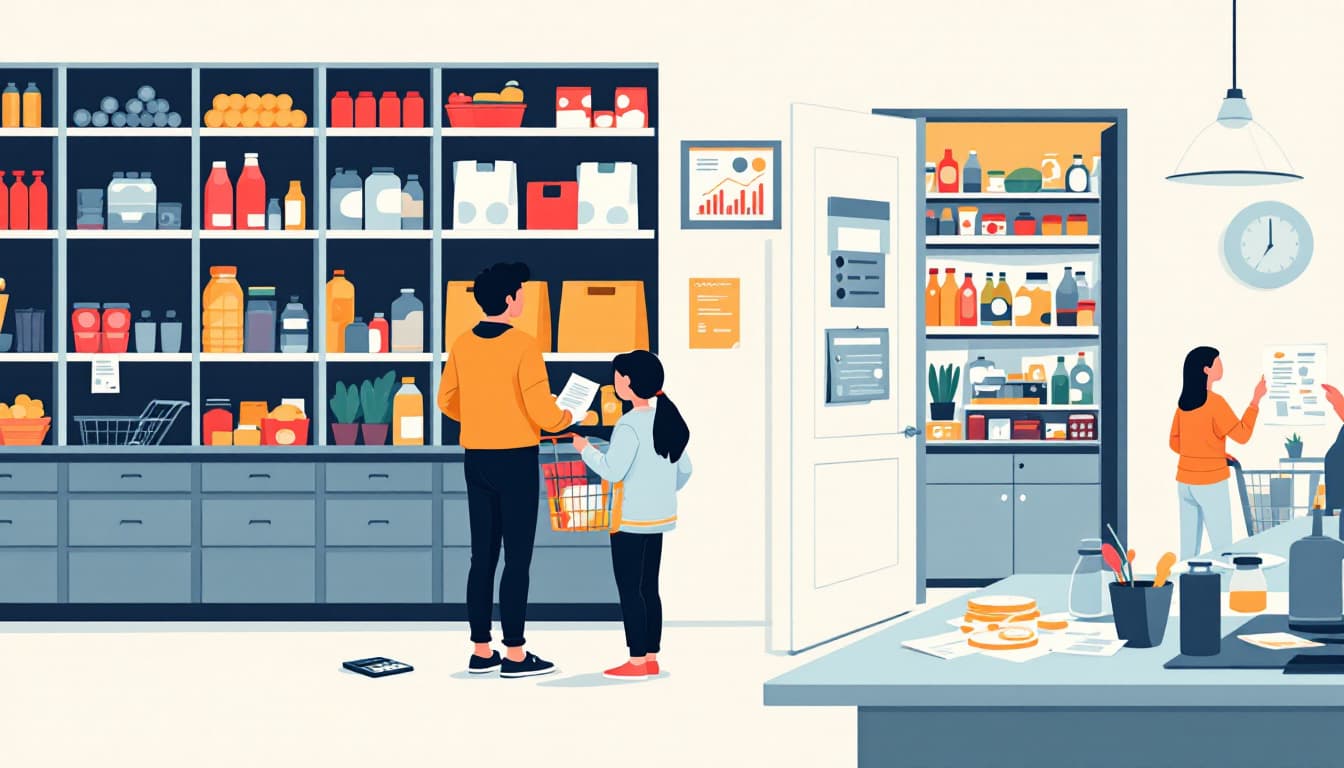
Map your household's cold-chain dependencies. Start by listing any medications or medical supplies in your home that require refrigeration. Then look honestly at your weekly grocery purchases: what percentage is perishable, and what's the stored-shelf alternative? You do not need a bunker freezer. You need a clear picture.
Most families discover two or three medications or supplements they've never considered from a supply angle. For refrigerated medications with no shelf-stable substitute, talk to your doctor about prescription buffer quantities. Many insurers allow a 90-day supply. Getting there before a shortage is a routine conversation; getting there during one is not.
Build a modest shelf-stable cold-chain substitute list. For every perishable food category you rely on heavily — dairy, meat, produce — identify one shelf-stable substitute that your household will actually eat. Canned fish instead of fresh. Shelf-stable UHT milk as a backup for cereal and cooking. Freeze-dried vegetables for soups. This is not about replacing your diet. It is about having three to four weeks of flex when a category goes thin.
Watch category-level pricing, not headline inflation. Aggregate inflation numbers mask significant divergence by category. Protein and cold-chain-dependent produce can spike 15 to 20 percent in a quarter while headline grocery inflation looks flat. BLS data allows category-level lookups. Spend ten minutes quarterly checking meat, dairy, and fresh produce indexes. When you see a category moving, you have a few weeks to stock before neighbors notice.
Treat a second freezer as infrastructure, not a luxury. A chest freezer running at capacity costs roughly $5 to $8 per month in electricity. It allows bulk purchasing when prices are low, reduces the impact of cold-chain delays on your weekly shopping, and extends the viability of your protein stores significantly. Used chest freezers are consistently available for $50 to $150 on local resale markets.
Diversify where you buy, not just what you buy. If your household gets most of its groceries from one retailer, you are exposed to that retailer's specific supply contracts. Adding a warehouse club, an ethnic grocery, or a local farm-direct source for even 20 percent of your spending gives you alternative channels when a single supplier's shelves go thin.
The bigger picture
Supply chains are not breaking. They are reorganizing — and the reorganization creates predictable friction points that household-level preparation can absorb. The families who feel this most acutely are the ones buying week-to-week with no buffer, no alternatives mapped, and no awareness of which categories are structurally thin.
Durability is not about predicting which disruption comes next. It is about building a household that can absorb the category of disruption — the short-shelf-life gap, the cold-chain delay, the price spike on a staple — without a crisis. The supply chain is doing its job of reorganizing. Your job is to reorganize your pantry shelf before it has to.