Pull up directions to somewhere you drove last month. Odds are you cannot describe the route in terms of street names, landmarks, or cardinal directions. You remember the blue line. You remember when the voice told you to turn. You do not remember the map.
This is not a moral failing. It is a design outcome. Turn-by-turn navigation is so frictionless that spatial reasoning has quietly stopped being practiced by most adults who reached driving age after roughly 2005. The skill has not vanished — it has just gone unexercised, the way a shoulder muscle atrophies after a sling comes off.
Here is the thing about spatial reasoning: it is not primarily a survival skill. It is a cognitive skill. Researchers who study wayfinding describe it as one of the few activities that recruits navigation-specific memory structures in a way that routine screen use does not. Regular map readers tend to maintain better spatial recall, orient more quickly in unfamiliar environments, and — importantly — stay calmer when disorientation sets in. Those benefits accrue on a normal camping trip, in an unfamiliar city, on a hiking trail that looks different at dusk than it did at noon. The emergency scenario is almost beside the point.
Why most people underestimate the gap
The common assumption is that reading a map is easy, and that the ability would come back automatically if the phone died. This assumption gets tested every year across the country when people wander off maintained trails into wilderness areas, or get lost in unfamiliar neighborhoods during power outages, or drive into flooded roads because the app said to turn right and they had no broader sense of the terrain.
The issue is not that paper maps are complicated. A road atlas is not complicated. The issue is that map reading requires two habits that atrophy fast: orienting the map to match your direction of travel, and building a continuous mental model of where you are relative to features you cannot currently see. Both of those habits require practice. Neither comes back instantly under stress.
A topographic map is a different skill again — one that tells you where water will run, where wind will funnel, where the slope ahead is steeper than it looks from below. It is a genuinely learnable skill, not an arcane specialty. The US Geological Survey has published plain-language guides to reading topo maps for decades. REI's free online tutorials cover the same ground in about two hours. Neither requires a course or an instructor.
The stress-compounding dynamic
Any skill practiced calmly in advance performs better under stress than a skill attempted for the first time under stress. This is not a controversial insight — it is just how procedural memory works. The preparedness community talks about this constantly in the context of shooting, firefighting, and first aid. It applies equally to navigation.
Someone who has read a paper map twenty times in ordinary conditions — on road trips, on weekend hikes, in a new city on purpose — will orient a map correctly under pressure almost automatically. Someone doing it for the first time at the trailhead after their phone battery died is working against both the cognitive load of the new skill and the cognitive load of mild panic. Those two things together produce bad decisions.
What to do this week
The on-ramp here is genuinely low. Here is a three-step sequence that takes about ninety minutes spread over a month:
-
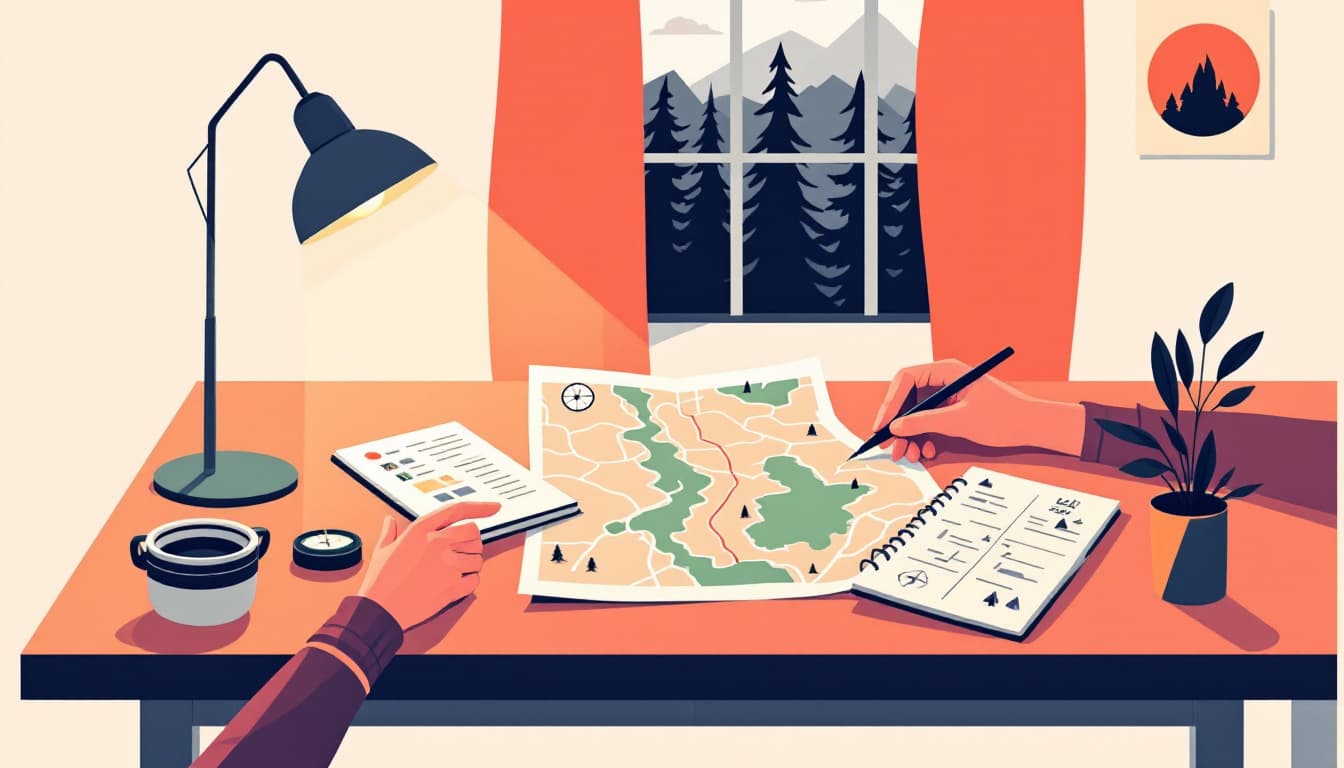
Buy a road atlas for your state. They cost between ten and fifteen dollars at most gas stations and big-box stores. Before your next drive somewhere you know, trace the route with your finger before you leave. Note two or three landmarks. Drive it without the phone on.
-
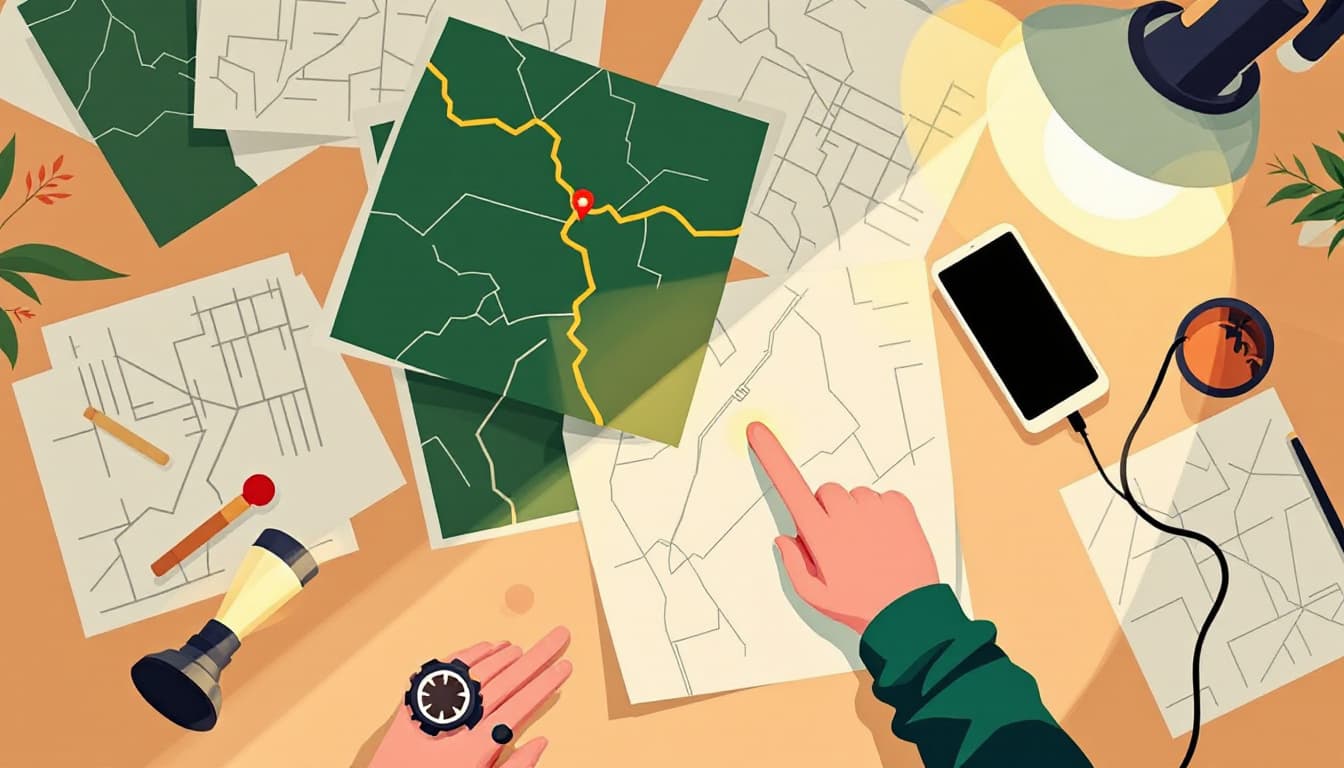
Download a free topo map of a nearby trail or park from the USGS National Map Viewer (nationalmap.gov — free, no account required). Print it or load it into a PDF reader. Take it on your next outdoor outing alongside your phone. Before you check the app, try to figure out where you are on the paper first.
-
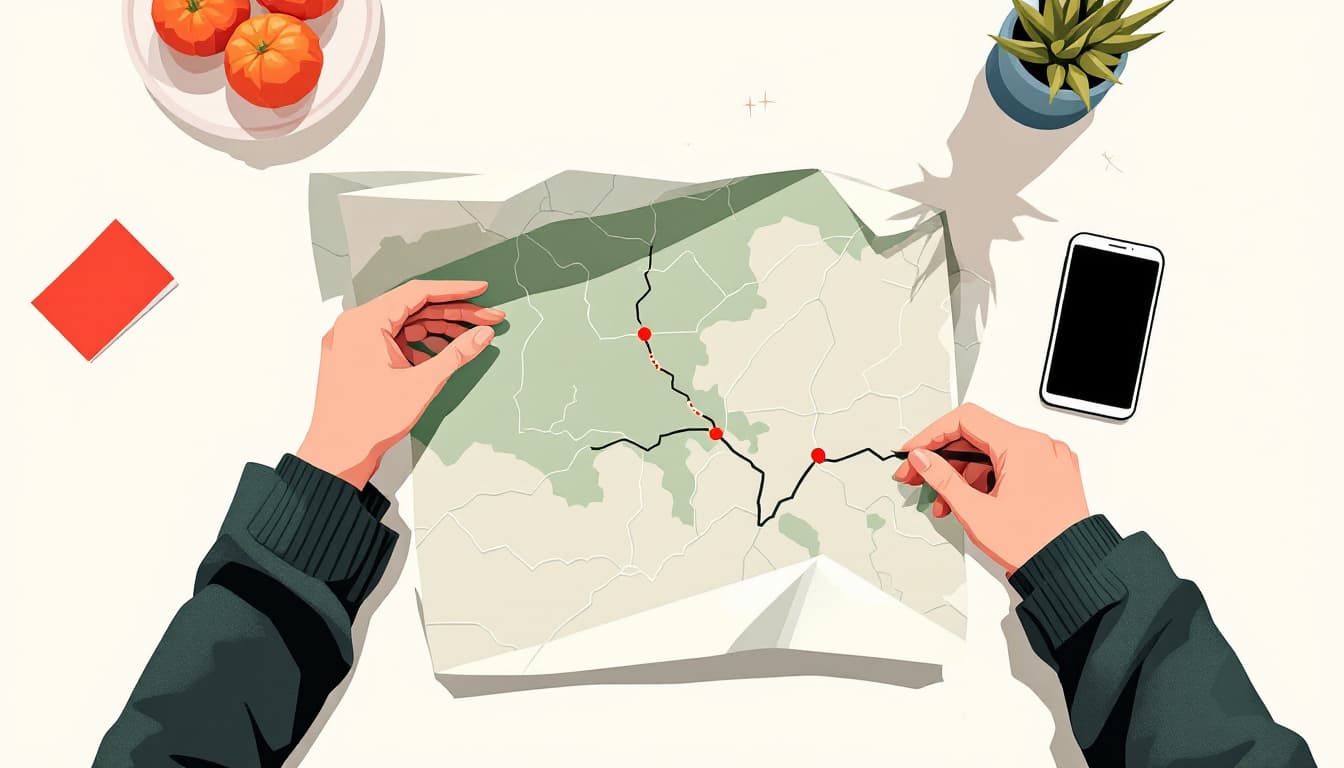
Practice orienting. Hold the map flat, then turn it until the features on the map match the features you see around you. Do this a few times on a familiar trail until it becomes automatic. This is the single most useful micro-skill in the whole sequence.
None of this requires a preparedness mindset. It just requires mild curiosity and a slightly longer morning.
The bigger picture
There is a category of skill that the preparedness world tends to present in the most alarming possible framing — as something you need when civilization wobbles — and that framing is mostly counterproductive. It makes the skill feel optional for the 99% of days when civilization is not wobbling.
Map reading belongs in the other category: skills that make you more capable and less anxious on an ordinary Tuesday, and that happen to be especially useful when something goes wrong. Sewing is like this. Basic car maintenance is like this. Neighbor relationships are like this. The emergency is not the point. The point is that a person who knows how to read a map moves through the world with more confidence and less dependence on a battery that will eventually die at an inconvenient moment.
That is worth ninety minutes.