The San Luis Obispo Tribune reported this week that a heat advisory is in effect for Northern California through Monday and Tuesday. That advisory language — not a warning, not an emergency — is exactly the kind of signal that households dismiss. They shouldn't.
Heat is not a dramatic hazard. It doesn't crack walls or flood basements. It just accumulates, quietly, inside bodies and buildings, until someone is in trouble. In California, heat kills more people annually than any other weather event, including wildfires. Most of those deaths happen at home.
What's actually different about a multi-day advisory
A single hot afternoon is not the problem. The body recovers overnight. What a two-day advisory means is that nighttime temperatures stay elevated enough to prevent that recovery. By Tuesday evening, a household that wasn't managing the heat on Monday is already starting the second day depleted.
Northern California's geography amplifies this. The Sacramento Valley and inland areas near the Coast Ranges funnel and hold heat in ways that coastal fog doesn't moderate. If you're in Redding, Chico, Fresno, or the inland foothills, the overnight lows that a weather app shows are often warmer inside your home than outside — particularly in houses with poor attic ventilation or west-facing exposure.
The grid is the other variable. California's grid has improved significantly in recent years, and CAISO has added demand-response capacity. But advisory-level heat events — the kind that don't make the national news — are exactly when utilities ask for voluntary conservation between 4 and 9 p.m. If you've never thought about your household's function during a rolling outage, this week is a reasonable time to start.
What we'd actually do
Audit your sleeping spaces tonight, not Tuesday night. Walk through your home after 10 p.m. and check which rooms are actually coolest. Many families default to their usual bedrooms during heat events and don't realize the interior temperature never drops below 82°F. A cheap indoor thermometer (under $15 at any hardware store) gives you a number to act on. Move children and elderly household members to the coolest room before the second night.
Fill the bathtub before the event peaks. This is standard earthquake prep advice that applies here too. If you lose power and water pressure drops — which can happen when pump stations lose power — you want stored water on hand for cooling as much as drinking. A full standard tub holds roughly 40 gallons.
Learn your nearest cooling center before you need one. California counties are required to open cooling centers during heat advisories. Sacramento, Placer, Shasta, and most Central Valley counties publish lists through their OES websites. The failure mode is not knowing the address when someone in your household is already symptomatic. Look it up now and put it in your phone's notes app.
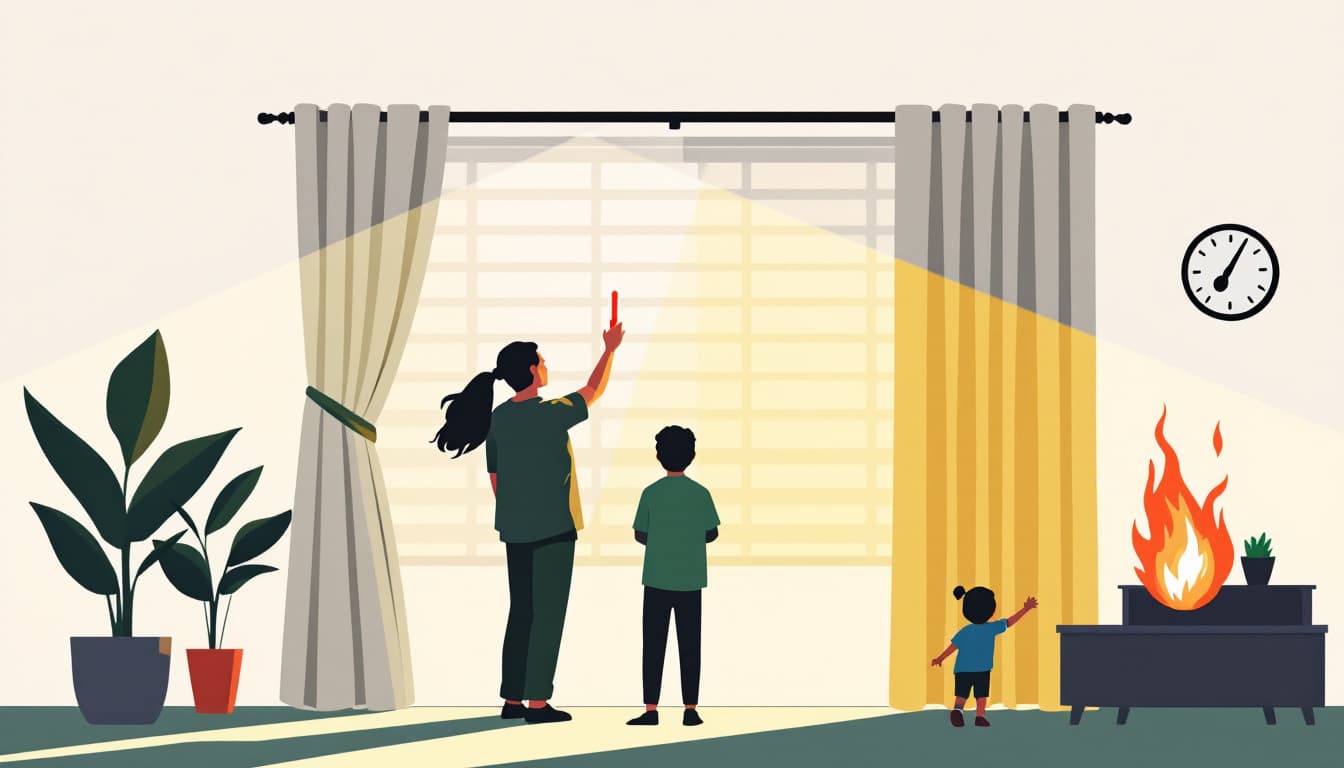
Block heat before it enters, not after. External window coverings — exterior shutters, reflective film, even hanging moving blankets outside south- and west-facing windows — are dramatically more effective than interior curtains. Interior curtains slow radiant heat by roughly 7 percent. Exterior blocking can reduce solar gain through glass by more than 70 percent, according to Department of Energy building data. Renters can use suction-cup hooks and hang exterior fabric without damaging walls.
Charge everything and locate your battery station. If you own a portable power station, plug it in now. If you don't, make sure phones, battery banks, and any medical devices are at full charge before Monday's peak. The four-to-nine-p.m. window is when grid strain is highest; that's exactly when you want to avoid drawing from it and when an outage is most plausible.
The bigger picture
Heat events in California are not getting less frequent. That's not catastrophism — it's what the state's own climate tracking shows in the trend lines. The practical response is not a bunker or a generator the size of a car. It's knowing your house's thermal behavior, knowing where your neighbors are if they're elderly or isolated, and having a one-page plan for what you do if the power goes out on day two of an advisory.
Durability isn't dramatic. It's just paying attention one day earlier than most people do.