A KTLA report this week put Southern California highs on a trajectory toward 110°F, with an extreme heat warning covering large portions of the region. The San Fernando Valley, Inland Empire, and low desert communities are bearing the worst of it. That number — 110°F — is not a record for these areas, but it arrives at a moment when the grid is already running near capacity and many households haven't thought through what happens if their AC fails, their power goes out, or their most vulnerable family member can't regulate heat the way younger adults can.
This is not an abstract climate story. It's a logistics problem that plays out in the next 72 hours.
What's actually at stake
The immediate risk is not the temperature itself — it's the combination of temperature, duration, and cooling access. Overnight lows are the number that matter most during a heat event. When overnight temps stay above 80°F in inland valleys, the body cannot recover, and heat illness accumulates across days, not just hours. Check the overnight forecast for your specific ZIP code, not just the daytime headline number.
California's grid operator, CAISO, has historically issued Flex Alerts during major heat events, asking households to reduce consumption between roughly 4 and 9 p.m. That window is when solar generation drops off and residential AC load peaks. A Flex Alert doesn't mean blackouts are imminent, but it does mean the margin is thin. Rotating outages — when they happen — typically last one to two hours per zone, not eight. Plan for that scenario first before planning for multi-day grid failure.
Air conditioning units also fail under sustained high-load conditions. Capacitors and compressors are most vulnerable when a unit runs continuously for days. If your system is more than 12 years old or has shown signs of reduced cooling this summer, that's worth knowing now.
What we'd actually do
Identify your household's most heat-vulnerable person and build the plan around them. Adults over 65, infants, anyone on diuretics, beta-blockers, or antipsychotics, and people with cardiovascular or kidney conditions are at elevated physiological risk. The rest of the household can tolerate more. If that person is you or someone in your home, the plan needs a fallback location — a friend's house, a library, a mall — before the AC fails, not after.
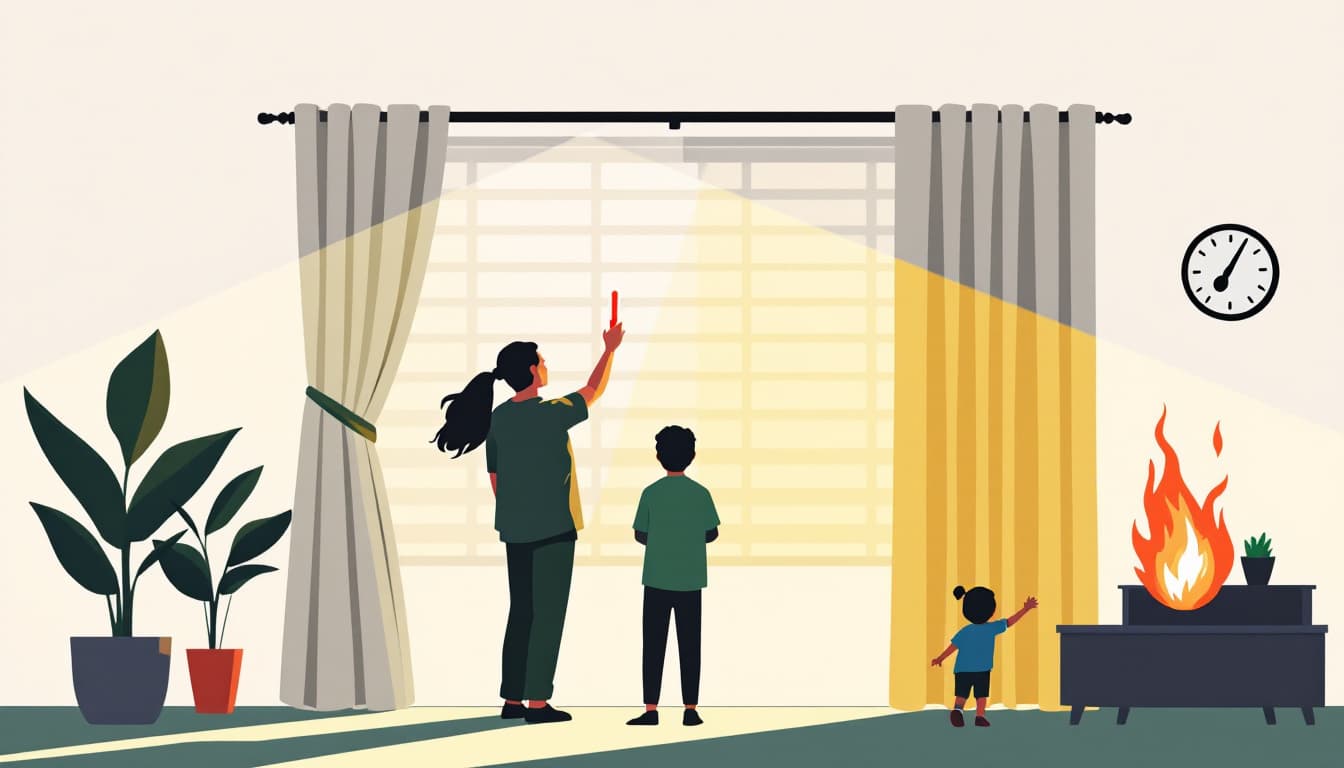
Pre-cool your home before the peak window. Drop your thermostat to 76–78°F between 6 and 10 a.m., when grid load is lower and your system isn't fighting 105°F ambient temps. Then raise the setpoint to 80°F during the late-afternoon Flex Alert window. Thermal mass — the temperature stored in walls, floors, and furniture — carries you through the peak better than running the system flat-out against the hottest hours. Close all blinds on south- and west-facing windows before 10 a.m.
Fill your car's gas tank and identify your nearest cooling center today. California counties are required to open cooling centers during extreme heat events. Los Angeles County's network includes libraries, community centers, and some senior facilities. Find the nearest one at the county OES website or by calling 211 — do this now, not when the power goes out and your phone is at 12%. A full gas tank matters because gas pumps run on electricity.
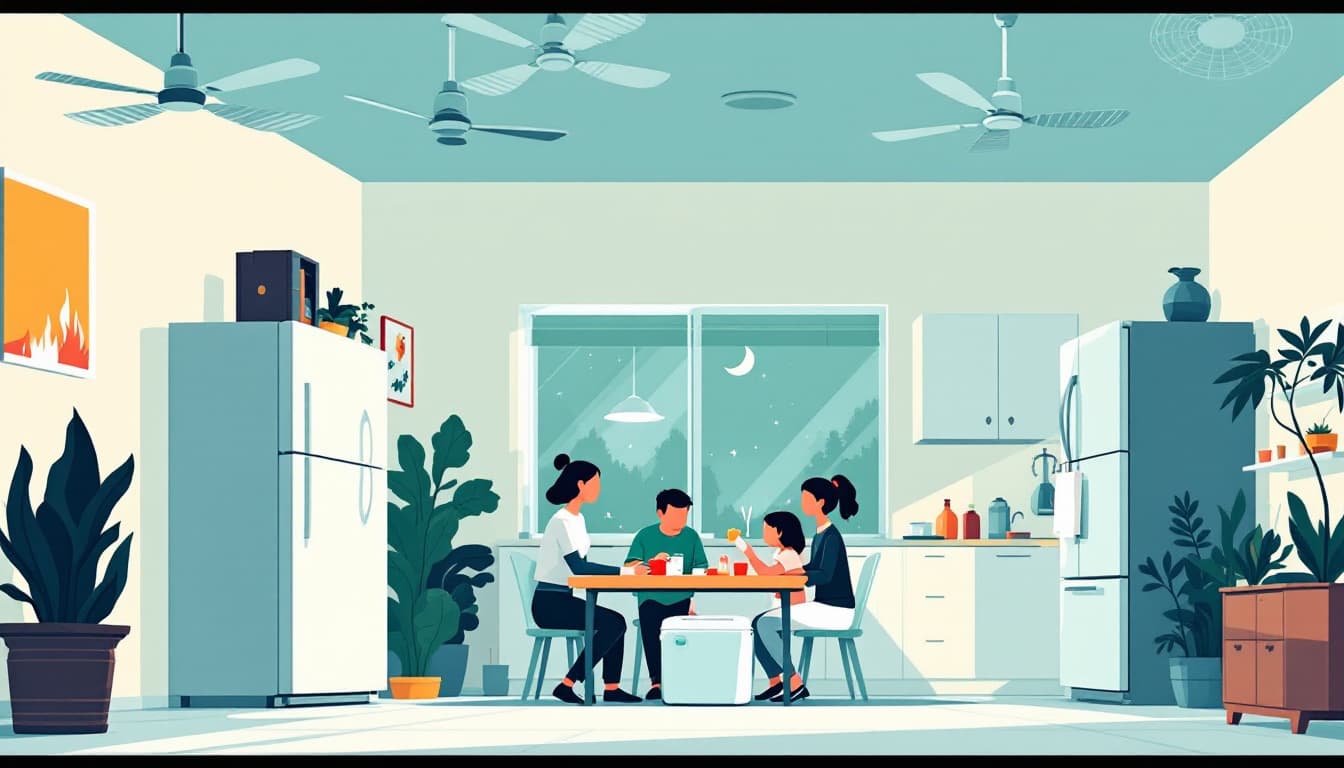
Put two gallons of water per person in the refrigerator overnight. Cold water is the fastest intervention for early heat illness. Pre-chilling it costs nothing. If you lose power, a full refrigerator holds temperature for roughly four hours — longer if you don't open it. Freeze a few water bottles as well; they double as ice packs.
Check your AC filter and outdoor condenser unit today. A clogged filter forces the blower motor to work harder and reduces airflow across the evaporator coil — exactly when you need capacity most. Filters are a $10–20 fix. While you're outside, make sure the condenser unit isn't packed with debris or blocked by overgrown shrubs. A condenser that can't exhaust heat runs hotter and fails sooner.
The bigger picture
Southern California has always had brutal summers. What's changed is the duration and night-time floor of these events, and the household population that's now aging into higher physiological risk. The answer isn't a bunker or a generator the size of a small car. It's understanding the specific failure modes — AC breakdown, grid stress, overnight heat accumulation, vulnerable people in the home — and closing those gaps one by one, before the temperature peaks.
Durability through a heat event looks like: a pre-cooled house, a backup location identified, water staged, and a plan for the person in your household who can least afford to wing it.