A Modern Healthcare News tracker published this week is logging hospital layoffs and facility closures across the country. The lead item is a Rhode Island hospital cutting staff. Rhode Island is not Louisiana. But the underlying pressure — thin operating margins, Medicare reimbursement gaps, post-pandemic staffing costs — is identical in every state, and Louisiana hospitals have been operating close to that edge for years.
What's actually changing
Rural hospital finances nationally have been under documented strain since at least 2020. Louisiana is not an outlier; it is a case study. The state has a high proportion of rural, critical-access hospitals serving parishes where the nearest alternative ER is 40 to 60 miles away. When one of those facilities cuts its emergency department hours, reduces its stroke or cardiac unit, or closes entirely, the gap does not fill itself.
This isn't hypothetical. Louisiana has seen hospital consolidations and service reductions in communities along the I-49 corridor and in the Florida Parishes. The pattern in states that have already lost rural hospitals — and there is a documented national pattern here — is that the closures tend to cluster. One facility's closure shifts uncompensated care burden to the next nearest hospital, stressing its margins in turn.
What the Modern Healthcare News tracker signals is that the pressure is broad and current. A Rhode Island closure is a data point. The trend behind it is the part Louisiana households should be paying attention to.
There's a second layer specific to the Gulf Coast: hurricane and flood events create exactly the kind of sudden, concentrated demand that strains an already-thin hospital system. A facility running lean on staff and beds in May looks very different by late August when a named storm moves through the basin.
What we'd actually do
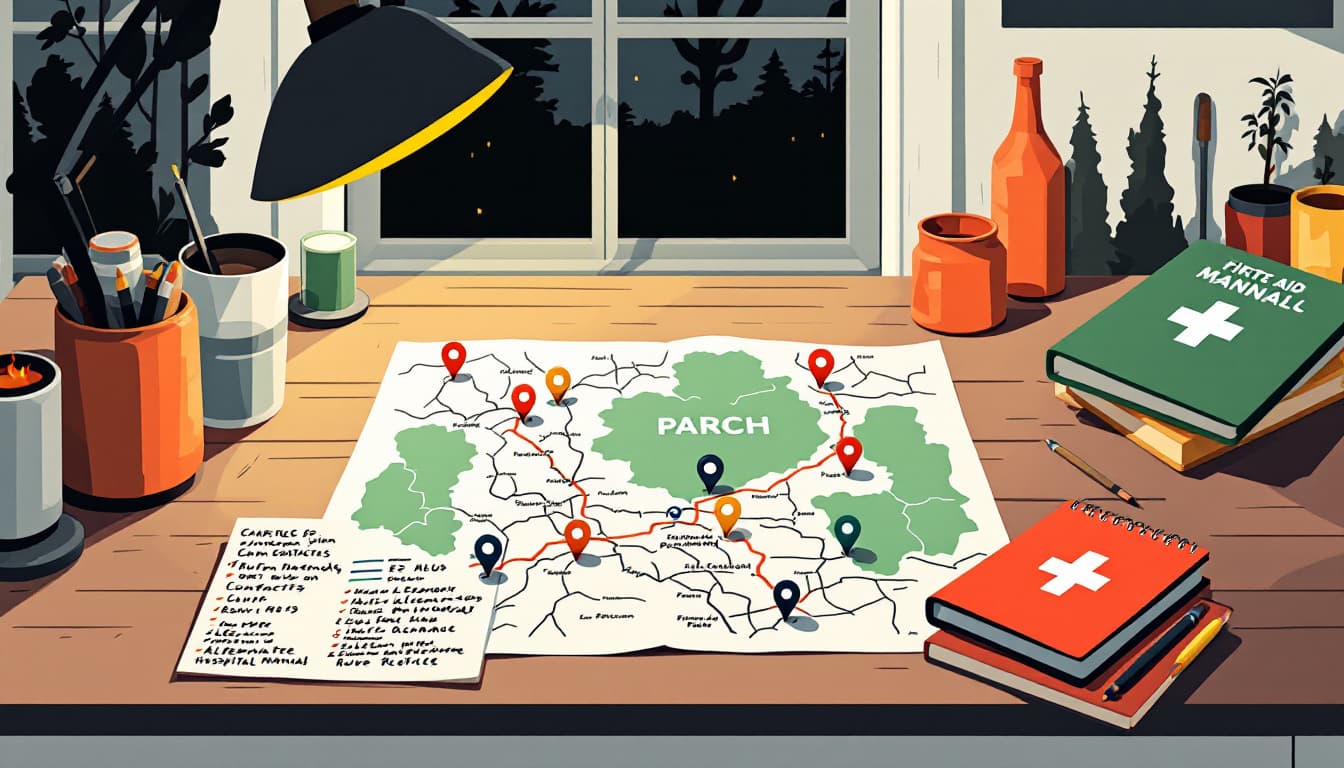
Find out right now which hospital is your household's primary ER, and which one is your backup. Drive the route to your backup at least once. During a regional emergency — a flood, a chemical release along the River Road corridor, a major storm — your primary facility may divert patients or lose power. Knowing your backup route before you need it is free and takes 30 minutes.
Most Louisiana households can name their nearest hospital but have never looked at what it actually offers. Check the hospital's website or call and ask whether it has a 24-hour emergency department, a cardiac catheterization lab, and a trauma designation. A critical-access hospital in a rural parish may be excellent for stabilization but will transfer you for a heart attack or severe trauma. Knowing that in advance changes your response during an emergency — you may be better off driving past it directly to the higher-level facility if time and condition allow, rather than stopping for a stabilizing transfer that adds an hour.
Build a household medical kit that extends your self-reliance window to 72 hours minimum. This is not about playing doctor. It is about managing a wound, a diabetic low, a minor burn, or an allergic reaction long enough to get to care — or long enough for conditions to clear after a storm when roads are impassable. A well-stocked kit includes a tourniquet (and someone in the household who has been shown how to use it), wound closure strips, a blood pressure cuff if anyone in the home has hypertension, a blood glucose meter if there's a diabetic, and a two-week supply of any critical prescription medications. That last item is the most neglected. Pharmacies close during storms. Insurance plans often allow a 90-day supply fill — call and ask.
If you or someone in your household has a chronic condition, establish care with a telehealth provider before you need it. Telehealth platforms can handle a significant portion of follow-up care, medication management, and urgent (not emergency) needs. Having a provider you've already seen once means a faster, better interaction when you're trying to manage a flare-up and your local clinic is closed.
Know the Louisiana Poison Control number and the LSU Health system's nurse advice line by heart. Not in your phone's notes — actually memorized, or written on paper taped inside a cabinet. Phones lose charge. Paper doesn't.
The bigger picture
A hospital closure in Rhode Island is a signal, not a sentence. Louisiana households don't need to panic about their nearest ER closing tomorrow. They do need to stop assuming that facility will always be there, always be staffed, and always be reachable under every condition this state's weather and industrial corridor can produce.
Durable households are the ones that have thought through their medical dependencies the same way they think through food and water. The goal isn't to never need a hospital. It's to know what you'll do when the system around you is under stress — which, in Louisiana, is a reasonable expectation every single hurricane season.