Farmers across Louisiana are receiving federal drought-assistance support, according to a report this week from Farms.com covering USDA relief programs directed at the state. The help is real and necessary. It's also a signal that conditions on the ground are serious enough to have triggered a federal response — and that the effects will eventually reach grocery aisles and farmers market tables across the state.
Louisiana's agricultural footprint is more relevant to local households than most residents realize. The state produces significant volumes of sweet potatoes, sugarcane, soybeans, and rice, along with crawfish and other seafood that depend on healthy freshwater systems. When prolonged dry conditions stress those supply chains, the effects don't stay on the farm.
What's actually happening
Drought in Louisiana tends to concentrate in specific regions — the northern parishes have historically been more vulnerable to dry summers than the coastal zone — but the implications spread statewide through distribution networks, feed costs, and processing capacity. When farmers are forced to reduce planted acreage, leave crops unharvested, or absorb higher input costs, those numbers eventually translate into thinner selection and higher prices at the retail level.
USDA drought-relief programs exist to stabilize farm operations, not household pantries. The assistance helps prevent farm failures, which matters. But it doesn't buffer the lag time between a stressed growing season and what you see at the store in late summer and fall. That buffer is your job to build.
This is also worth naming clearly: Louisiana's combination of heat, humidity, and occasional drought creates a particular challenge for household food storage. What works for a household in Colorado — a cool, dry basement, easy rotation of bulk dry goods — requires active adaptation here.
What we'd actually do
Check your pantry baseline before prices rise. Walk through your kitchen this week and identify staple foods you use regularly that are likely to get more expensive if Louisiana's produce season underperforms. Rice, sweet potatoes, and dried beans are the obvious candidates. Buying one or two extra bags now, at current prices, is not panic-buying — it's basic cost management.
A modest increase in shelf-stable staples bought today, before any price movement, is the lowest-friction form of household resilience. The goal isn't a bunker; it's a two-to-four-week buffer that removes your household from the spot market during the period when supply is tightest and prices are highest.
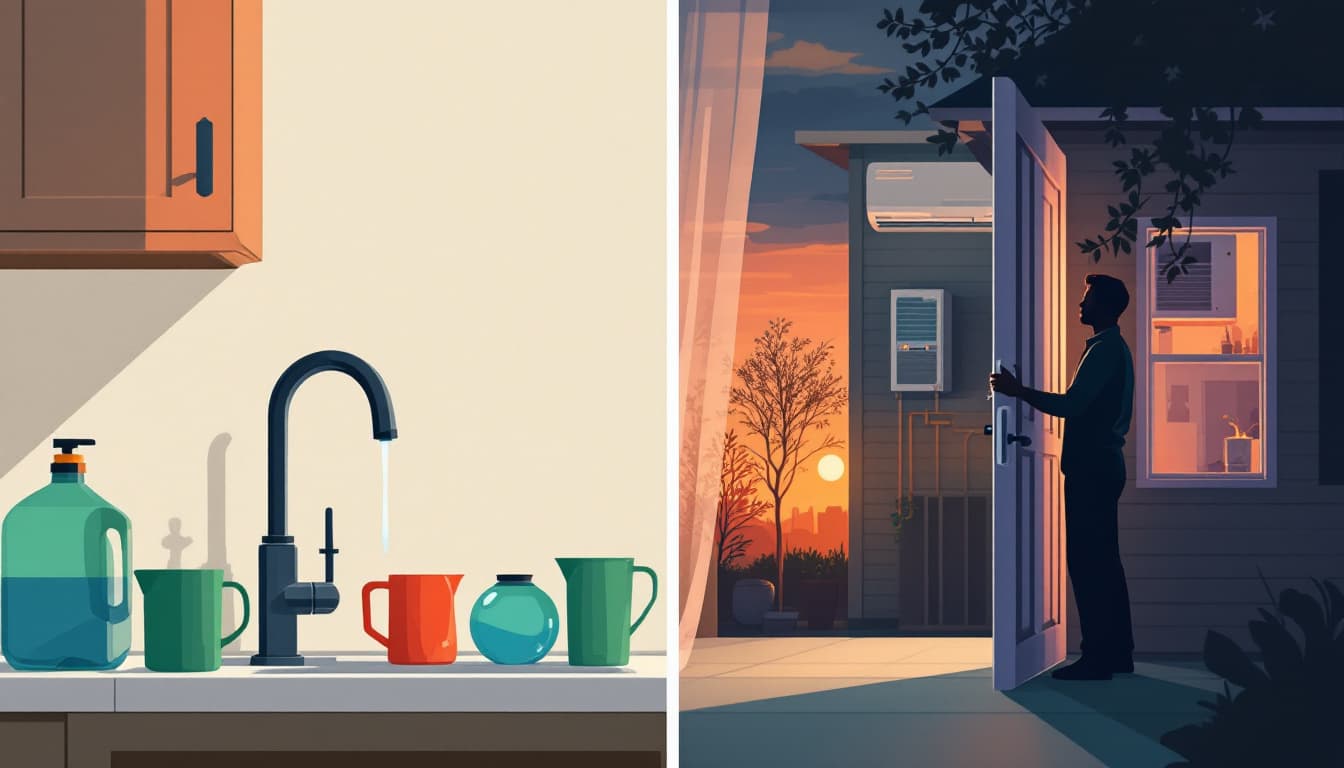
Get serious about water storage, even if just a small amount. Louisiana isn't in danger of running out of municipal water — but drought conditions stress municipal systems in ways that show up as pressure drops, boil advisories, or temporary service interruptions, particularly in smaller parishes and rural areas. The Louisiana Department of Health maintains a public advisory page for water systems; it's worth bookmarking. A case of water and two or three filled one-gallon jugs is a 48-hour cushion that costs almost nothing.
Find one local food source and actually use it this summer. Louisiana has a functioning network of farmers markets, CSA operations, and roadside stands, particularly in the Acadiana region, the River Parishes, and around the Northshore. Producers who sell direct are often more price-stable and more resilient to supply-chain disruptions than produce that travels through a national distributor. The LSU AgCenter maintains parish-level extension contacts who can point you toward local sources.
Reconsider how you store food given the climate. If you're stocking up on bulk dry goods — rice, flour, dried beans — and you're storing them in a garage or non-climate-controlled space in Louisiana, you're fighting the humidity. Sealed Mylar bags or food-grade buckets with gamma-seal lids make a real difference. This isn't optional gear in a state where summer humidity routinely sits above 80 percent.
The bigger picture
Federal assistance for drought-stressed farmers is a stabilizing mechanism, not a fix. It keeps operations viable through bad seasons, which matters enormously for long-term food system health. But the gap between a stressed growing season and a well-stocked household pantry is one that public programs were never designed to close.
Louisiana families who treat a regional drought signal as an abstract farm problem — something for USDA and the agriculture pages to sort out — will be the ones standing in front of thin produce sections in September wondering what happened. The households who respond with small, deliberate actions in June won't avoid the drought. They'll just be in a better position when it shows up at the checkout line.
Durability doesn't require a dramatic response to every signal. It requires responding at all.