On a July afternoon in the New Orleans metro, the heat index regularly climbs past 110°F. That's not a projection — it's a recurring condition in southeast Louisiana every summer. A report this week from WWLTV.com documented physicians actively warning residents about the health risks as another dangerous heat event gripped the region. The doctors aren't being dramatic. Heat is the leading weather-related cause of death in the United States, and Louisiana sits near the top of national exposure rankings every single year.
The question worth asking at home is not "is this serious?" but "which part of our household plan has gaps?"
What's actually changing
The medical warnings in this week's coverage aren't new science — they're new urgency applied to a familiar pattern. What makes Louisiana's summers particularly punishing is the combination: temperatures in the low-to-mid 90s interact with humidity levels that strip the body's ability to cool through sweat. A "feels like" reading in the Gulf Coast corridor can be 15 to 20 degrees above the thermometer reading. That gap is where people get into trouble.
Three groups face the sharpest risk in Louisiana households: adults over 65, children under four, and anyone on diuretics, beta-blockers, or antipsychotic medications — all of which interfere with the body's ability to regulate temperature. If anyone in your home falls into those categories, your heat plan needs to be specific to them, not generic.
Power outages compound all of this. Southeast Louisiana's grid faces additional stress during sustained heat events, and losing AC for six or more hours puts vulnerable household members on a clinical clock, not just a comfort clock. The Louisiana Governor's Office of Homeland Security and Emergency Preparedness (GOHSEP) maintains a list of parish-level cooling centers that activates during declared heat emergencies — most households have never looked it up.
What we'd actually do
Locate your nearest cooling center now, before you need it. GOHSEP and your parish emergency management office publish cooling center locations during heat emergencies. Find the list, write down the address and hours, and confirm whether it accepts pets. Doing this at 8 PM on a calm evening takes five minutes. Doing it at 2 PM during a power outage with a 95°F house is a different experience.
Build a 72-hour indoor heat plan that accounts for no electricity. This is the gap most Louisiana households have. A generator covers AC, but if you don't have one, map out where your household would go if power went out for more than four hours on a day above 95°F. That might be a family member's house, a library, a casino, or a church — somewhere with certainty of working AC. Write it down. Tell the relevant people.
Review any medications in the home against heat-risk drug interactions. A pharmacist can do this in under three minutes. Diuretics ("water pills"), blood pressure medications, and several common psychiatric medications all raise heat risk. This isn't about stopping medications — it's about knowing who needs extra monitoring on extreme heat days and what warning signs to watch for.
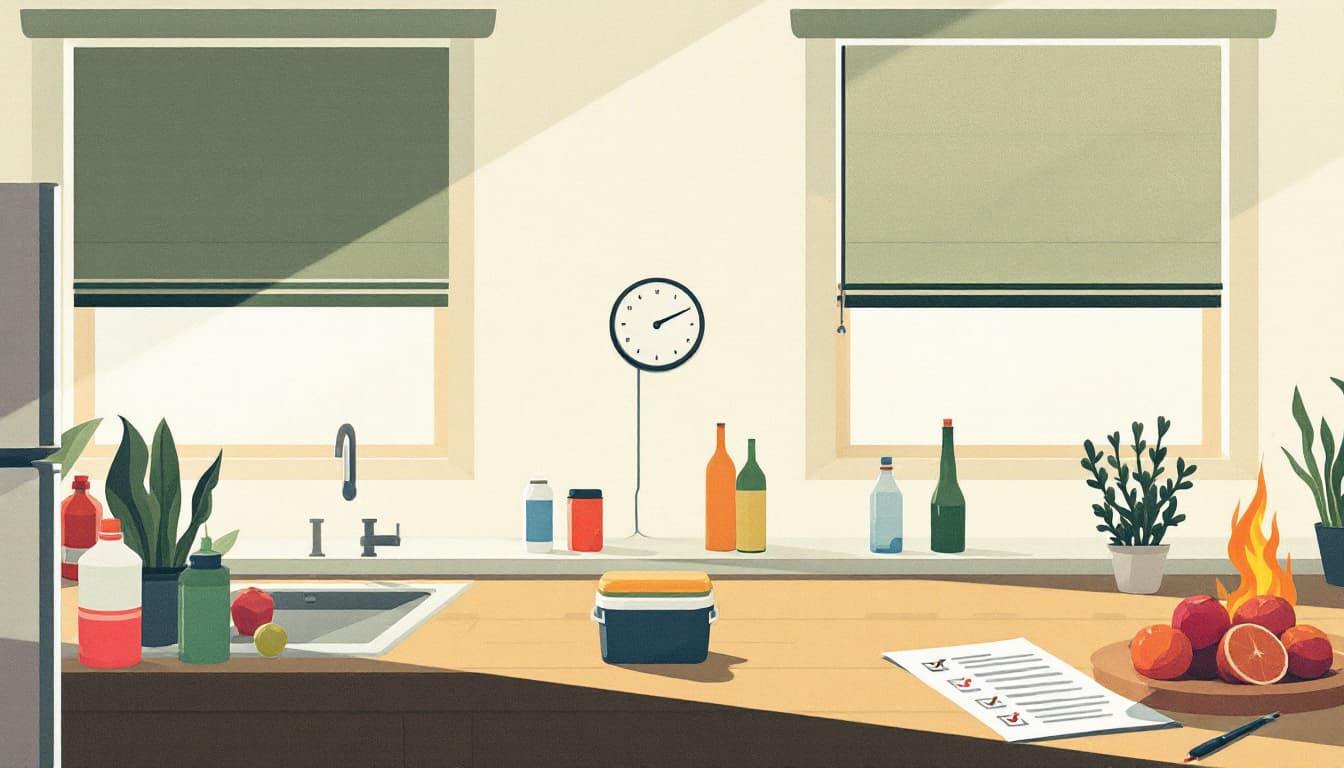
Pre-stage your hydration supplies and a manual thermometer. A case of water stored somewhere accessible — not in an outdoor shed at 120°F — plus oral rehydration packets (the kind used for travel illness) and a thermometer that works without batteries. Heat illness progresses in stages: cramps, then exhaustion, then stroke. A thermometer helps you make clinical decisions, not guesses.
Check on one neighbor who lives alone. Parish emergency management officials have said repeatedly that neighbor-to-neighbor contact during heat events saves lives in ways no alert system replicates. You don't need a program or a sign-up sheet. You need to know which house on your block has an elderly resident living solo, and to knock on the door during extreme heat days.
The bigger picture
Southeast Louisiana households are not poorly prepared because they're careless. They're under-prepared for heat specifically because AC has worked well enough, most of the time, that the gap only shows up during outages or medical emergencies — which is the worst possible time to notice it. The goal here isn't to stockpile or panic. It's to spend 30 minutes this weekend closing three or four specific gaps so that the next heat event is boring instead of dangerous.
Durability is the standard, not survival. Hot summers in Louisiana are not going away, and households that treat them as a known, manageable variable rather than a crisis-in-waiting will handle them better across every dimension.