On a typical summer afternoon, a household's exposure to heat is mostly a comfort problem. When a heat wave and an active fire season arrive together, it becomes a resource problem — and the resources that fail first are the ones most families have never thought to audit.
A report this week from chinadailyasia.com describes the current U.S. heat wave as aggravating an already active fire emergency, with health and property threats expanding across multiple regions simultaneously. That pairing matters more than either hazard alone.
What's actually changing
Heat and fire interact in ways that compress the time families have to respond.
High temperatures push electricity demand toward grid limits. Fire events force utility companies to preemptively cut power in fire-risk corridors — a practice that has become standard operating procedure in California and is spreading to other states. Those two pressures can collide: the same afternoon that a family needs air conditioning most, the grid is most likely to either fail or be deliberately de-energized.
Smoke from fires degrades outdoor air quality well beyond the fire perimeter. Recent air quality data from NOAA's monitoring networks has repeatedly shown that smoke from western fires reaches the Midwest and East Coast within days, dropping air quality into ranges that affect people with asthma, heart disease, or compromised immune systems. A family in Ohio can be materially affected by a fire burning in New Mexico.
Heat itself is a health emergency before it becomes a comfort nuisance. The CDC reports that heat is the leading weather-related cause of death in the U.S., outpacing floods, hurricanes, and tornadoes combined. The threshold where healthy adults face serious risk is lower than most people assume, and children, elderly relatives, and anyone on diuretics or antihistamines hit that threshold faster.
Insurance and property are a separate pressure. Insurers have been pulling back from high-fire-risk markets — recent reporting from multiple outlets has documented non-renewals in California, Colorado, and Florida at scale. Families in affected zones who have not re-read their current policy in the past 12 months may be operating with false assumptions about what is covered.
What we'd actually do
Check your home's "smoke envelope" this week, not when you smell smoke. Download the EPA's AirNow app or bookmark airnow.gov. Set up alerts for your zip code. Know what AQI level triggers a "windows closed, recirculated air only" policy in your home. That threshold for sensitive family members is typically AQI 100; for everyone, it's 150. Having the rule decided before conditions deteriorate removes the in-the-moment guesswork.
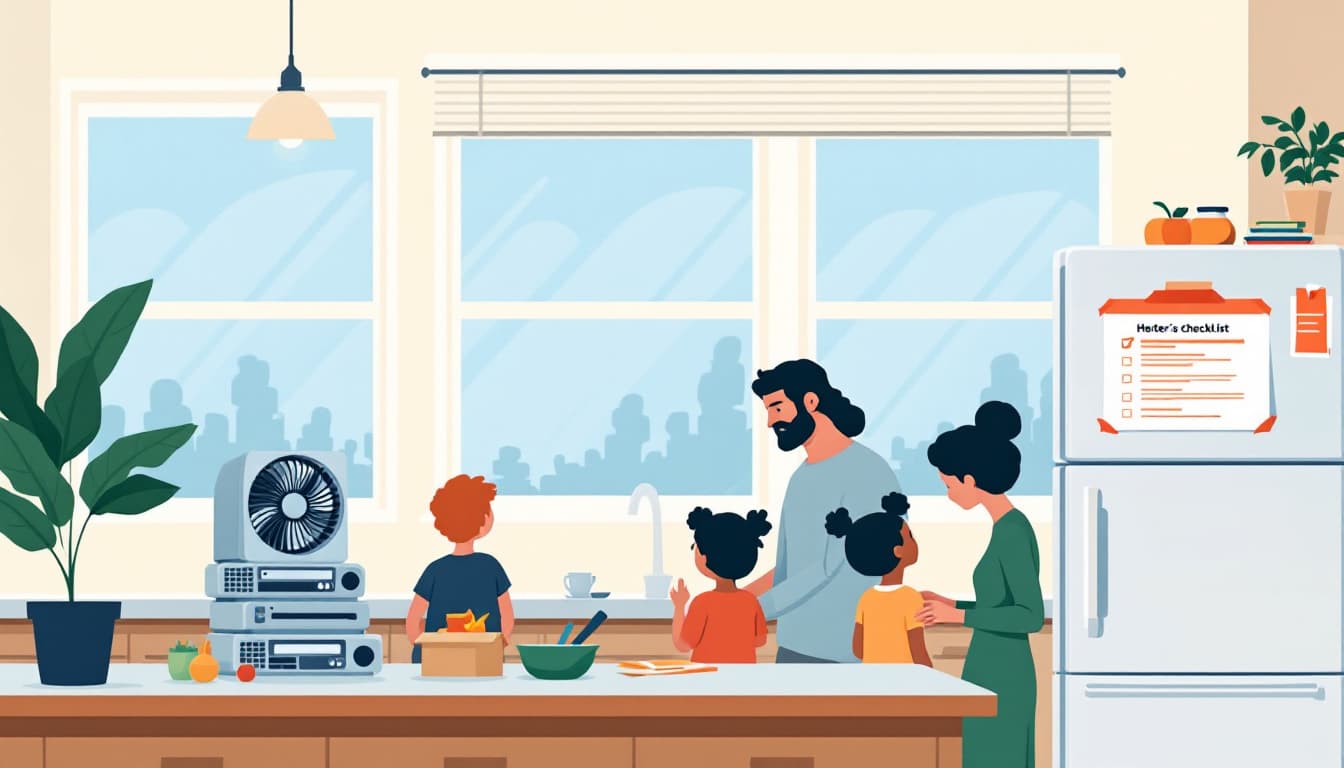
Locate and test your coolest room now. In a power outage during a heat event, your house will heat unevenly. The lowest floor, the room with the least window exposure, and a room adjacent to an interior wall all lose heat more slowly. Identify it now. Keep two battery-powered fans there. A battery fan plus a bowl of ice and water extends survivable conditions meaningfully — not indefinitely, but long enough to matter.
Pull out your insurance declarations page and read the fire and smoke exclusions. Smoke damage from a nearby fire is not universally covered. "Fire" coverage and "smoke damage" coverage are not the same line item in every policy. If you're in a state where your insurer has recently changed terms, call your agent and ask a direct question: if a fire burns within five miles and damages my roof or interior air quality, what exactly is covered? Get the answer in writing via email.
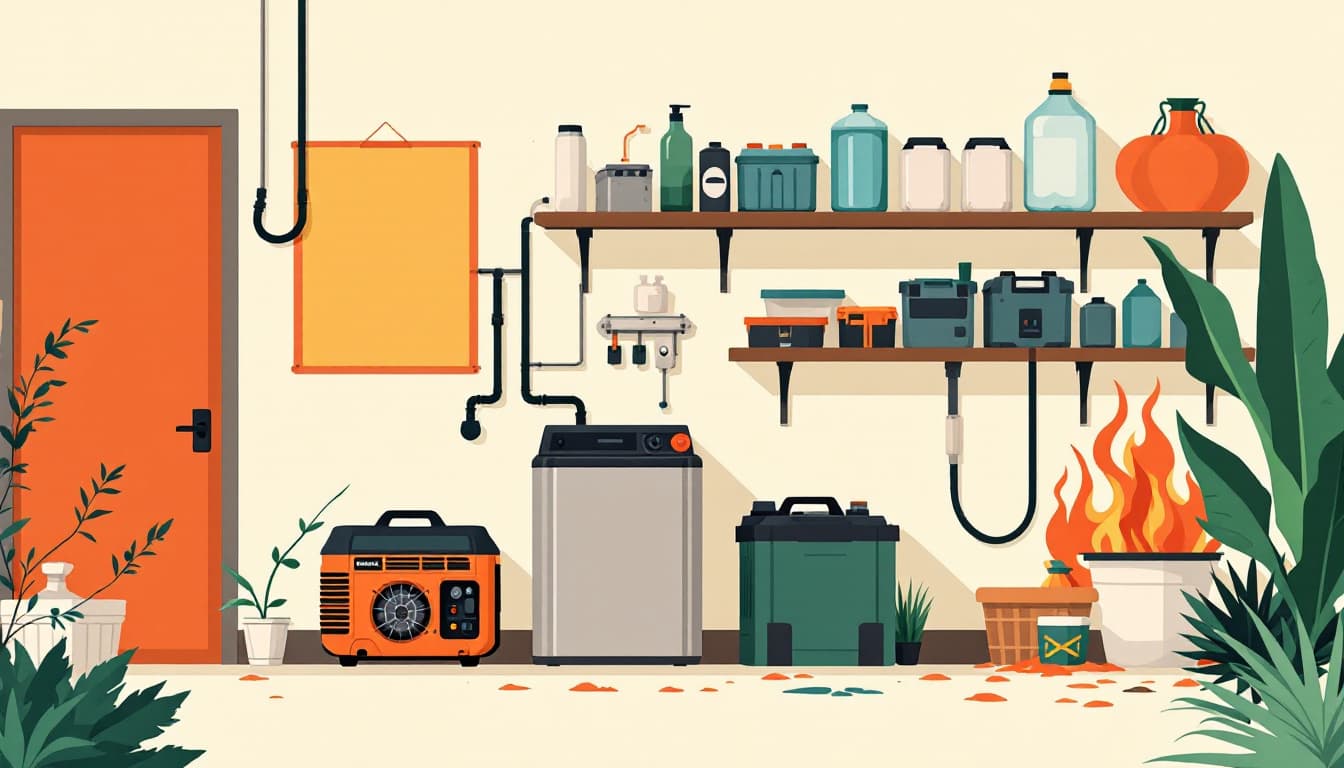
Build a 72-hour go-bag that assumes no power and degraded air. The standard emergency kit advice tends to assume you'll have electricity at a shelter. In a combined heat-fire event, public cooling centers can close if they lose power or if outdoor air quality makes transit dangerous. Your bag should include N95 masks (not cloth masks — N95 filters particulate at the sizes wildfire smoke produces), a battery or hand-crank radio, cash in small bills, printed copies of insurance documents, and a written list of any prescription medications with dosages.
Establish a heat check-in chain for vulnerable relatives. Identify every person in your circle who is over 70, under 2, or on daily medications that affect heat tolerance. Assign someone to contact each of them before noon on any day where the forecast exceeds 95°F. This is a social infrastructure decision, not a gear decision. It costs nothing and has saved lives.
The bigger pattern
The compounding of heat and fire into a single seasonal threat is not a 2026 anomaly. Both federal emergency management data and utility grid planning documents have been treating this overlap as a planning baseline for several years. The news cycle will move on from this heat wave. The structural conditions that made it dangerous will not.
Preparedness that holds up is not about buying things in a panic window. It is about auditing the systems your family depends on before those systems are under load. The families who navigate this season well will mostly be the ones who did boring, specific work in June.