FOX13 Memphis reported this week that America's 250th birthday arrived in the Mid-South wrapped in high heat and humidity — the kind of conditions that push heat indices well above 100°F and turn a backyard fireworks watch into a genuine medical event. That combination, heat plus crowds plus a holiday that keeps people outside past dark, is exactly when heat-related emergencies spike in Tennessee emergency rooms.
This is not a freak event. The Tennessee Valley and the Memphis metro sit in one of the most thermally punishing corridors in the country during July. The TVA grid — which powers most of Tennessee — regularly issues conservation appeals during afternoon demand peaks in heat waves. When demand spikes and generating capacity tightens, rolling interruptions become possible even if they're not announced in advance.
What's actually happening here
The risk isn't just discomfort. It's the compounding of three simultaneous stressors: physiological heat stress on people, mechanical heat stress on HVAC equipment, and electrical demand stress on the grid.
Older homes in Memphis, Nashville's urban core, and rural West Tennessee often run aging central air units that were sized for the house as it was originally built — not for modern appliance loads and not for multi-day heat events. When those units run continuously for 48-plus hours, capacitors and compressors fail at elevated rates. HVAC service call backlogs during a regional heat wave routinely stretch to five or more days in urban Tennessee markets.
At the same time, Tennessee's humidity makes wet-bulb temperatures dangerous faster than dry heat does. A heat index of 105°F in Memphis is physiologically harder on the body than 105°F of dry heat in a desert climate, because sweat stops cooling you efficiently. That matters most for households with elderly members, infants, or anyone on diuretics, beta-blockers, or antipsychotics — all of which impair thermoregulation.
What we'd actually do
Map your household's real cooling vulnerabilities this week, not next month. Walk through your home and identify which rooms lose cool air fastest, which windows get direct afternoon sun, and whether your central unit's air filter was last changed within 90 days. A clogged filter alone can reduce cooling efficiency enough to matter in a sustained heat event. Replace it now; a standard filter is under $15 at any Tennessee hardware store.
Identify your nearest county cooling center before you need it. Every Tennessee county is required to open designated cooling centers when the National Weather Service issues an Excessive Heat Warning. Shelby County, Davidson County, and Knox County all publish those locations online. Find yours, save the address in your phone, and share it with any elderly neighbor or family member who lives alone. The barrier isn't usually knowledge of the centers — it's transportation. Think through that now.
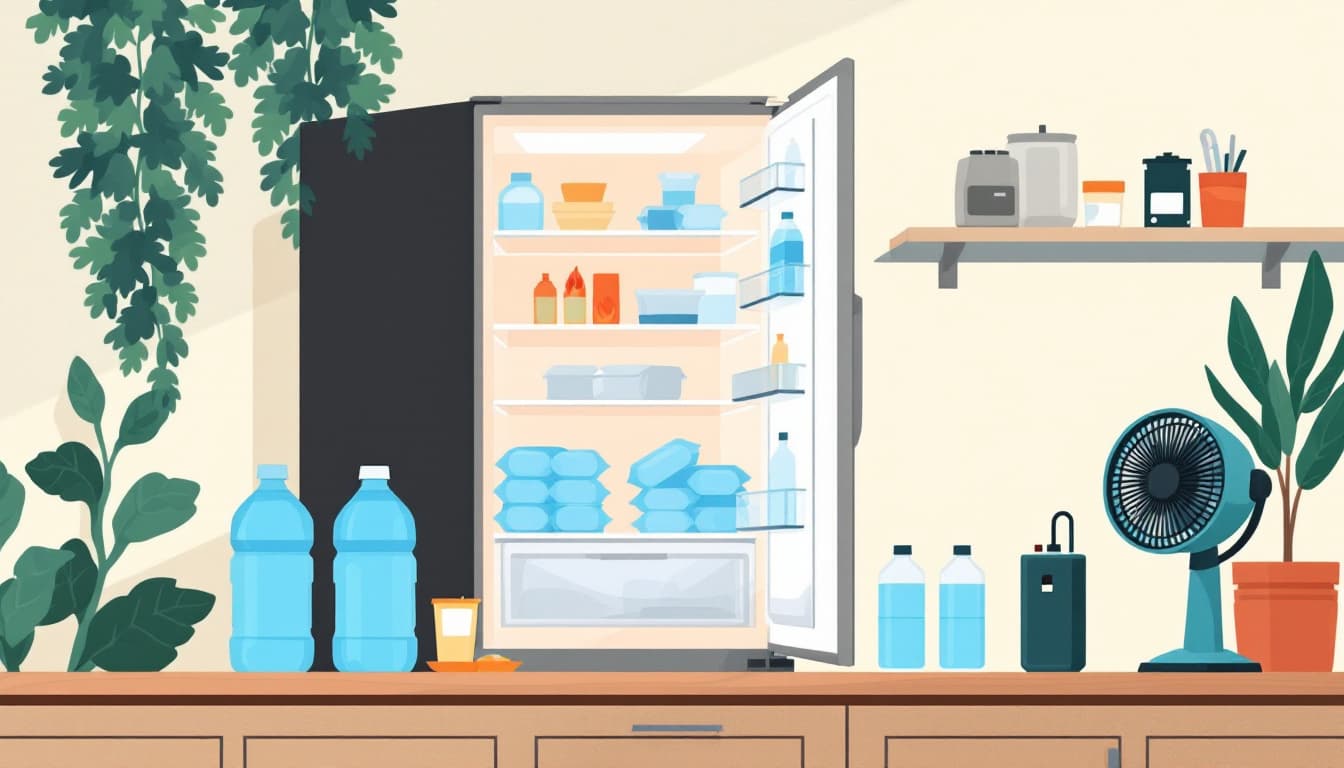
Stage a 72-hour power outage kit that accounts for heat specifically. A standard emergency kit assumes the threat is cold or dark. In Tennessee summer, the threat is heat. That means: a battery-powered or USB fan, electrolyte packets (not just water — you lose sodium), a list of which of your medications require refrigeration and the name of the nearest 24-hour pharmacy with a generator, and a pre-agreed plan for where your household goes if the power is out for more than four hours. A friend's house, a hotel, a relative's place — have the number written down, not just in a phone that might be dead.
Check your car's cooling system before the next heat advisory. More heat-related medical emergencies in Tennessee happen in or near vehicles than most people expect — not just children left in cars, but adults whose car AC fails during a commute in stop-and-go traffic on I-40 or I-240 in July. A car AC recharge kit runs about $30 at AutoZone. If your system hasn't been serviced in two years, schedule it now while shops still have availability.
Know the heat illness progression and have one intervention ready. Heat cramps lead to heat exhaustion lead to heat stroke. Heat stroke — confusion, cessation of sweating, skin that's hot and dry — is a 911 call. Heat exhaustion — heavy sweating, weakness, nausea — can often be managed at home with cool water immersion and electrolytes if caught early. Know the difference. A cold wet towel on the back of the neck and wrists is not adequate for heat stroke. Get to air conditioning or call for help.
Tennessee summers are not a surprise. They arrive every year, they get more intense in multi-day stretches, and the infrastructure serving the state was not built for unlimited demand. The goal isn't to fear the heat — it's to stay functional through it. A household that has thought through its cooling plan once, mapped its cooling centers, and checked its equipment is far more durable than one that improvises when the forecast hits 105°F and the HVAC service lines are full.
Durability is the point. Not stockpiles. Not panic. Just a little thinking done early.