The Pensacola News Journal reported this week that an extreme heat warning is in effect for the Florida Panhandle, with heat index values reaching 113°F. That number is not an air temperature — it's what the air feels like to the human body when humidity is factored in. The distinction matters, because most households calibrate their summer plans around the thermometer reading, not the physiological load.
At 113°F heat index, the body's ability to shed heat through sweat begins to fail. Cognitive function degrades before most people notice it's happening. Older adults, children under five, and anyone on diuretics, antihistamines, or certain blood pressure medications reach dangerous core temperatures faster than baseline. The warning-level threshold is not "uncomfortable" — it's the range where healthy adults working outdoors without shade can develop heat stroke within an hour.
What's actually changing
Heat warnings in the Gulf Coast region are not new. What has shifted over the past decade, according to NOAA's historical heat data, is the frequency of multi-day heat index events above 105°F and the overnight lows that accompany them. When nighttime temperatures stay above 80°F, residential buildings that rely on air conditioning don't get the overnight thermal reset that lets the structure cool down. By day three of a heat event, an un-air-conditioned room in a wood-frame house can hold indoor temps above 90°F even with windows open at night.
That last point is the one most coverage skips. People think about staying cool during the day. The more dangerous window — statistically, and by what the CDC's heat mortality data shows — is sleeping in a hot building for multiple consecutive nights. Cumulative heat stress builds. Sleep deprivation compounds it.
Grid reliability is the second piece. Extreme heat events drive peak electricity demand at exactly the moment aging distribution infrastructure is under maximum thermal stress. Outages are not guaranteed, but a family whose only cooling plan is central air conditioning has a single point of failure.
What we'd actually do
Audit the household for your most heat-vulnerable person, not your average member. Identify whoever in your home faces the highest risk — elderly parent, infant, person on prescription medication — and plan around their threshold, not the adults who "run warm anyway." Call their doctor or pharmacist this week and ask directly whether their current medications affect heat tolerance.
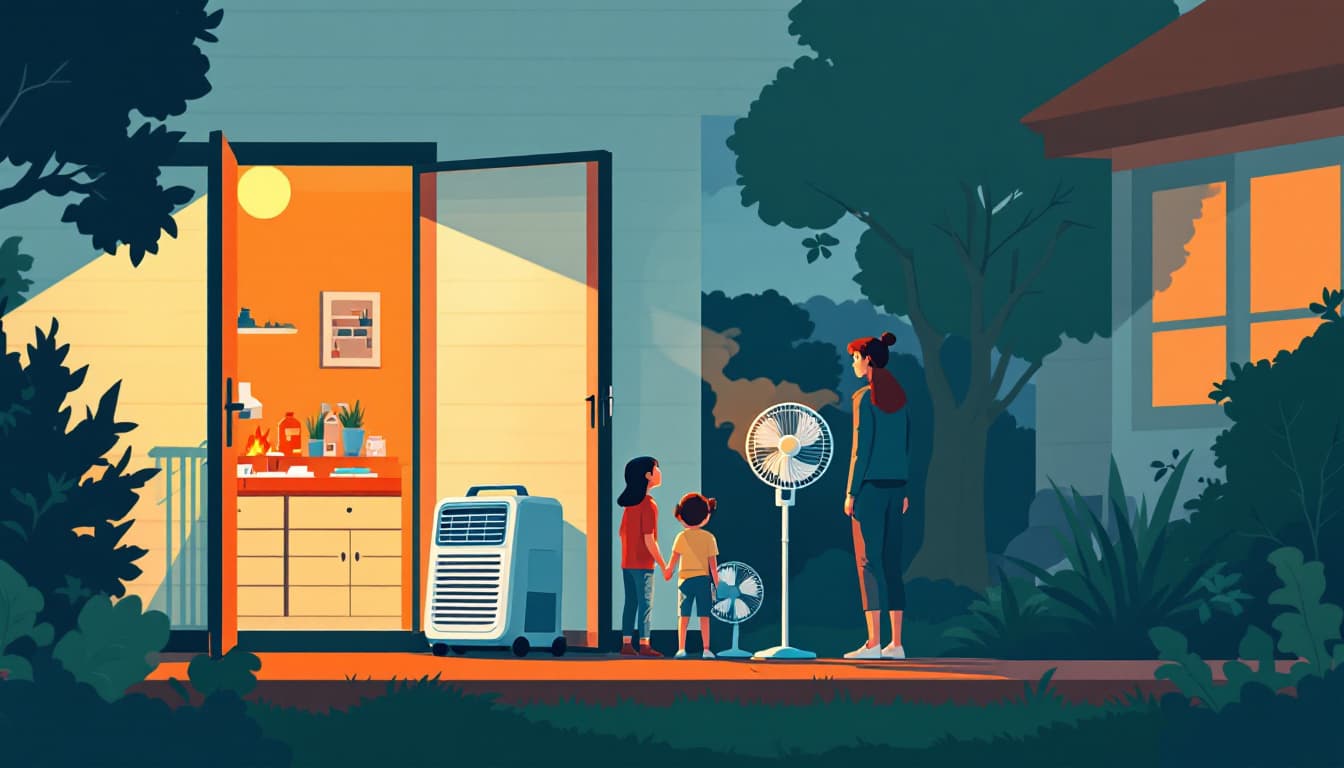
Identify your nearest cooling center and your car's AC as a backup resource. Most municipalities post cooling center locations on their emergency management websites; find yours before you need it. If your home AC fails during a multi-day event, a two-hour sit in a library or a church is a real intervention, not a last resort. Your car's air conditioning is a legitimate cooling tool if the building goes down — 45 minutes with the AC running in a parked, shaded car is enough to lower core temperature meaningfully.
Freeze water in advance and store it before the next warning. A chest freezer or even a standard freezer compartment stocked with gallon jugs of ice extends your options significantly if power becomes intermittent. Ice doesn't require electricity once it's frozen; the stored thermal mass buys time. Refreezing takes 12-24 hours, so waiting until the warning is issued is waiting too long.
Check your window units and portable AC filters right now. A clogged filter reduces cooling efficiency by a measurable percentage and makes the unit work harder — shortening its lifespan and raising your electric bill during peak hours. Takes five minutes. Do it before the next warning cycle, not during.
Know the signs of heat exhaustion before you need them. Heavy sweating, pale or clammy skin, fast or weak pulse, nausea, muscle cramps. These precede heat stroke, which presents with hot dry skin, confusion, and loss of consciousness. The treatment for heat exhaustion is aggressive cooling and hydration; heat stroke requires emergency services. The gap between the two is shorter than people expect, especially in elderly adults.
The bigger picture
The Florida Panhandle event is a specific, acute warning. It is also part of a pattern that households in the Gulf South, the Southwest, and increasingly the mid-Atlantic need to build into their baseline planning — not because civilization is collapsing, but because a three-day power outage during a 113°F heat index event is a life-safety situation for some members of nearly every household.
The goal is not a bunker. It's a family that can handle a bad week in August without ending up in an emergency room. That starts with knowing your most vulnerable person, knowing your backup cooling options, and having the supplies in place before the warning sounds.