On a July afternoon in Greenville or New Bern, the air doesn't just feel hot — it feels like a wet blanket someone left in a car. The heat index routinely climbs 10 to 15 degrees above the actual temperature in the coastal plain, and by late afternoon, the same humidity that makes the morning miserable starts feeding thunderstorms that can go severe inside of 30 minutes.
A report this week from The Weather Channel flagged exactly this pattern for eastern North Carolina: hot, humid conditions with severe storm potential on July 7, 2026. That combination is not unusual for July here. What is unusual is how few households are actually set up to handle both threats at once.
What's actually happening
Eastern NC's coastal plain — the stretch from Rocky Mount and Wilson down through Goldsboro, Kinston, Greenville, and out toward the Outer Banks — sits in a geography that amplifies summer weather stress. Flat terrain means storms can travel fast and far with little topographic braking. The same flat terrain that flooded catastrophically during Florence in 2018 and Dorian in 2019 doesn't drain quickly after a heavy convective cell drops three inches in 45 minutes.
Heat is the quieter danger. North Carolina's state climate office has documented a long-term upward trend in overnight low temperatures across the eastern counties, which means the body gets less recovery time between hot days. Power outages during these events are not hypothetical — Duke Energy and Dominion Energy North Carolina both service this region, and their outage maps during severe convective events routinely show clusters of 5,000 to 20,000 customers down at once, sometimes for 12 to 36 hours.
That overlap — heat emergency plus power loss — is the specific scenario eastern NC households should be planning around right now, not in October.
What we'd actually do
Audit your household's heat tolerance before the next outage, not during it. Walk through your home today and identify who is most vulnerable: elderly relatives, infants, anyone on medications that impair heat response (diuretics, beta blockers, antihistamines, and antipsychotics all affect thermoregulation). Map out where you'd go if AC failed for 24 hours. A cooling center, a neighbor with a generator, a family member across town — have that conversation now. NC's county emergency management offices maintain cooling center lists; check your county's site before you need it.
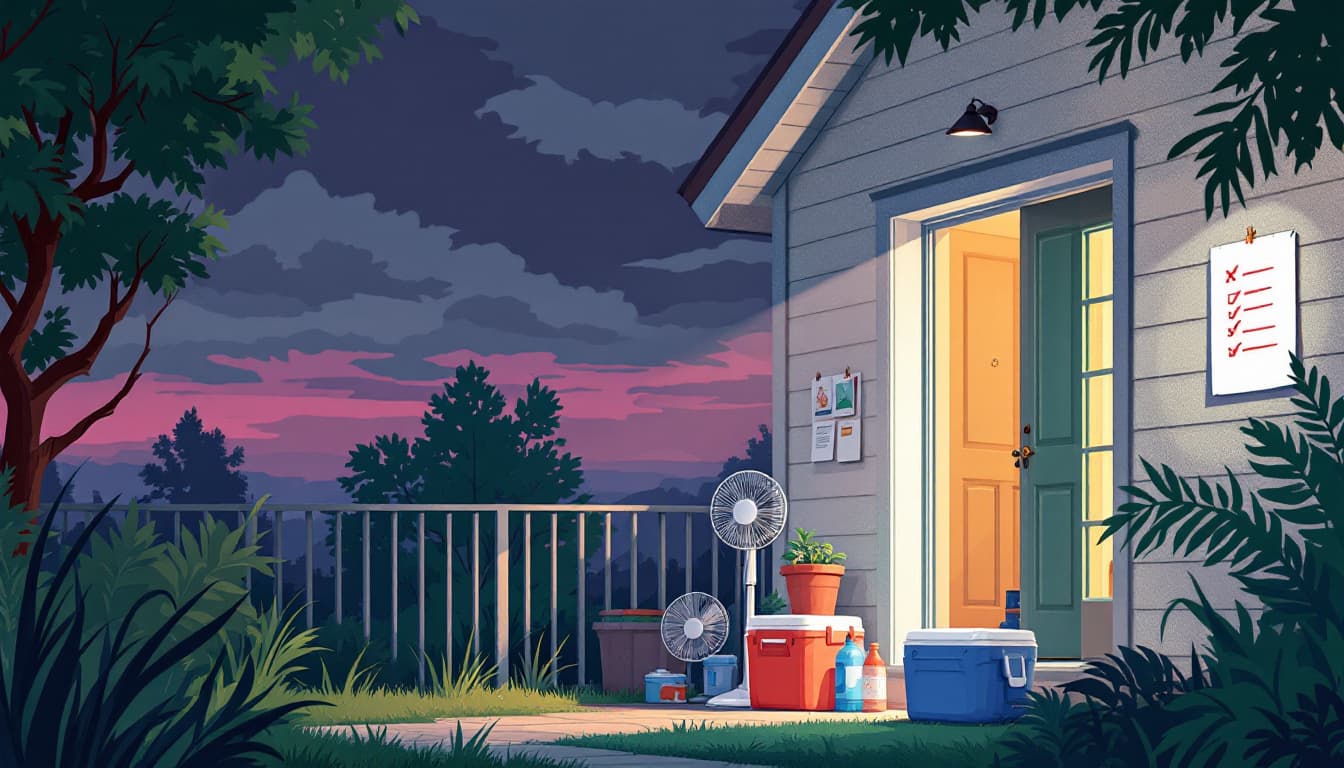
Store at least a gallon of water per person per day for three days, with a realistic plan to use it. This is not about doomsday scenarios. It's about the fact that a severe storm that knocks out power in Pitt or Lenoir County can also compromise municipal water pressure within hours if pump stations lose power. Three days of stored water for a family of four is twelve gallons — four standard jugs from any grocery store, rotated every six months. Keep them somewhere accessible, not buried in a garage under holiday bins.
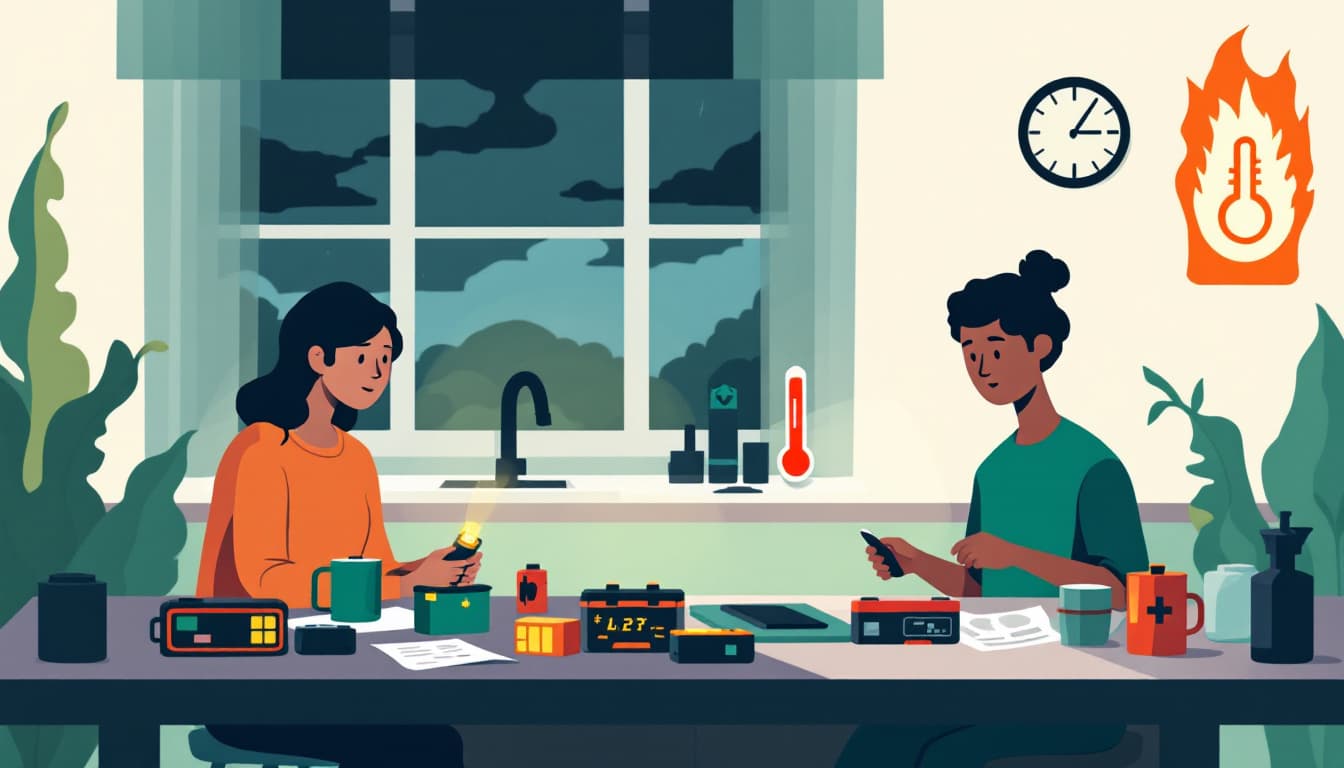
Charge every rechargeable device and power bank before a forecasted storm day, every time. The Weather Channel forecast gives you the heads-up. Use it. A fully charged phone and a 20,000 mAh power bank (available for under $30 at most hardware stores) can keep communication going through a 24-hour outage. Add a battery-powered or hand-crank weather radio — NOAA broadcasts on 162.400–162.550 MHz and continues transmitting during cell tower failures, which happen in severe events.
Know the specific severe weather risk for your county, not just "eastern NC." The Storm Prediction Center issues mesoscale discussions and tornado watches that are county-specific. Bookmark weather.gov/rah — that's the NWS Raleigh office, which covers most of eastern NC. Their local forecast discussions are written by actual meteorologists and are more granular than any national app's push notification.
Clear your yard before peak storm season, not after the first warning. Loose patio furniture, unsecured tarps, children's play equipment, and dead tree limbs are the primary sources of property damage in fast-moving summer thunderstorms. One afternoon of yard work in early July removes a category of risk entirely. If you have large hardwood trees near the roofline, a certified arborist inspection costs $100 to $300 and can identify limbs likely to fail under wind load.
The bigger picture
Eastern North Carolina is not a fragile place. Generations of families here have handled hurricanes, floods, and brutal summers with practical resourcefulness. The goal isn't to be afraid of July — it's to not be caught flat-footed by a scenario you had 48 hours of warning to prepare for. Durability looks like a household that loses power for 18 hours and is mildly inconvenienced, not one that ends up in an ER for heat exhaustion. That gap is closed by small, undramatic actions taken before the storm, not during it.