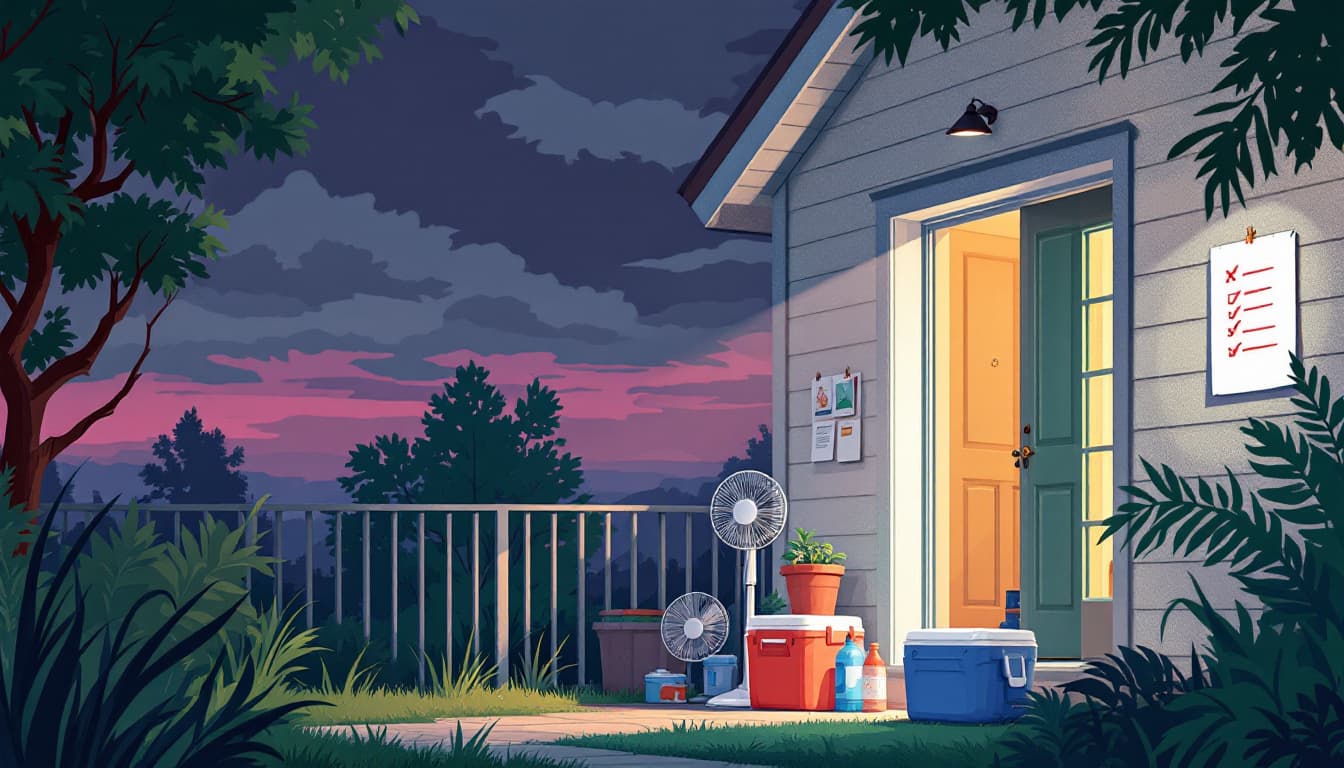
A Weather Channel report dated June 26, 2026 put eastern North Carolina under weekend thunderstorm and heat advisories. If you've lived east of I-95 for any length of time, this is not a surprise. June through August is when the coastal plain earns its reputation: high dew points, afternoon convection, and storms that drop two inches of rain in forty minutes before moving on. The problem isn't the storm itself. It's how fast the chain reaction unfolds — a flooded road, a tripped breaker, a refrigerator that's been off for six hours in ninety-degree heat — and how poorly most households are positioned to absorb even twelve hours of disruption.
What's actually changing this season
The base pattern is familiar, but two things are different heading into summer 2026. First, Duke Energy and Dominion Energy North Carolina have both flagged increased grid stress during peak cooling demand in recent rate filings. Restoration times after storm events have crept upward in some eastern counties, particularly in areas where underground infrastructure work is still incomplete after prior hurricane seasons. Second, recent NOAA seasonal outlooks place the Southeast at elevated probability for above-normal temperatures through August — meaning storms won't provide relief so much as they'll interrupt dangerous heat rather than end it.
That combination — longer outages, hotter baseline temperatures — is the actual household risk. A power outage during a 95°F day with 80% humidity is a medical event for elderly residents and young children within hours, not days.
What we'd actually do
Audit your food and medication cold chain before the first big storm hits. Take fifteen minutes today to photograph what's in your refrigerator and freezer, then note what would be lost if the power went out for 24 hours. Insulin, certain cardiac medications, and expressed breast milk are the non-negotiables. A $30 Yeti-style bag with a few reusable ice packs can extend safe storage significantly. For longer outages, know where your nearest cooling center is — NC DHHS maintains a locator through local county emergency management offices, and most counties in the eastern part of the state activate them when heat indices exceed 105°F.
Fill a five-gallon water container this weekend. Municipal water in eastern NC depends on pump stations that run on electricity. A 2023 Duke Energy storm event knocked out service in parts of Pitt and Wayne counties for more than 48 hours. Five gallons per person covers drinking and basic sanitation for roughly two days. It costs nothing beyond the container.
Locate your breaker panel and test your GFCI outlets now, not during a storm. Eastern NC's older housing stock — particularly manufactured homes, which make up a large share of the rural residential market east of Goldsboro — is more vulnerable to lightning-caused electrical surges. Know whether your home has a whole-house surge protector. If it doesn't, a service entrance surge protector runs $150 to $300 installed and protects appliances that would cost far more to replace.
Download offline maps and the NC 511 app before Saturday. Storm drainage in the coastal plain is slow. Roads flood fast and often without warning. US-70 through Lenoir and Greene counties, Highway 264 between Wilson and Washington, and the low-lying sections of US-17 have documented recurring flood points. When cell networks are congested during a storm, an offline map (Google Maps and Apple Maps both offer this) keeps you navigating without data.
Put a battery-powered or hand-crank weather radio in the same place as your flashlight. Not a phone notification. An actual NOAA weather radio. Cell networks degrade during severe weather events precisely when you need information most. Midland and Sangean make reliable units for under $40. Set it to your local NWS Morehead City or Newport/Morehead City transmitter frequency, which covers most of the eastern NC coastal plain.
The bigger picture
Summer storms in eastern North Carolina are a known, recurring risk with a known, manageable response. The households that struggle after a storm event are almost never the ones that did dramatic prepping. They're the ones that had no water stored, didn't know where the breaker was, and had a full chest freezer of meat three days before a 48-hour outage. Durability isn't about worst-case scenarios. It's about the gap between your current setup and a single bad weekend.
Close that gap before Sunday.