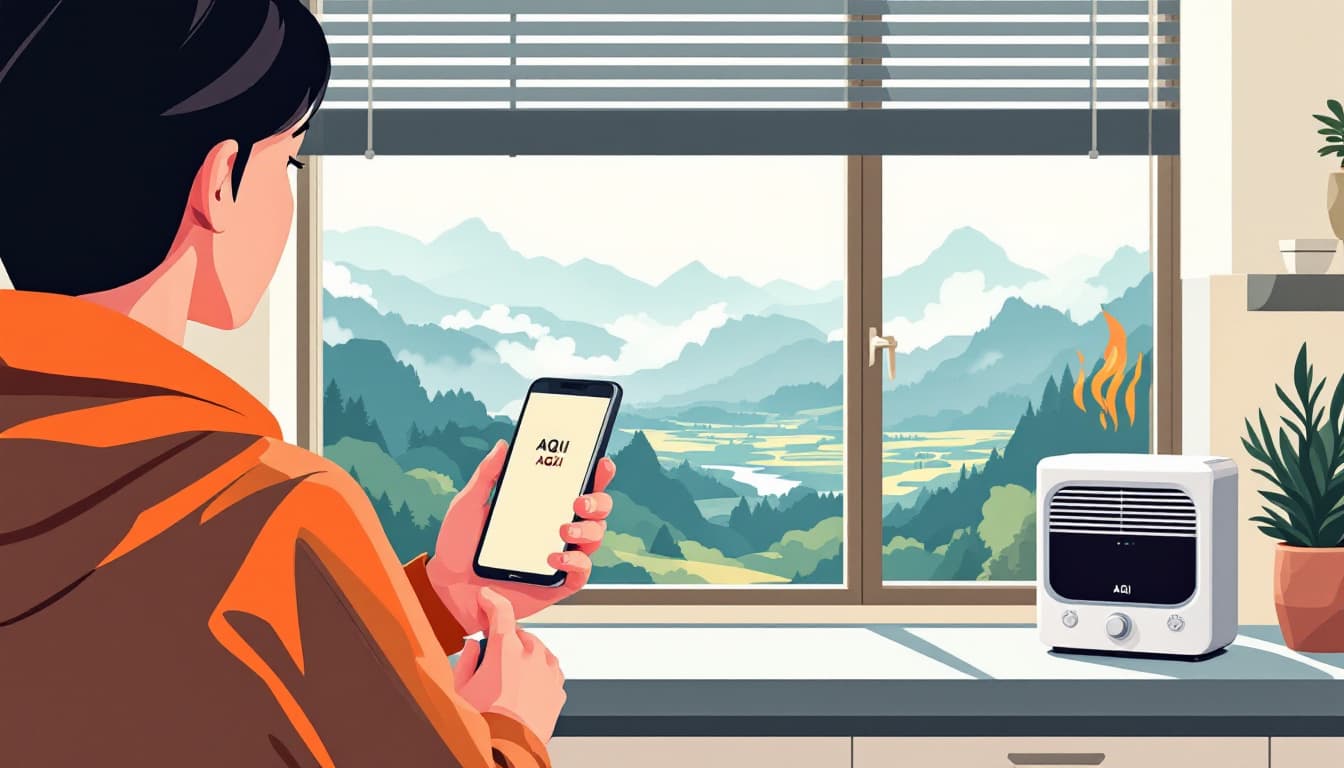
A Gunnison Country Times report this week documented wildfire smoke drifting into the Gunnison Valley and walked readers through how to interpret the Air Quality Index. It's useful public education. What it doesn't cover is what a Colorado household should actually do at each threshold — and how to build enough capacity at home that a bad air week doesn't become a health emergency.
What the AQI actually tells you — and where people misread it
The AQI is a 0–500 scale. The EPA divides it into six color-coded bands, but the two that matter most for households with kids, elderly members, or anyone with asthma are the transition points: 101 (Unhealthy for Sensitive Groups) and 151 (Unhealthy for Everyone).
Most Colorado families see an orange or red day on the weather app and keep the windows open anyway. The assumption is that smoke is unpleasant but manageable. That assumption is wrong for fine particulate matter — the PM2.5 particles that make wildfire smoke dangerous. These particles are small enough to penetrate deep into lung tissue. A few hours of exposure at AQI 160 is not equivalent to a single bad commute in traffic; it's cumulative and harder to walk back.
Colorado's Front Range gets significant media attention during smoke events, but Western Slope valleys like Gunnison, Telluride, and Montrose often trap smoke more severely because of their bowl geography. Cold air pooling at elevation holds smoke low overnight. Residents in these areas should weight their personal AQI thresholds lower than someone in Denver with more atmospheric mixing.
The Colorado Department of Public Health and Environment publishes real-time AQI data at cdphe.colorado.gov, updated more frequently than most third-party weather apps. That's the source to bookmark, not the default phone widget.
What we'd actually do
Check the AQI before opening windows each morning, not after. Smoke concentrations in mountain valleys frequently peak overnight and in the early morning before temperature inversion breaks. Opening windows at 7 a.m. because the air "looks okay" can bring indoor PM2.5 to outdoor levels within 20 minutes. The CDPHE map takes 30 seconds to load on a phone.
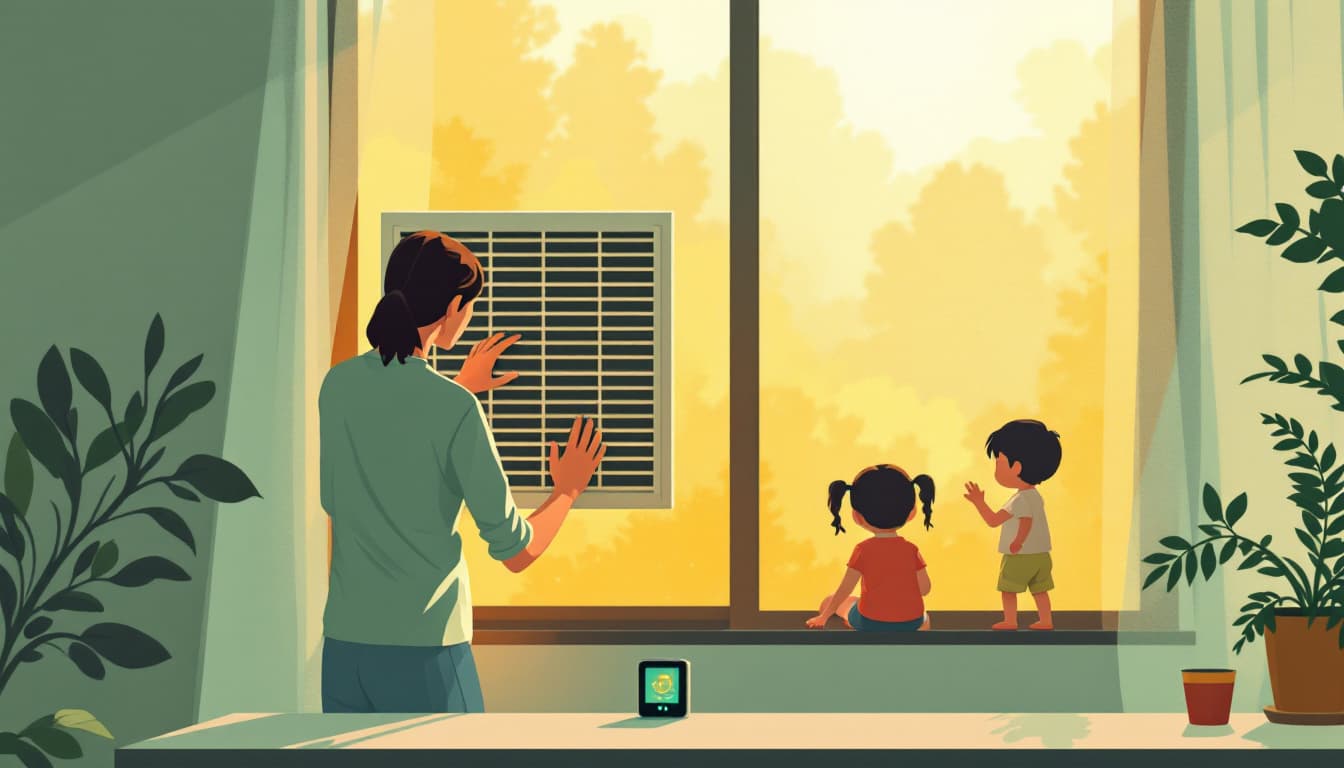
Run your HVAC on recirculate whenever AQI crosses 100, and verify your filter is rated MERV-13 or higher. Most Colorado homes run standard MERV-8 filters, which do almost nothing for sub-2.5-micron particles. A MERV-13 filter costs roughly $20–30 at any hardware store. Swap it in now, before your system is already running hard through a smoke event. If you don't have central air, a box fan with a MERV-13 furnace filter taped to the intake — sometimes called a Corsi-Rosenthal box — demonstrably reduces indoor PM2.5. Recent indoor-air research has confirmed this low-cost approach works.
Keep at least two N95 or KN95 masks per household member accessible, not buried in a cabinet. During a multi-day smoke event, there will be moments when you need to go outside — a car issue, a pet emergency, picking up a prescription. Cloth masks and surgical masks do not filter PM2.5 effectively. N95s do. A box of ten costs about $15 and has a shelf life of several years if stored away from UV light.
Identify one room in your home to designate as a clean-air room. Choose the room with the fewest exterior wall gaps and windows, run an air purifier with a true HEPA filter, and use it as a retreat during prolonged high-AQI periods. If you don't own a portable HEPA unit, this is the one piece of equipment worth buying before fire season peaks — entry-level models from reputable brands run $60–100 and handle rooms up to 300 square feet adequately.
Know your household's medical trigger points before a smoke event, not during one. If anyone in the house uses a rescue inhaler, confirm it's current and not expired. If a family member has COPD or cardiovascular disease, have a short conversation with their provider now about whether there's a prescribed AQI threshold at which they should shelter or relocate.
The bigger picture
Wildfire smoke in Colorado is no longer a two-week anomaly in late summer. Recent fire seasons have pushed smoke events into June and stretched them into October. The Gunnison Valley getting blanketed is not unusual anymore — it's a repeating condition that households need standing protocols for, not a surprise to react to.
The goal is not a bunker or a panic purchase. It's a household that doesn't get caught making decisions in degraded air while searching for a mask they might have bought two years ago. The actions above are achievable in a single weekend and cost under $100 total if you own nothing yet.
Durability means your family breathes clean air while the smoke passes. That's it.