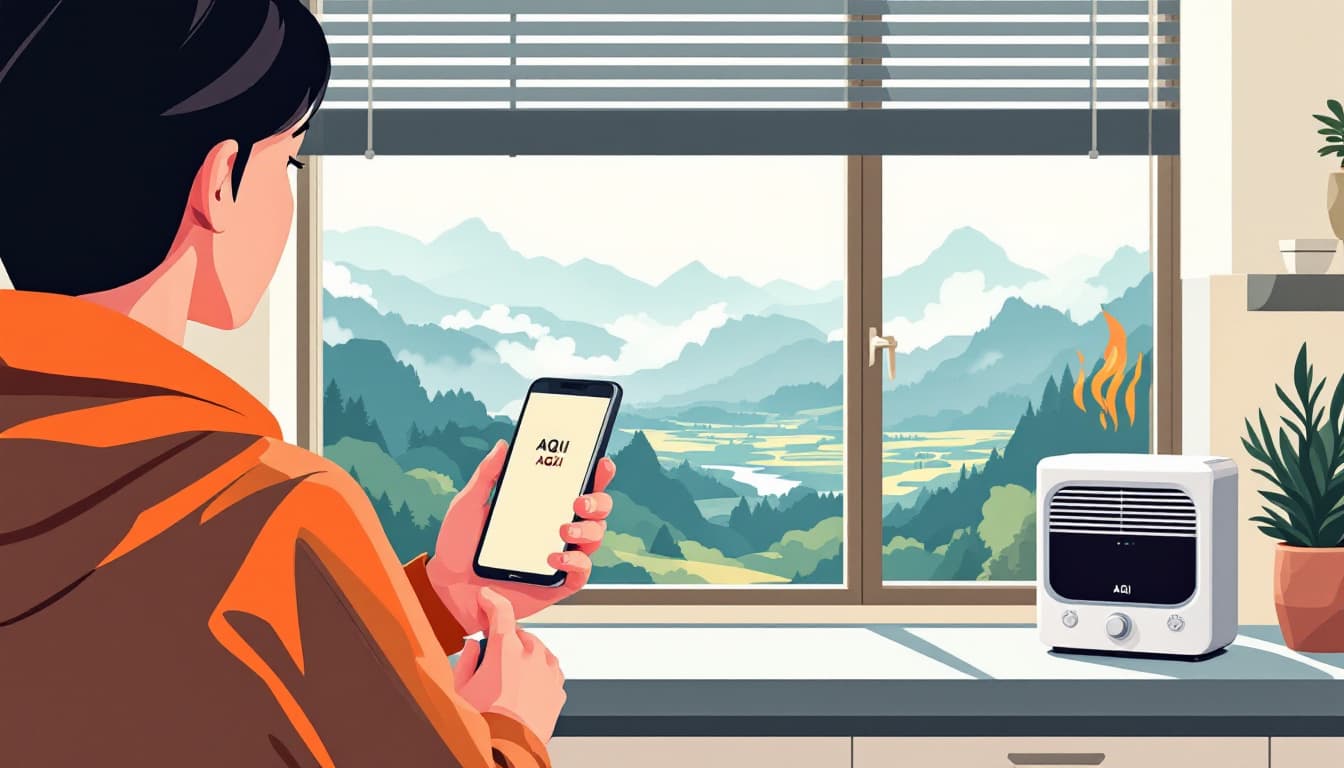
A Newsweek report this week confirmed what the Front Range, Western Slope, and southern Colorado communities were already smelling: wildfires have prompted a state disaster emergency declaration, and air quality alerts are in effect across significant portions of Colorado. This is not a late-season anomaly. The state is tracking an early and active fire year.
The news coverage tells you the AQI numbers are bad. It does not tell you what to do inside your house on day three of a smoke event when your kids are coughing and you've already closed all the windows.
What's actually changing
Colorado's fire seasons have been compressing at both ends — starting earlier in June and extending deeper into fall. When the governor issues a disaster emergency declaration, it unlocks state resources and accelerates coordination between CDPHE (the Colorado Department of Public Health and Environment), local emergency managers, and the National Interagency Fire Center. That's meaningful for suppression. It does not filter the air inside your home.
The real household risk during prolonged smoke events is cumulative PM2.5 exposure — fine particulate matter that penetrates deep into lungs and, with repeated exposure, stresses cardiovascular systems. The AQI alerts you're seeing across Colorado right now reflect PM2.5 levels. Kids, elderly residents, and anyone with asthma or heart conditions are most exposed. So are people who work outside — a significant share of Colorado's workforce in agriculture, construction, and recreation.
The other variable: most Colorado homes are not sealed tightly. Older homes in Pueblo, Grand Junction, and mountain communities often have significant air infiltration even with windows closed. A purple AQI reading outside can push your indoor air into the unhealthy range within a few hours.
What we'd actually do
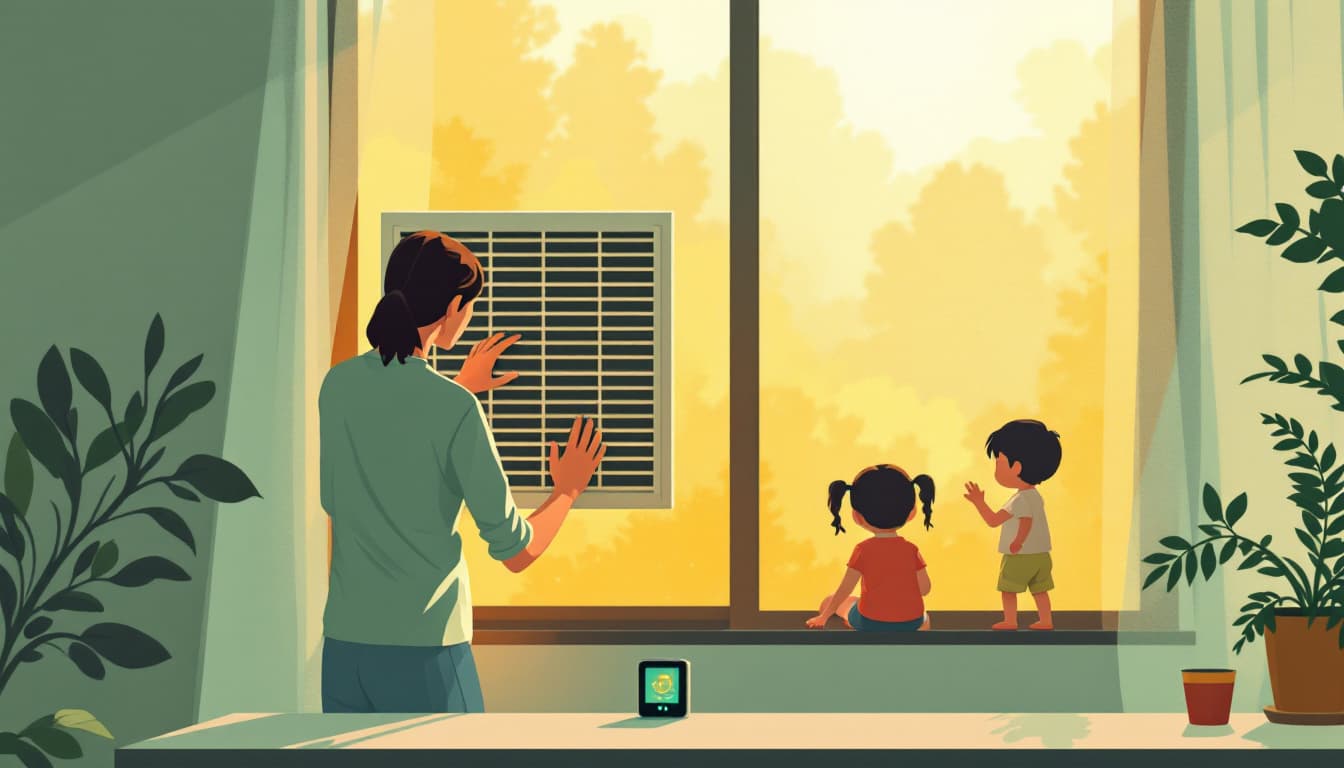
Build a low-cost indoor clean air room — today, not when smoke arrives. Designate one interior room of your home as the clean-air refuge: ideally a bedroom without many exterior wall penetrations. A box fan plus a MERV-13 furnace filter taped to the intake side (the "Corsi-Rosenthal box" variant works with four filters and a box fan) costs roughly $40-70 in materials and genuinely reduces PM2.5 indoors. CDPHE has endorsed this approach. Run it continuously during high-AQI days, keep the door mostly closed, and rotate family members through it for sleep.
Check and replace your HVAC filter right now, not in September. If your home has central air, verify it's running a MERV-13 filter (or the highest rating your system can handle without straining airflow — check your unit's specs). Most Colorado households are running MERV-8 or lower. Swapping to MERV-13 before a smoke event is a $15-25 upgrade with real consequences for indoor PM2.5 levels during a multi-day smoke siege. Set your system to recirculate rather than pull fresh outside air.
Get a real-time AQI reading for your specific neighborhood, not just the city. The EPA's AirNow app and the PurpleAir sensor network both show hyperlocal readings. Smoke plumes behave oddly in Colorado's terrain — AQI in downtown Denver can read yellow while a neighborhood in the Foothills reads purple 45 minutes away. If your household includes someone with asthma or heart disease, a $60-80 PurpleAir sensor on your porch gives you data your county's monitoring station can't.
Prepare a 72-hour go-bag with N95s, not just for evacuation — for shelter-in-place too. Colorado families rightly think of go-bags in terms of evacuation. Smoke events sometimes require the opposite: staying inside for two to three days. Your bag should include N95 respirators (one per family member per day of expected event), a three-day medication supply, and a manual can opener. N95s are also what you wear if you must go outside during a Code Red or Code Purple day — a cloth mask does essentially nothing for PM2.5.
Register for your county's emergency alert system if you haven't. Colorado's 64 counties run their own systems; there's no single statewide opt-in. Go to your county's Office of Emergency Management website and sign up. During the 2020 and 2021 fire years, households that received direct alerts had materially more lead time for decisions about evacuation or sheltering. This takes five minutes and costs nothing.
The bigger picture
A wildfire disaster emergency declaration in late June is not a signal to panic-buy gear or move to a different state. It is a signal that Colorado's fire season is a recurring infrastructure problem for households — not a once-a-decade event. The families who handle these events best are not the ones with the most supplies. They're the ones who built clean-air capacity into their normal routines, know their county's alert systems, and have thought through what three bad air days actually require.
Durability looks boring. It also looks like sleeping in a room with filtered air while your neighbors are coughing.