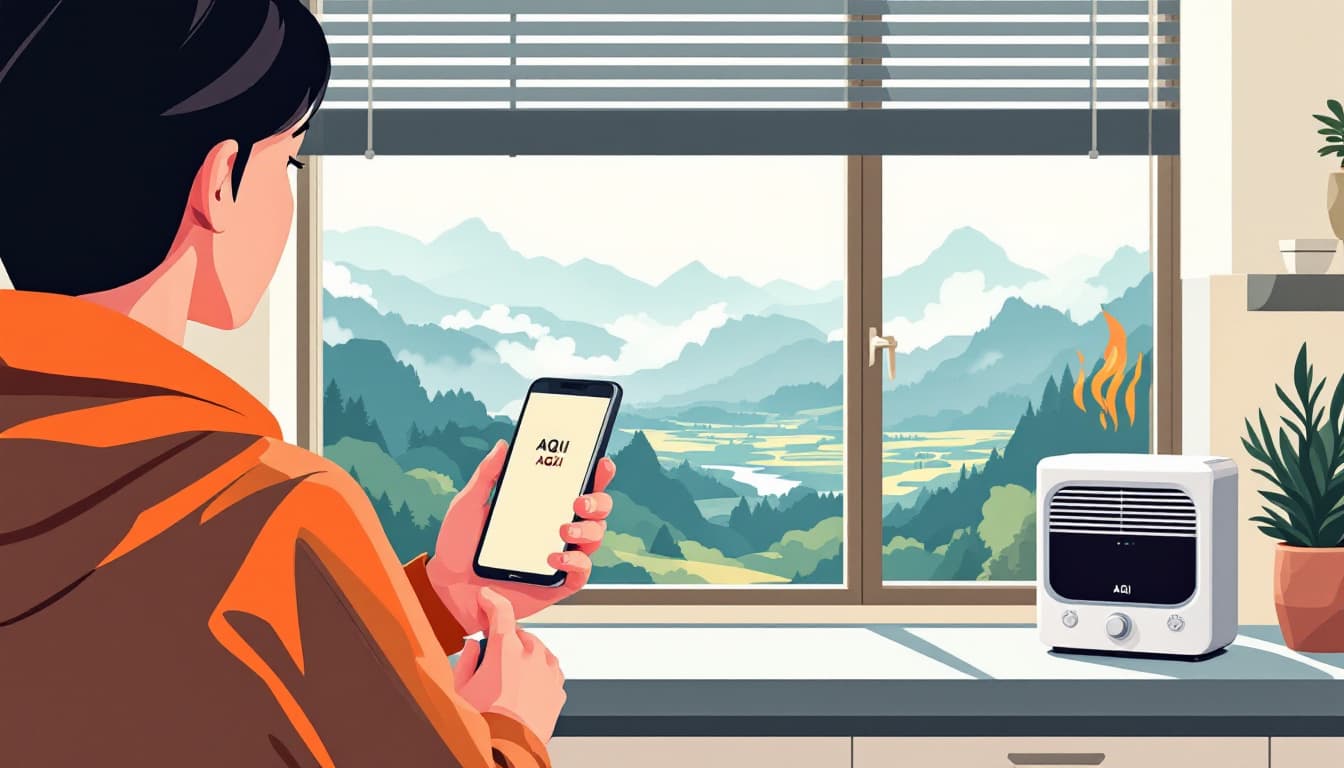
The air quality index over Pueblo climbed into unhealthy territory this week as smoke from the Aspen Acres Fire drifted east across the Arkansas River valley. A report from the Pueblo Chieftain noted that conditions were expected to improve — but "relief on the way" is not a plan. It's a weather forecast. And in Colorado's Front Range and southern corridor, the window between "fire ignited" and "smoke in your living room" can be measured in hours, not days.
What's actually happening
Wildfire smoke isn't just an outdoor nuisance. Fine particulate matter — particles small enough to penetrate deep into lung tissue — moves through window gaps, door seals, and HVAC returns. When an air quality index reading crosses 150 (the "unhealthy" threshold on the EPA's AirNow scale), standard activities like yard work or open-window ventilation become genuine health risks for children, older adults, and anyone with asthma or cardiovascular conditions.
Colorado's fire season has extended well into July in recent years, and southern Colorado communities like Pueblo sit in geography that funnels smoke from fires burning in the Wet Mountains, the San Isabels, and the foothills west of Canon City. This isn't a once-a-decade event anymore. The Colorado Air Pollution Control Division tracks air quality across the state, and their public data shows that multi-day smoke events in Pueblo's zip codes have become a recurring summer pattern.
The Aspen Acres event also matters because it caught households on a holiday weekend — a pattern worth noting. Fire weather doesn't observe federal holidays. Families with outdoor plans, kids at summer programs, or elderly relatives living alone are the ones most likely to be caught without a plan.
What we'd actually do
Check AirNow before opening windows, not after you smell smoke. Go to airnow.gov or download the AirNow app and set a location alert for your zip code. By the time smoke is visible from your porch, the fine particulates have already been entering your home for hours. The Colorado Air Pollution Control Division also posts region-specific advisories that often lead AirNow updates for smaller communities.
Build a clean room, not a bunker. Pick one interior room — ideally one with no fireplace or older window units — and commit to keeping it sealed during smoke events. A box fan with a MERV-13 furnace filter taped to the intake side, sometimes called a "Corsi-Rosenthal box," filters fine particles effectively and costs under $40 in materials. This isn't about permanent fortification. It's about having one room where the air is demonstrably better than outside.
Know your HVAC filter rating and change it before fire season peaks. Most residential HVAC systems ship with MERV-8 filters, which handle dust and pollen but pass fine smoke particles. Swapping to a MERV-13 filter (compatible with most standard residential systems — check your unit's documentation) meaningfully improves indoor filtration during smoke events. In Colorado, that upgrade is worth making before August, not during it.
Have a 48-hour supply of prescription medication for anyone in the household with asthma or COPD. This isn't about stockpiling. It's about not needing to drive to a pharmacy during an air quality emergency with a child who is wheezing. A single extra inhaler or a refill timed to a smoke event is a reasonable, low-cost step that most insurance plans cover.
Text the most vulnerable person in your network. Not a social media post — a direct text to an elderly neighbor, a relative with heart disease, a friend with a new baby. Check whether they know about the advisory and whether their home is adequately sealed. Community resilience during smoke events runs on direct contact, not broadcast alerts.
The bigger picture
Smoke preparedness doesn't require a generator, a go-bag, or a month of freeze-dried food. It requires knowing which way the wind blows relative to your address, having a $25 filter upgrade done before the fire starts, and making sure the people in your life who are most vulnerable aren't getting their information from a social media scroll at midnight.
Colorado households in the southern part of the state are not at the mercy of wildfire smoke — but only if they treat air quality alerts as operational information rather than ambient news. The Aspen Acres Fire will clear. The next one will not give more warning.