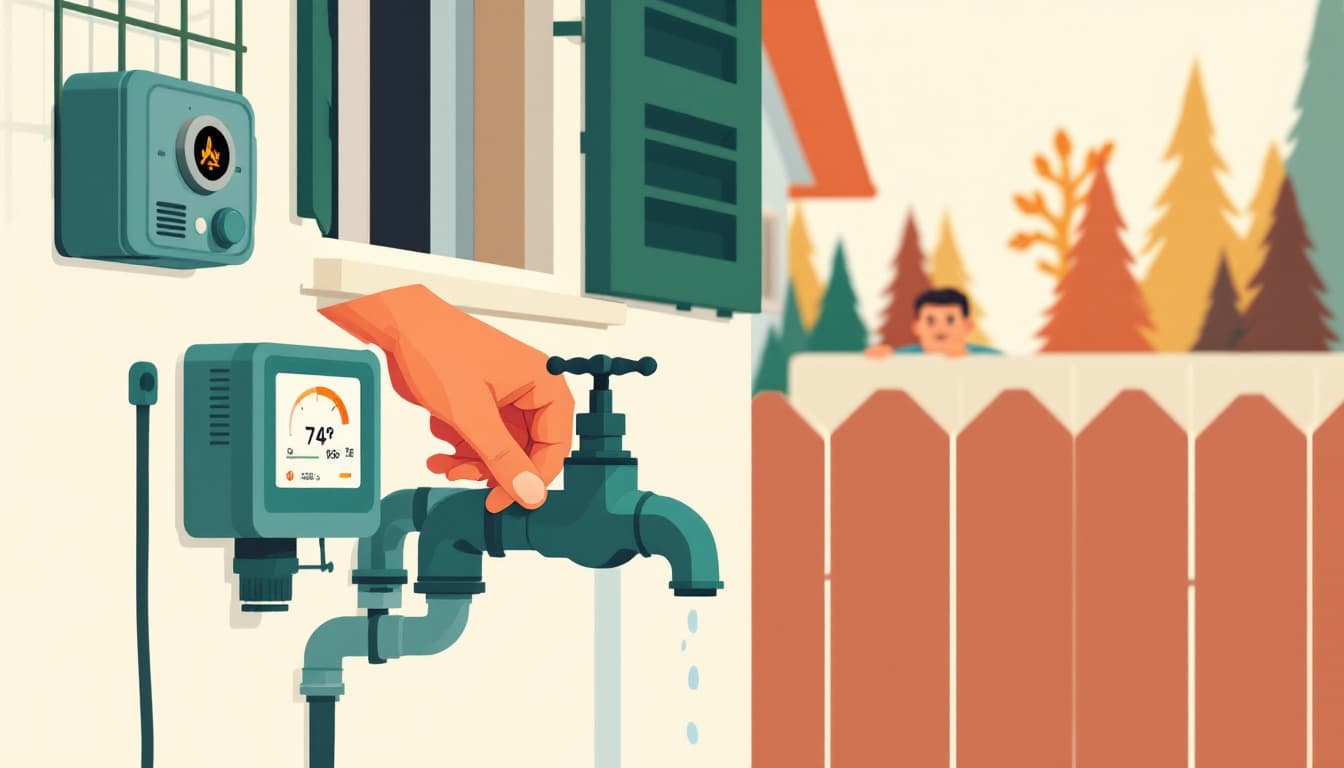
On a July morning in Colorado's Front Range, your neighbor's irrigation system kicks on at 10 a.m. By the time the water drains into the sidewalk gutter, there is a chance someone — or something — has already logged it.
A report this week from KUNC describes how Colorado water suppliers are moving beyond occasional patrols to enforce drought restrictions. Some districts are using software that flags unusual consumption patterns directly from smart meter data. Others have opened formal tip lines where residents can report neighbors they believe are violating watering schedules. The shift is not subtle: enforcement is becoming automated, continuous, and community-sourced.
What is actually changing
Manual enforcement of drought restrictions has always been spotty. An inspector can only cover so many blocks. But smart meter infrastructure — already installed by a number of Colorado utilities, including several Denver metro-area districts — transmits hourly or near-hourly usage data. Pattern-detection software can compare your usage against your watering schedule, flag anomalies, and generate a notice without a human ever looking at your yard.
The neighbor tip line piece adds a social layer. It creates friction between households at the exact moment — a multi-year drought cycle in a high-altitude, semi-arid state — when community cohesion is already strained by heat and cost pressure. The practical effect: if you are watering outside your permitted window, someone will notice, and now there is a formal channel to report it.
Colorado's water situation is not a sudden crisis. The state's major river basins have seen below-average snowpack for multiple consecutive years. Municipalities along the Front Range and in mountain communities are under pressure from state compacts and the dry reality of their own reservoirs. Enforcement tightening was predictable; it just got concrete mechanisms this summer.
What we'd actually do
Pull your watering schedule and read it as a legal document, not a suggestion. Most Colorado water districts post their current drought-stage restrictions online. Find your district's specific schedule — permitted days, permitted hours, prohibited practices — and treat it the way you'd treat a HOA fine schedule. Violations during Stage 2 or Stage 3 drought can carry real dollar penalties.
Your district's enforcement tier matters. Denver Water, Aurora Water, Colorado Springs Utilities, and dozens of smaller rural co-ops all have different schedules and different fine structures. Ten minutes on your district's website this weekend tells you exactly where you stand.
Audit your irrigation system for accidental violations. A controller set to a schedule from last year, a broken sensor that overrides rain shutoff, a zone that runs longer than you think — these are exactly the patterns automated systems are built to catch. Walk your property on a morning when the system runs. Time each zone. Compare it to what your controller says it should do.
If you have a smart controller (Rachio, RainBird ESP-TM2, and similar), verify that the seasonal adjustment settings and local weather integrations are active. These features exist precisely to reduce usage without you thinking about it daily.
Reduce your single-point-of-failure dependence on turf. This is a longer play, but Colorado's xeriscape rebate programs are active right now. Denver Water and several other utilities offer rebates per square foot of grass removed and replaced with drought-tolerant landscaping. The rebate money is not unlimited and programs close when funds run out. If you have been considering converting even a portion of your lawn, this summer is the time to apply, not next spring.
Know your fine structure before you get a notice. Many Colorado districts escalate fines fast — first violation is a warning, second is a modest fine, third can be a significant penalty or flow restriction. If you receive a notice, respond in writing immediately and document your compliance steps. Automated systems generate flags; humans still adjudicate disputes, and documentation matters.
If you have any outdoor irrigation, document your own usage. Screenshot your smart meter portal weekly or note your manual meter reading. If a neighbor files a tip and the dates don't match your actual logs, you want records. This takes two minutes per week.
The bigger picture
Drought enforcement is not a sign that Colorado is collapsing — it is a sign that the state is managing a constrained resource with the tools it now has. Automated monitoring and social tip systems are uncomfortable, but they also create a legible set of rules you can follow precisely. That is actually better for prepared households than vague, unenforced guidelines.
The durable household response here is not outrage and not paranoia. It is treating water like what it is in a semi-arid state at 5,000-plus feet: a finite input with a real cost structure and a regulatory framework that just got sharper teeth. Households that get ahead of that — with audited irrigation, documented usage, and some xeriscape progress — are simply less exposed. That is the goal.