Snowpack across much of Colorado came in well below average this past winter, and by late spring the ground was showing it. Now it's official: the governor has declared a statewide drought emergency, as reported this week by Heart of the Rockies Radio. That declaration isn't just a press release. It activates state-level coordination between the Colorado Water Conservation Board, the Division of Water Resources, and county emergency managers — and it signals that municipalities may be moving toward mandatory conservation orders faster than most households expect.
What's actually changing
A drought emergency declaration in Colorado does several concrete things. It gives state agencies authority to expedite water-sharing agreements between districts, loosens some regulatory friction on groundwater use, and — critically for households — it typically precedes tiered water pricing and use restrictions at the municipal level. Front Range cities that draw from the South Platte system and communities along the Arkansas River basin that rely on mountain runoff are both exposed. Western Slope communities dependent on tributary flows face their own set of pressures.
This is not a forecast of taps running dry in Denver suburbs. Municipal water systems carry reserves and have emergency protocols. What it does mean is that the comfortable assumption of unlimited, cheap water is getting quietly repriced — in both dollars and reliability. Homeowners on wells, especially in rural Chaffee, Fremont, and Saguache counties where the Heart of the Rockies Radio coverage area sits, face more direct risk if aquifer levels drop.
The part most household preparedness coverage skips: water disruptions in drought emergencies rarely look like zero water from the tap. They look like pressure drops during peak-demand mornings, boil advisories after utilities struggle to maintain system pressure, and sudden surcharges on your bill because you crossed a consumption tier you didn't know existed.
What we'd actually do
Pull your most recent water bill and find the tier structure. One sentence: this tells you exactly how close you are to a rate increase and what the next tier costs. Most Colorado utilities publish tiered pricing, but few households know their current tier. If your family is already in tier two or three, a conservation effort now is cheaper than a surprise bill in August.
Store two weeks of drinking water in your home. FEMA's baseline guidance is one gallon per person per day. For a family of four, that's 56 gallons — achievable with a combination of sealed five-gallon jugs (available at most Colorado hardware stores for around $10 each) and food-grade water storage containers. This isn't doomsday prep; it's the equivalent of keeping a spare tire. A boil advisory or a pressure outage lasting three to five days is well within historical precedent.
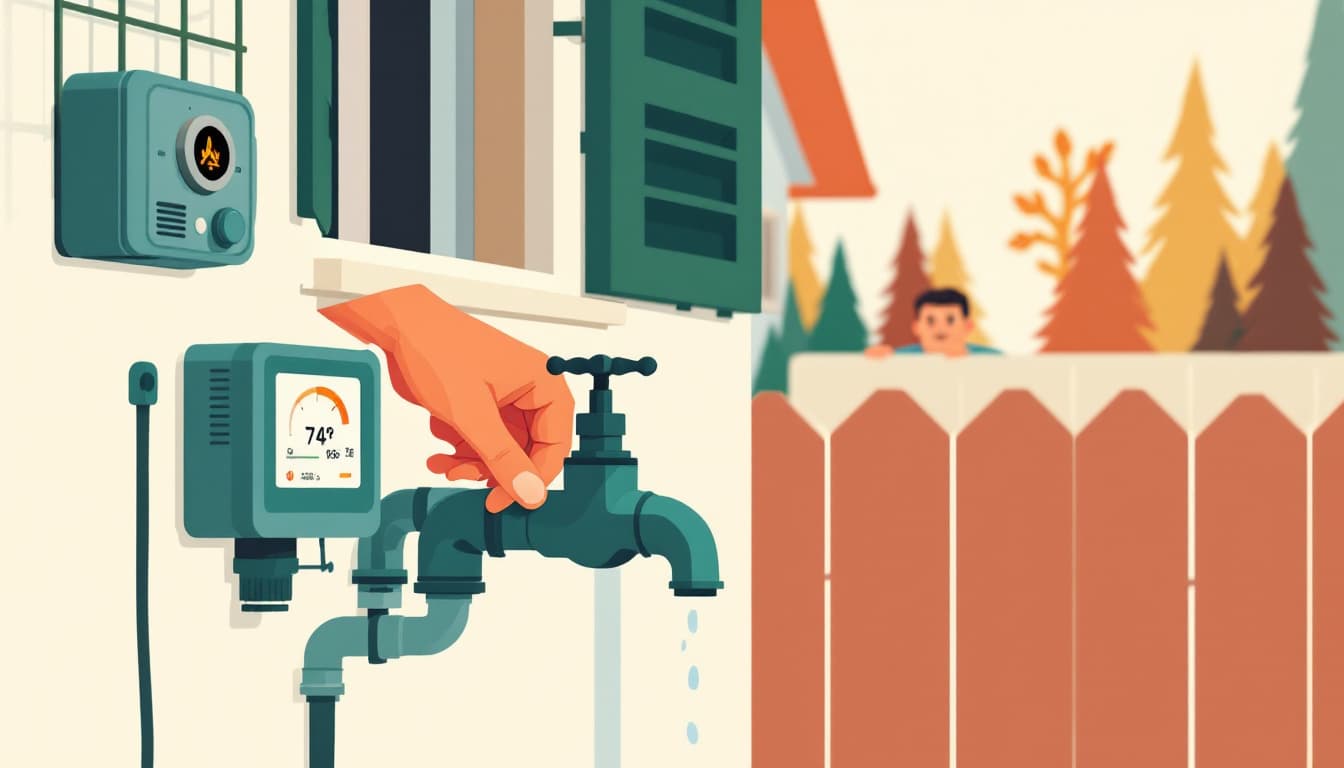
Audit your outdoor water use before restrictions arrive. Outdoor irrigation is almost always the first thing restricted under Colorado emergency orders, and violations carry fines. If you have a sprinkler system, set it to water before 6 a.m. or after 8 p.m., check for broken heads, and calibrate your schedule to your actual lawn's needs rather than the factory default your installer left on the controller. Water wasted now is water you'll pay a premium for in July.
Talk to your neighbors if you're on a shared well. Rural Colorado households on shared or community well systems have specific vulnerabilities that municipal customers don't. If you don't know the depth of your well, the age of the pump, or the water-sharing arrangement in your neighborhood, this is the week to find out. Your county's Division of Water Resources office can tell you what monitoring data exists for your aquifer.
Check whether your homeowner's or renter's insurance covers water damage from pressure loss or infrastructure failure. This one surprises people. Drought-related infrastructure stress can cause pipe failures, and standard policies vary significantly in what they cover. A ten-minute call to your agent costs nothing.
The bigger picture
Colorado's water future has been discussed in policy circles for decades. What's different now is that stress that was projected as a 2040 problem is arriving in 2026. That doesn't mean crisis — Colorado has some of the most sophisticated water law in the West, and the prior appropriation system, whatever its flaws, exists precisely to manage scarcity. What it means for households is that water is transitioning from a utility you ignore to one you manage, the way you already manage electricity and fuel.
Durability isn't about having a basement full of barrels. It's about knowing your system, your exposure, and your next three steps. Right now, those steps are pretty simple.