A report this week from The Salt Lake Tribune traced part of the haze blanketing Salt Lake City to wildfires burning outside Utah's borders. Some of that smoke originated in or moved through Arizona. If you live in Flagstaff, Show Low, Prescott, or even the east Valley, you already know this isn't theoretical — the smell has been real, and the AQI numbers on your phone have been climbing.
Arizona's fire season now runs longer than it did two decades ago. The monsoon that used to provide a hard stop in mid-July has become less reliable as a reset. That means households need to stop treating smoke events as brief inconveniences and start treating them as a seasonal condition to manage.
What's actually changing
Wildfire smoke doesn't stay local. It travels hundreds of miles at altitude, then descends into valley basins where it concentrates. Phoenix's geography — ringed by mountains, prone to inversions — traps particulate matter just as efficiently as Salt Lake City does. Tucson faces similar dynamics in its basin, and communities in the White Mountains and Mogollon Rim corridor are often in the direct burn path.
The particles that do the most damage are PM2.5 — fine particulate matter small enough to pass through your lungs into your bloodstream. Arizona Department of Environmental Quality (ADEQ) publishes real-time AQI data specific to monitoring stations across the state. During active smoke events in 2025, several Valley stations exceeded "Unhealthy" thresholds for multiple consecutive days, not just hours.
The standard advice — "go inside" — is accurate but incomplete. Most Arizona homes are not sealed against PM2.5. A home with a standard HVAC filter, leaky window seals, and no air purifier can reach 60–80% of outdoor PM2.5 concentration within an hour of a smoke event. "Inside" is only safe if you've prepared the inside.
What we'd actually do
Check your HVAC filter and upgrade it before July. A MERV-8 filter — what most Arizona HVAC installers put in by default — captures larger dust particles but does relatively little for fine wildfire smoke. A MERV-13 filter fits the same housing in most residential systems and catches a meaningful portion of PM2.5. Call your HVAC company now, before the monsoon season rush, and ask specifically whether your system can handle a MERV-13 without restricting airflow. Many newer systems can. Swap it at the start of fire season, not after the first red-flag warning.
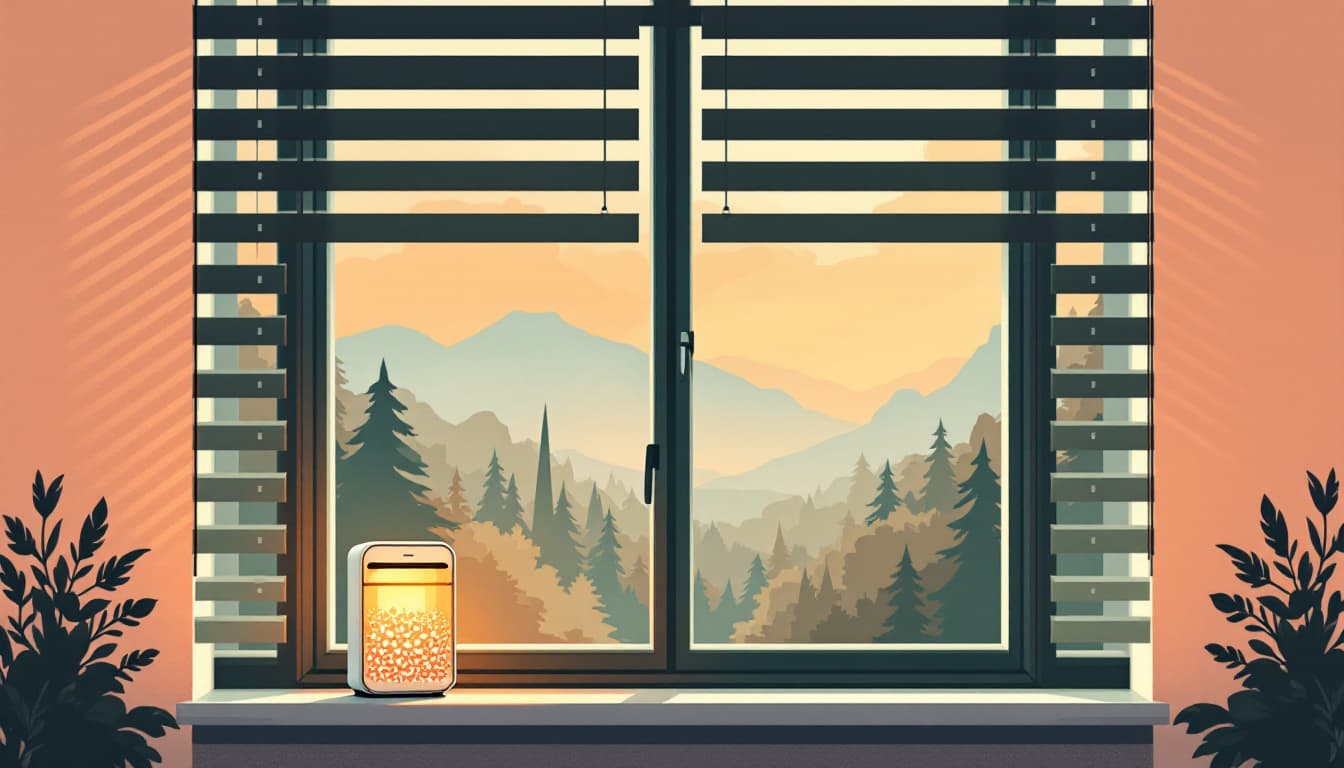
Buy one room air purifier rated for your bedroom square footage. You do not need to purify your whole house. You need one room — the room where your family sleeps — to function as a clean-air refuge. A HEPA purifier sized for 300–400 square feet runs between $80 and $150 at most big-box stores and costs roughly $3–5 a month to operate. Run it on medium, not high, for continuous overnight filtration. If you already own one, verify the filter was replaced within the last 12 months.
Download ADEQ's AZ Air app and set an alert threshold. Most families find out the air is bad when they step outside and smell smoke. You can get notified the night before by setting an alert at AQI 100 — the point at which sensitive groups (children, elderly, anyone with asthma) should limit outdoor exposure. This gives you a 12-hour window to close up the house, start the purifier, and cancel the morning run.
Seal the obvious gaps before a smoke event, not during one. Weatherstripping on exterior doors and door sweeps on garage entry doors make a measurable difference in how quickly outdoor air infiltrates your home. A tube of foam weatherstripping costs under $10 at any hardware store. This is a 30-minute Saturday project that also cuts your summer cooling bill — it has no downside.
Keep N95s in the car and at home, not just a drawer you can't find. Surgical masks do not filter PM2.5. N95s do. Arizona households used to stockpile these for COVID; most have run through that supply. A box of 10 costs under $15. If you need to run an errand during a heavy smoke day, or if your power goes out and you lose your filtered indoor environment, you need this on hand.
The bigger picture
Arizona isn't going to stop having wildfires. The forests around Flagstaff, the chaparral above Prescott, and the grasslands in the southeast corner of the state carry fuel loads that take years of managed burns and thinning to address. That work is happening — the Four Forest Restoration Initiative has been active for years — but it's slow, and it doesn't eliminate fire risk.
What you can control is how well your household tolerates a smoke event. A MERV-13 filter, one air purifier, and an AQI alert app costs less than $200 total and takes an afternoon to set up. That's not prepper gear. That's maintenance, the same way you'd prep your swamp cooler before summer or check your CO detector before winter.
Durability isn't about surviving the worst case. It's about not being blindsided by the predictable one.