A fire doesn't need it to be August to kill you in Los Angeles County.
A Washington Post report this week described a fast-moving, wind-driven fire exploding outside Los Angeles — the kind of event that used to mark the peak of fall fire season but now shows up in May, in winter, in years that no longer behave like the ones California was built for. The details in the report aren't surprising to anyone who watched January 2025 burn through Altadena and Pacific Palisades. What they should be is instructive.
What's actually changing
The term "fire season" has become functionally obsolete for most of California. CAL FIRE data from recent years shows year-round significant fire activity across the state, with Southern California particularly vulnerable during Santa Ana wind events that can arrive in any month. What makes a wind-driven fire dangerous isn't primarily the heat or the fuel load — it's the speed. Structures that would survive a slow-creeping fire are overrun before residents can respond. That speed collapses the margin between "I have time to pack" and "I have to go now."
The other shift worth naming: evacuation infrastructure hasn't kept pace with how quickly these fires move. The road networks in foothill communities from the Conejo Valley to the Inland Empire were not designed for simultaneous outbound traffic from thousands of households. When a fire moves fast and an evacuation order covers multiple ZIP codes at once, the bottleneck becomes the road itself.
None of this means you should panic or relocate. It means your preparation window — the time between when a fire ignites and when it reaches your neighborhood — is shorter than most households plan for. Most families still operate on a mental model of 30 to 60 minutes to gather belongings. In a wind-driven event, the real window can be under 10.
What we'd actually do
Sign up for your county's emergency alert system and confirm it's actually working. Los Angeles County uses NotifyLA; Ventura County uses Alert SoCal; San Bernardino uses ReadySBC. Each requires a separate registration tied to your address. The default emergency broadcast to your cell phone (Wireless Emergency Alerts) covers some events but not all local evacuation orders. Spend five minutes this week verifying your registration and checking that your household members' phones are enrolled.
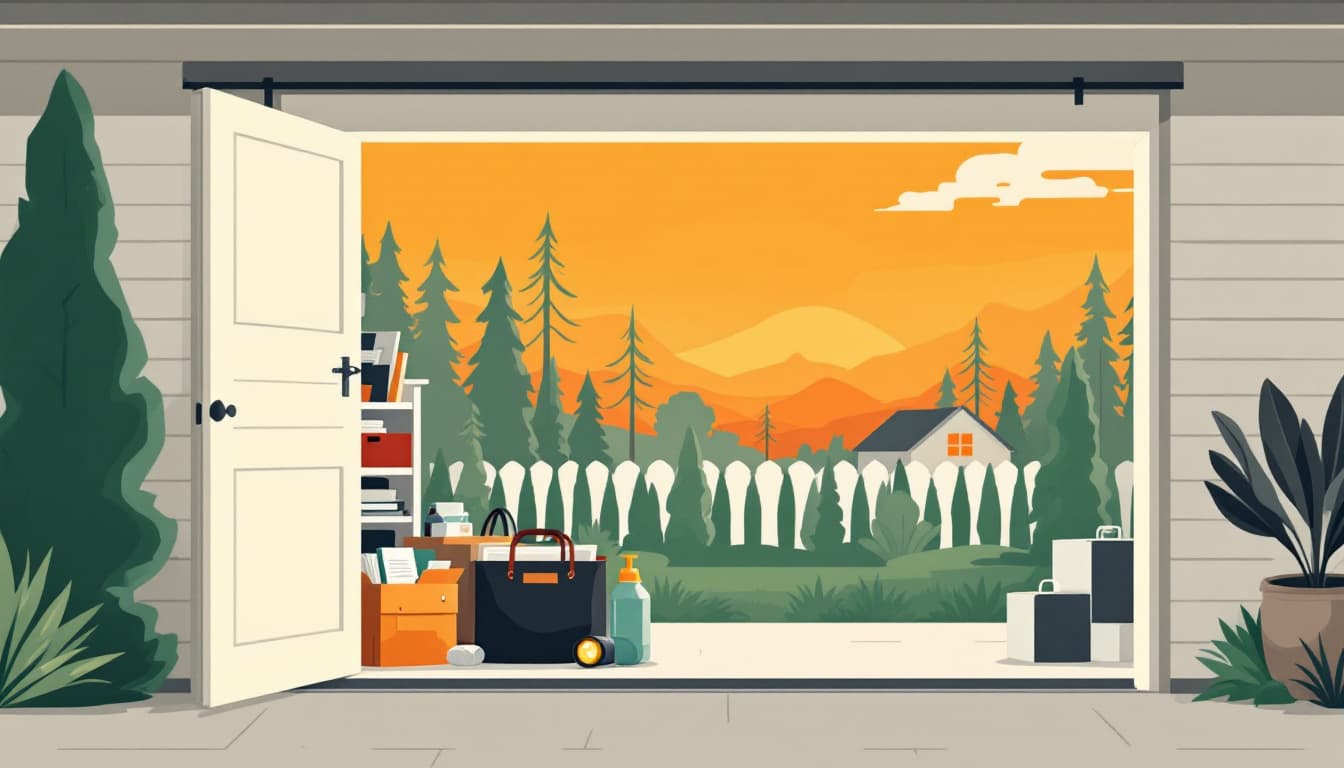
Build a go-bag that can leave in under three minutes, not 30. The standard preparedness advice to pack a 72-hour kit is correct but underspecifies the speed requirement. Your go-bag should be pre-staged — not in the garage behind the bikes, not partially assembled. Documents should already be in it or digitally accessible on a cloud account you can reach without home internet. Medications, phone chargers, a change of clothes per person. The goal is that grabbing it requires zero decisions.
Know your evacuation zone designation and two exit routes before there's smoke. CAL FIRE and county OES systems have divided most at-risk areas into lettered or numbered evacuation zones. Look yours up now at your county's OES website. Then drive both of your planned exit routes during daylight on a calm day so you're not navigating them for the first time in smoke and traffic.
Take one hour this month to photograph or video your home's contents for insurance. Walk every room, open every closet, document serial numbers on electronics and appliances. Store the video on a cloud service, not just your phone. After a total loss, insurance claims go faster and settle higher when you can show what you owned. This is free and takes less time than most people expect.
Check the air quality plan for your household, especially if anyone has asthma or cardiovascular issues. During the smoke days that follow any major fire, indoor air quality in Southern California homes drops significantly. A basic supply of N95 or KN95 masks and knowledge of how to run your HVAC on recirculate (not fresh air intake) can meaningfully reduce exposure. The California Air Resources Board's AirNow partnership provides real-time data at airnow.gov — worth bookmarking.
The bigger picture
California is not becoming uninhabitable. It is becoming a place where the cost of inattention is higher than it used to be. The families who navigate the next decade well won't be the ones who bought the most gear or moved to the highest ground. They'll be the ones who closed the gap between knowing the risk and acting on it before an event forces them to.
Durability looks like a three-minute go-bag, two exit routes, and a county alert account that's actually activated. Start there.