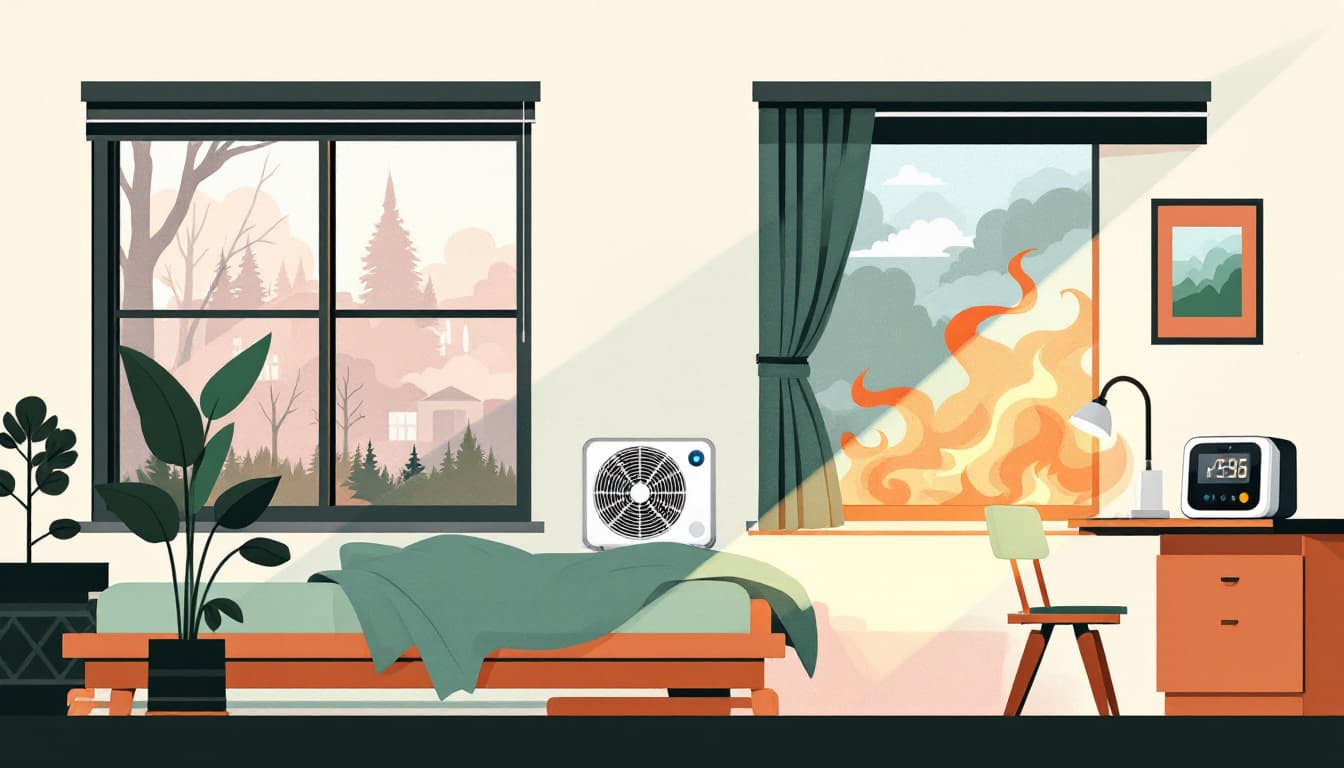
A Wind Advisory along the California coast and a Red Flag Warning for inland areas and foothills. ABC7 San Francisco reported both conditions this week, meaning CAL FIRE and the National Weather Service have assessed that low humidity, dry fuel, and sustained winds have lined up in the combination that turns a dropped cigarette or a sparking power line into something much worse.
This is not a fire. It is a condition. That distinction matters, because conditions are the moment when preparation is still possible.
What's actually changing
Red Flag Warnings are issued by the NWS when relative humidity drops below a threshold — often into the single digits inland — and winds sustained above 25 mph are forecast for an extended period. The coast getting a Wind Advisory at the same time tells you the pressure gradient driving this event is significant; marine layer air that usually suppresses fire risk isn't buffering the inland valleys the way it does in milder weeks.
California's fire season has effectively lost its seasonal walls. CAL FIRE data from recent years shows the agency responding to major fires in every calendar month. What used to be an October problem is now a May problem too. A Red Flag Warning in the second week of May is not anomalous anymore — it is the new baseline, which means households that were planning to "get ready before fire season" have already missed their window.
The specific geography that matters here: inland hills and valleys, particularly those in the Bay Area's East Bay hills, the Diablo Range, the Santa Ana corridor in Southern California, and the Sierra Nevada foothills. If you live in or adjacent to Wildland-Urban Interface (WUI) zones — and roughly one-third of California homes do — this advisory is addressed to you.
What we'd actually do
Spend 20 minutes this week confirming your evacuation zone and your household's go-signal. Cal OES maintains the My Hazards Awareness Map, and every California county has its own zone-lookup tool. Most households in WUI zones know roughly that they're at risk but have never looked up whether they're in Zone A, B, or C — and those letters determine when you're expected to leave. Find your zone, write it on a sticky note on the fridge, and decide in advance at what zone-level your household moves without waiting to see flames.
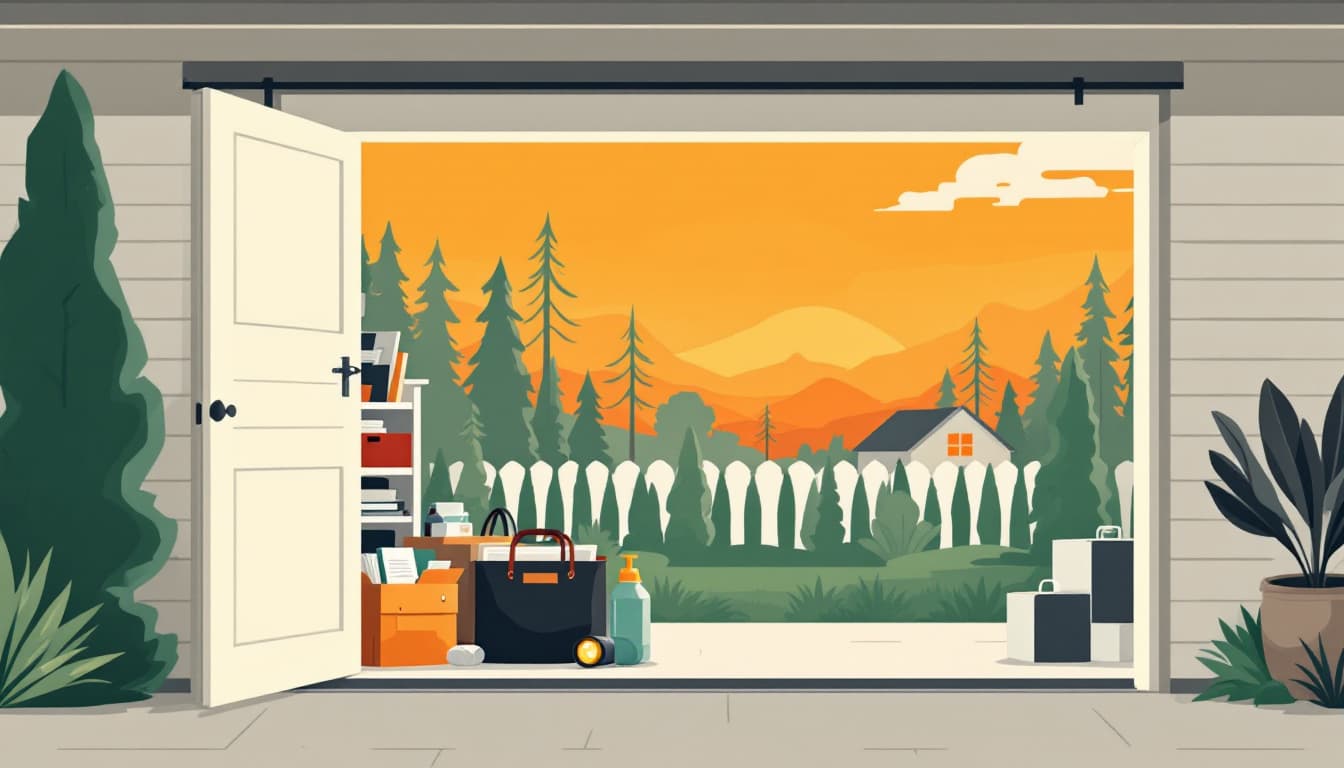
Assemble or audit a 72-hour bag that can actually leave with you in under five minutes. The standard guidance here is sound but rarely followed: medications for 72 hours minimum, copies of insurance and identification documents (digital backup on a thumb drive is fine), phone chargers, water for each person, and whatever a pet needs to survive three days. The bag should already be packed. If you have to pack it during an evacuation order, you will forget things. Go check it this week — not someday.
Clear a minimum of five feet of non-combustible zone around every exterior door and vent. CAL FIRE's "Ember-Resistant Zone" research consistently shows that most homes ignite not from direct flame contact but from embers landing in debris accumulated against the structure. Dry leaves in gutters, wood mulch against the foundation, a welcome mat at the back door — these are ignition points. Five feet of clearance around entry points and under eave vents is achievable in an afternoon and costs nothing but time.
Download Zonehaven or your county's evacuation app before you need it. Several California counties have adopted Zonehaven as their official evacuation management platform; others use AlertSF, SoCoAlert, or similar systems. Cell networks degrade fast during large evacuations. Download the relevant app now, enable push notifications, and confirm it's pulling from your correct address. A Red Flag Warning day is a good day to test whether the notification actually reaches your phone.
Check in with one neighbor who may need help leaving. This is not a preparedness cliché. California's WUI evacuation research shows that the households most likely to shelter in place too long are elderly residents and people with limited transportation. If you know someone on your street who fits that description, a five-minute conversation now — "if we both get an evacuation order, do you have a ride?" — is more valuable than any piece of gear.
The bigger picture
Red Flag Warnings are the California climate's way of making preparedness legible. The risk is not hypothetical on these days; it has a name, a zone, and a color on a map. That specificity is useful. Most preparedness failures in California aren't failures of information — households know fire is a risk. They're failures of execution: the bag that was never packed, the zone that was never looked up, the neighbor who was never asked.
Durability for a California household doesn't mean building a bunker or buying a generator the size of a refrigerator. It means removing the five minutes of friction that would otherwise cost you the window to leave safely. This week is a good week to do that.