A wildfire map flagged by IQAir this week shows the Shore Fire burning in Riverside County. The fire is a reminder that the Santa Ana wind corridor in Southern California does not wait for the calendar to say summer. Inland Riverside County, with its dry chaparral and hot June temperatures, can push fire toward populated areas quickly, and the air quality consequences reach households well outside the direct burn zone.
Most California families are not unprepared because they lack gear. They are underprepared because they delay the same three tasks every spring and never quite finish them before the first fire of the season makes the news.
What is actually changing
The Shore Fire itself may be contained by the time you read this. That is not the point. The point is the pattern: California's fire season has been trending earlier in the year, and the inland counties — Riverside, San Bernardino, Kern — now see meaningful fire activity in May and June, not just the October-November window that most households mentally budget for.
Cal Fire and the National Interagency Fire Center have both noted in recent briefings that fuel moisture levels across Southern California this spring have been below historical averages, which shortens the runway between ignition and rapid spread. A dry winter followed by early heat is a reliable setup for exactly the kind of early-season fire that the IQAir map highlighted in Riverside County this week.
The air quality angle matters even if you are 40 miles from the flames. AQI readings in the unhealthy range (above 150) reached parts of the Los Angeles Basin and Coachella Valley during fires that were burning in Riverside County terrain. Smoke travels, and it does not respect county lines.
What we would actually do
Check your N95 supply and the fit of every mask in the house. A box of N95 respirators stored in a garage since 2021 is not a plan. Heat and humidity degrade the elastics that create the facial seal. Pull them out, check the straps, and confirm you have at least five per household member. The key word is fit — an N95 worn loosely over a beard or a child's smaller face is closer to no protection than full protection. California's CDPH guidance recommends children be sized and fitted specifically; many standard N95s do not seal on kids under 12.
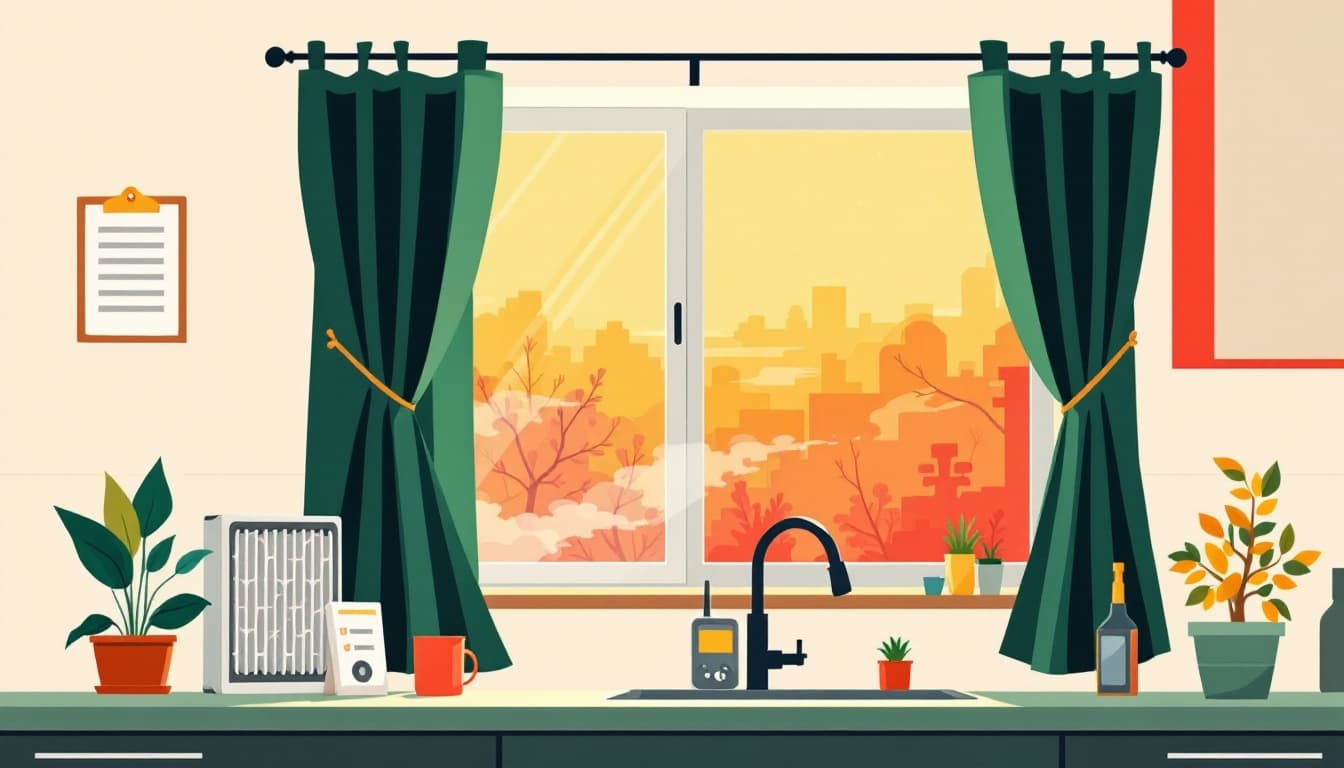
Set up an indoor clean-air room before you need it. Pick one room — typically a bedroom — that you can seal with rolled towels at the door gap and run a HEPA air purifier inside. A box fan with a MERV-13 or higher furnace filter taped to the intake is a functional, low-cost alternative that recent EPA-backed research confirms reduces indoor particulate significantly during smoke events. The time to identify and test that room is now, not when AQI hits 175.
Download and bookmark AirNow and the Cal Fire incident page for your region. IQAir and AirNow both provide real-time AQI maps that are more granular than a general weather app. The Cal Fire Southern Region incident page publishes evacuation warnings and watch zones by county. Add both to your phone's home screen. Many households during past Riverside County fires reported not knowing an evacuation warning had been issued for a neighboring zone until it was rescinded — because they were relying on local TV rather than direct agency feeds.
Audit your go-bag for summer conditions. If your family has an evacuation kit assembled from a November checklist, open it. Summer evacuation means different things: water needs double in 100-degree Riverside heat, medications stored in a hot garage can degrade, and the flip-flops that were fine in a rain event will not work on a fire debris road. Swap out anything heat-sensitive and add an extra two liters per person per day to your water estimate.
The bigger picture
Wildfire in Riverside County in June is not a catastrophe signal. It is a calibration signal. California households that treat each early fire as a dry run — checking supplies, confirming communication plans, testing their clean-air setup — build a kind of durability that no single gear purchase creates. The goal is not to be ready for the worst day imaginable. It is to be un-panicked and functional on the bad days that actually come, which in California increasingly means almost any week from May through November.
The Shore Fire is a prompt. Use it.