A report this week from FOX 5 DC described code red and purple air quality alerts blanketing the Washington, DC metro area — not from local industry or traffic, but from wildfire smoke drifting east. Code purple means particulate matter concentrations at levels that are dangerous even for healthy adults, not just for people with asthma or heart conditions.
Washington state households have watched this movie before. In the summers of recent years, the Spokane Valley, the Yakima Valley, the Methow, and even western Puget Sound communities have registered AQI readings above 200 for days at a stretch. The DC event is a useful reminder that smoke events arrive fast, often peak overnight, and catch households unprepared even when fire season is a known annual risk.
What's actually changing
The problem is not just that wildfires are large — it's that smoke dispersal is unpredictable at the household level. A fire burning in eastern Oregon or British Columbia can produce air that is technically hazardous in Seattle by the following morning, with little warning from a standard weather app. The Washington State Department of Ecology publishes real-time AQI data through its air quality monitoring network, and the EPA's AirNow site aggregates it, but most families don't check either until they can already smell smoke indoors.
The other shift worth naming: public guidance has moved away from "stay indoors" as a complete solution. Research published through the EPA and academic air-quality labs over the past several years established that most Washington homes — built before modern air-sealing standards became common — exchange indoor and outdoor air fast enough that a code red event outside will produce a code orange environment inside within a few hours, even with windows closed. If your HVAC filter is a fiberglass 1-inch flat panel, it is not meaningfully filtering fine particulate matter (PM2.5).
What we'd actually do
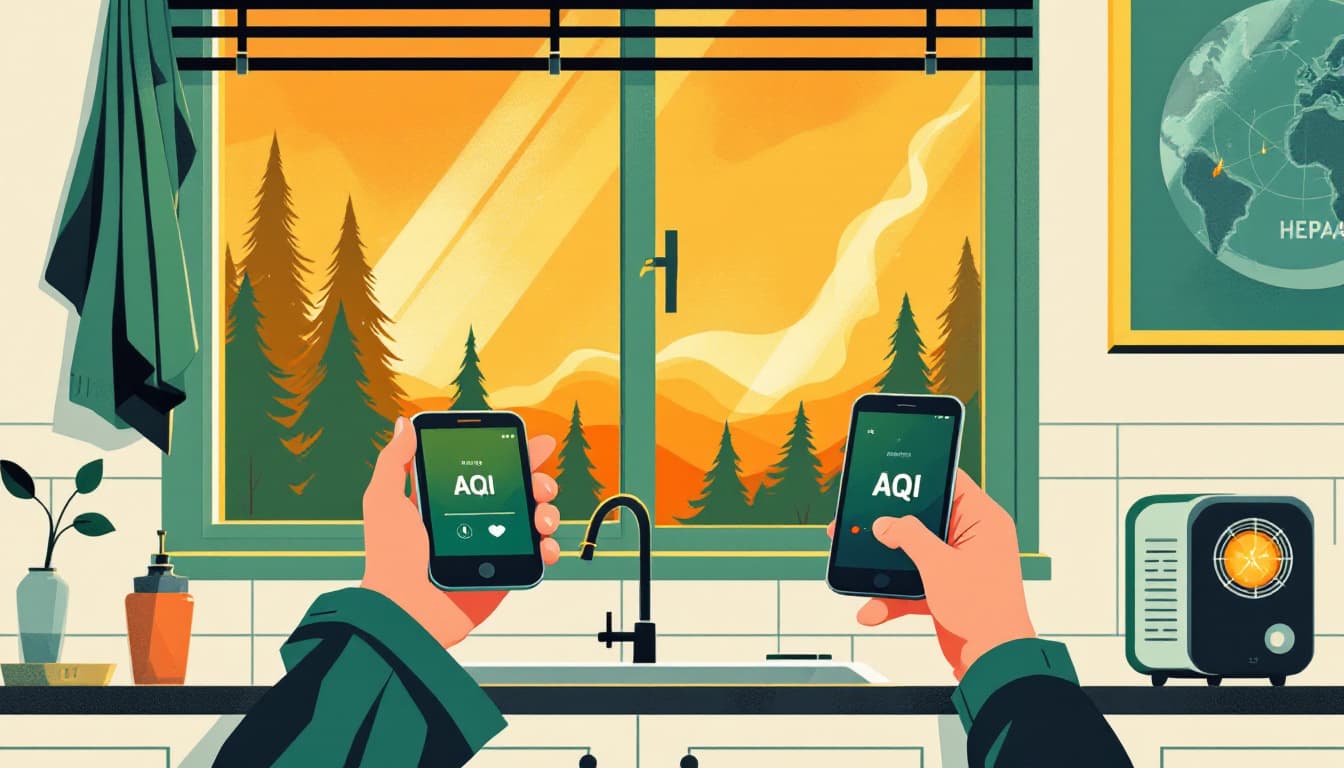
Set an AQI alert on your phone right now, before the next fire ignites. The EPA's AirNow app (free, iOS and Android) lets you set a location-specific notification threshold. Set it at AQI 100 — "unhealthy for sensitive groups" — so you have a day's lead time before conditions go critical. Waiting until you smell smoke means you've already been breathing PM2.5 for hours.
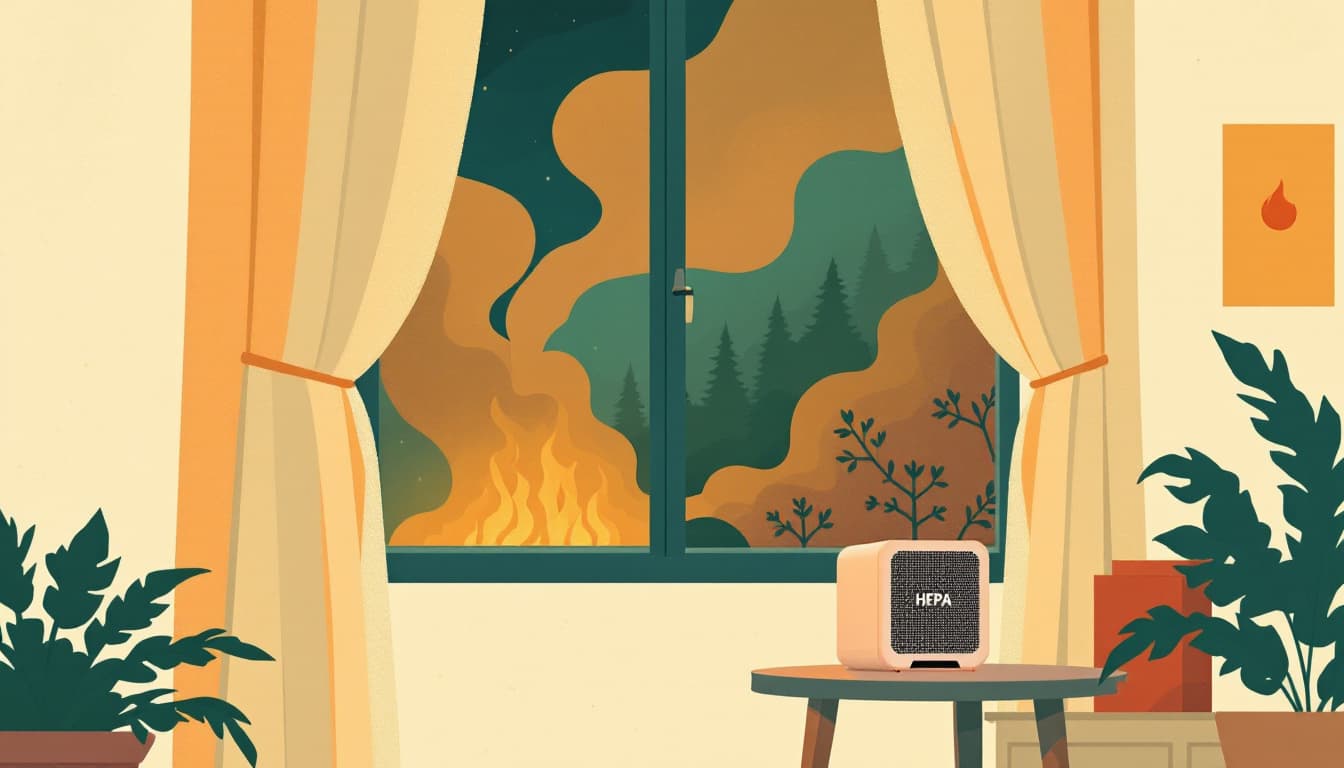
Upgrade at least one room to MERV-13 filtration or better. A MERV-13 filter costs roughly $15–25 and fits most standard 1-inch and 2-inch HVAC slots. It is the minimum rating that captures PM2.5 particles effectively. Run your HVAC fan continuously (not just when heating or cooling) during smoke events to cycle air through the filter. If your system won't support MERV-13 due to airflow restrictions — some older systems can't — a box fan with a 20x20 furnace filter taped to the intake face (the "Corsi-Rosenthal box" design) costs under $60 in materials and performs comparably to mid-range air purifiers in a single room.
Designate a clean room before you need it. Pick one interior room — usually a bedroom — that you can seal reasonably well with towels along door gaps and that contains your HVAC return or a portable filtration unit. During a code red or purple event, healthy adults can reduce their total exposure significantly by spending sleeping hours in this room rather than treating the whole house as equally protected. Families with young children or members with respiratory conditions should treat clean-room setup as non-negotiable, not optional.
Stock N95 respirators, not surgical masks. Surgical masks do not seal against fine particulate. NIOSH-approved N95s do, when worn with a proper face seal. Buy a small supply now — 10 to 20 masks per household member — while they're available at normal prices, not during the scramble of a smoke event when local hardware stores sell out in hours. They cost roughly $1–2 per mask in multi-packs.
Know your evacuation trigger, not just your shelter-in-place plan. Smoke events and fire proximity are two different threats, and they can arrive together. Washington state uses the Ready, Set, Go! framework for evacuation levels through county emergency management offices. Look up your county's specific alert system — Snohomish, King, Yakima, and Spokane counties each use different notification platforms — and register for alerts before fire season peaks in August and September.
The bigger picture
The DC region story is useful to us in Washington precisely because it shows what these events look like to people who weren't expecting them. The households hardest hit are almost always the ones who assumed smoke at that level was somebody else's problem until the day it wasn't. Washington has the geography, the fire load, and the wind patterns to produce these events domestically, and the trend over recent fire seasons has not been toward shorter smoke windows or lower peak concentrations.
This is not a reason to panic or spend thousands on a whole-house filtration system this weekend. It is a reason to spend $30 on filters and 20 minutes on app settings before August. Durability looks like small, boring decisions made before the event, not frantic ones made during it.