A FOX 29 Philadelphia report this week flagged extreme heat as the backdrop for Fourth of July celebrations in Washington D.C. — fireworks, crowds, and temperatures pushing into dangerous territory. The same pattern is showing up across the country. For households in Washington state, this is not an abstract concern.
The 2021 Pacific Northwest heat dome is the reference point here. Temperatures hit 116°F in Lytton, British Columbia, and 108°F in Seattle. Washington state's Department of Health confirmed 112 heat-related deaths over roughly four days. Most victims were elderly, lived alone, and did not have air conditioning. The lesson was not that heat was new — it was that Western Washington households had no infrastructure or habits built for sustained triple-digit heat.
What's actually changing
Western Washington homes were designed for rain and mild summers. Fewer than half of Seattle-area residences had central air conditioning before 2021, and that gap closes slowly. Eastern Washington — Yakima, Spokane, the Tri-Cities — has historically run hotter, and residents there have more adaptive habits, but aging housing stock and extended drought conditions raise the stakes for everyone.
What's shifting is the frequency. Heat events that climate scientists once categorized as once-in-fifty-years are arriving more often. Washington's Department of Ecology tracks this. That doesn't mean every July is catastrophic — it means households that treat cooling as a luxury rather than a system are running a recurring risk.
Wildfires complicate this further. During a heat event, smoke from Eastern Washington or Oregon fires can push Air Quality Index readings into the unhealthy range across the state, turning the standard advice ("open your windows at night to cool down") into a health hazard. You cannot always ventilate your way out of the heat.
What we'd actually do
Identify your cooling anchor now, before a heat advisory is issued. Don't assume your house can serve as your cooling anchor. Pick a backup: a library, community center, or the home of a friend or family member with reliable AC. King County, Snohomish County, and Spokane County all operate cooling centers — locate the nearest one at your county's emergency management website before you need it. During the 2021 dome, some cooling centers filled quickly.
Buy a window AC unit or portable AC this week, not during the event. Demand spikes the moment a heat advisory drops, and units sell out at Home Depot and Costco within hours. A basic 5,000 BTU window unit costs $150–$200 and is sufficient for one room. That one room — ideally a bedroom — is what gets your household through a three-night event. You do not need to cool your whole house.
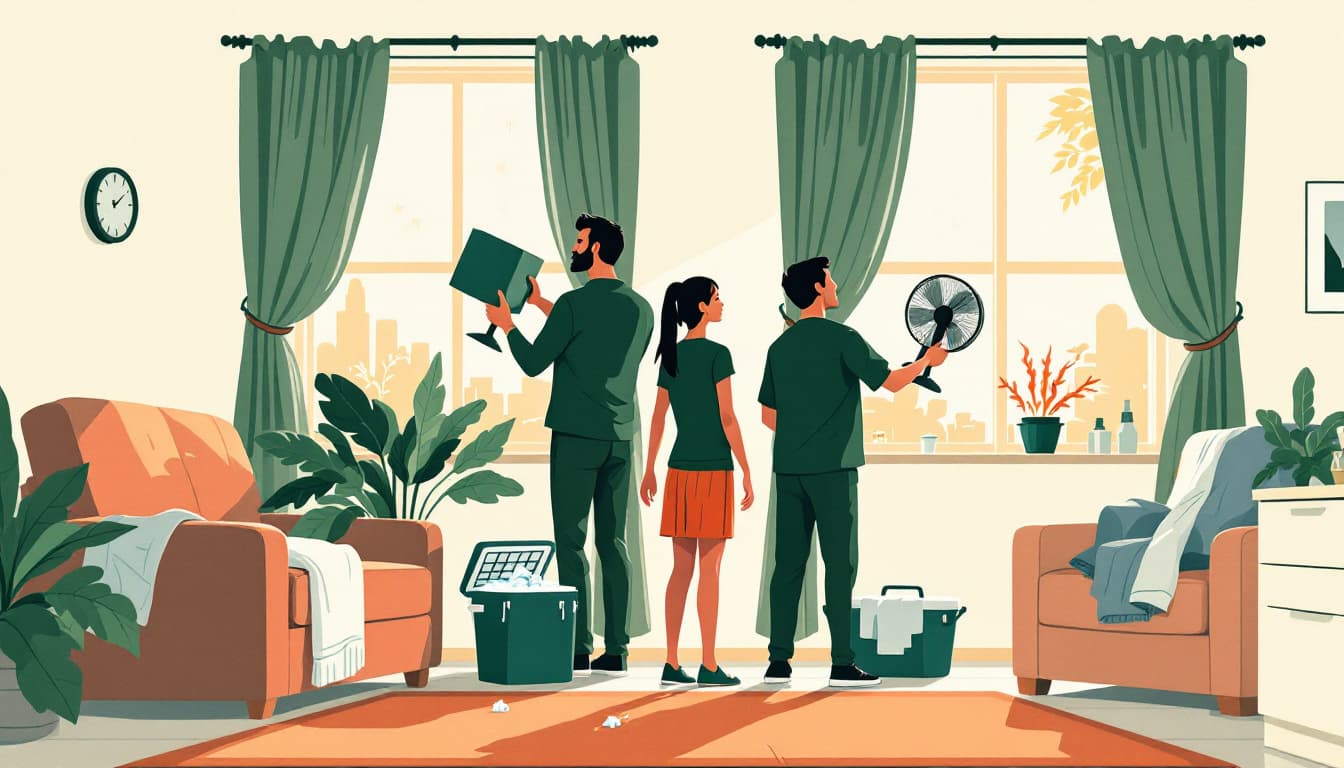
Build a no-power cooling kit. Power outages during heat events are a real secondary risk — demand surges strain the grid. A no-power kit: battery-powered fan, frozen water bottles in a cooler, lightweight cotton sheets, and a battery or hand-crank weather radio. Misting a cotton sheet with water and draping it over a window fan cuts ambient temperature meaningfully. It's not comfortable, but it's safe.
Check on one neighbor. Washington's heat deaths in 2021 were concentrated among people living alone. Pick one person on your block — elderly, lives alone, no car — and make a plan to check on them by noon on the hottest days. This is not sentimentality. It is the single highest-impact action most households can take during a regional heat event.
Know your thresholds for evacuation. If your home's indoor temperature hits 90°F and isn't dropping by midnight, leave. Go to a cooling center, a 24-hour business, or a friend's house. Heat illness develops faster than most people expect, and impaired judgment is one of its earliest symptoms — which means you will underestimate your own condition. Set the threshold in advance, when you're thinking clearly.
The bigger picture
Washington households built resilience around earthquake kits, Go-bags for wildfire evacuations, and three-day emergency food supplies. Extreme heat has been underprepared for in this state relative to its actual mortality risk. The goal is not to catastrophize about every hot weekend. It is to close a specific gap — the lack of a cooling plan — before the next heat dome arrives, because the next one will arrive with little warning and will last longer than feels possible on a mild July morning.
The 4th of July is a good forcing function. It's already hot, neighbors are already gathered, and the conversations are easy. Use it.