A report this week from The Olympian confirms an extreme heat warning is in effect for Southwest Washington from Sunday through Tuesday. That corridor — covering the Chehalis Valley, the Longview-Kelso metro, and the lower Columbia River communities — sits in a geographic bowl that traps heat longer than coastal or higher-elevation areas. Residents there have fewer days per year to acclimate than Yakima or the Tri-Cities, where summer heat is routine. This warning is not routine for them.
What's actually different about this event
Washington west of the Cascades is not built for heat. That is not a complaint; it is an infrastructure fact. According to U.S. Census data, less than half of homes in the wetter, west-side counties have central air conditioning, compared to the national average of roughly 90 percent. That gap closes slowly. When a multi-day event hits — not a single afternoon spike, but 72-plus hours of elevated overnight lows — the problem compounds. Your house absorbs heat each day and never fully sheds it overnight. By Tuesday morning, the indoor temperature in an uncooled Olympia or Centralia bungalow can exceed the outdoor low by 10 degrees or more.
That is the scenario that produces heat-related illness. Not a hot afternoon. A hot afternoon after two hot nights in a building that never cooled down.
The other piece of this: Washington's power grid is reliable relative to many states, but sustained heat drives demand spikes that can produce localized outages. Puget Sound Energy and Pacific Power both serve portions of Southwest Washington. If you lose power during a heat event, your situation changes fast.
What we'd actually do
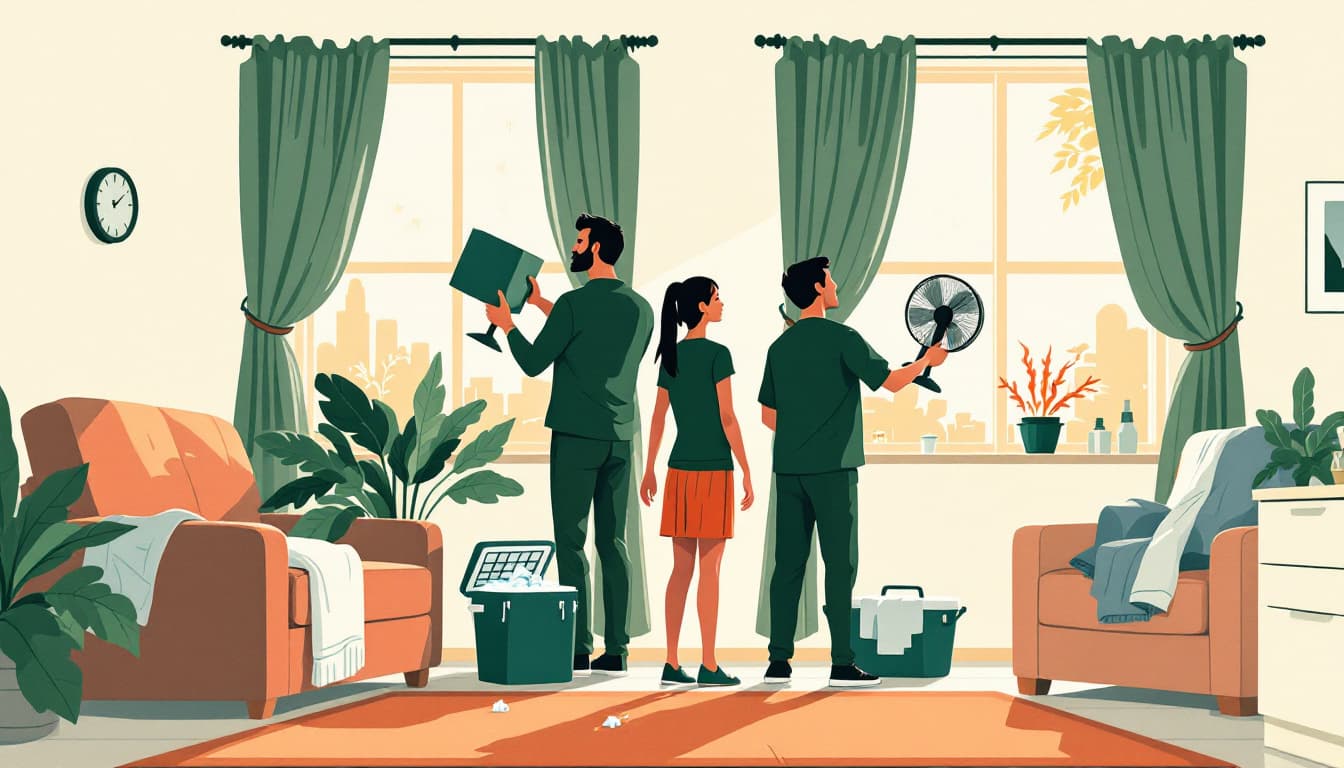
Pre-cool your home aggressively before Sunday morning. Open windows tonight and tomorrow night — Friday and Saturday are your window. Run fans to flush hot air out and draw cooler night air in. The goal is to lower the thermal mass of your walls, floors, and furniture before the warning period begins. Once the event starts, keep windows and blinds closed during the day.
During the first Pacific Northwest heat dome in 2021, many households reported that they didn't close up their homes in time on the first morning. By 10 a.m. it was already too late to prevent heat gain. Set a reminder for before sunrise Sunday: close everything up.
Identify your nearest cooling center now, not Sunday. Washington State's Department of Commerce coordinates a cooling center map updated by county emergency management offices. Clark County, Cowlitz County, and Lewis County all maintain their own listings. Look it up today. Write the address down. If you have elderly neighbors or relatives without AC in the Southwest Washington area, call them this weekend — not to alarm them, but to make a plan. The 2021 heat dome killed more Washingtonians than any weather event in recent state history. Most of those deaths happened in uncooled private residences.
Charge everything and fill the freezer. If you lose power mid-event, your timeline shrinks. Charge phones, battery banks, and any portable fans to full before Sunday. Fill unused freezer space with water in zip-lock bags or plastic containers. A full freezer stays cold roughly twice as long as a half-empty one. Those ice blocks can move to a cooler if you need to relocate or keep medications cold.
Have a go-to cool space that isn't your house. A mall, a library, a movie theater, a friend's home with AC — pick one ahead of time. The psychological barrier to leaving your home is real. People stay in dangerously hot conditions because they don't want to seem dramatic. Make the decision now, in the abstract, so you don't have to make it at noon on Monday when you're already heat-stressed. The threshold is simple: if indoor temps hit 85°F and aren't dropping, you go.
Know the signs that matter. Heat exhaustion — heavy sweating, weakness, cold or pale skin, a weak pulse — is treatable at home with rest and hydration. Heat stroke — hot and red skin, rapid strong pulse, confusion, loss of consciousness — is a 911 call. The difference between the two is the difference between a bad afternoon and a life-threatening emergency. Confusion is the signal. If someone seems confused or stops sweating during a heat event, call 911 immediately.
The bigger picture
Southwest Washington does not get warnings like this often, which is exactly why the response needs to be more deliberate, not less. Communities that deal with extreme heat regularly have built the habits and the infrastructure for it. Communities that don't are more vulnerable precisely because they haven't. This week is a test of household resilience — not survivalism, not catastrophizing. Just knowing what your home does in heat, where you'll go if it becomes untenable, and who in your network needs a check-in call.
Durability is the goal. You are not preparing for the apocalypse. You are preparing for Tuesday.