The Cascade snowpack that feeds Washington's rivers, irrigates the Yakima Valley, and quietly backs up municipal water systems across the state hit critically low levels again this spring. A report this week from the Yakima Herald-Republic confirmed what state agencies have now said four years running: Washington is in drought. Four consecutive declarations is not a pattern you explain away with a single dry winter. It is a structural shift in how water arrives, how much arrives, and when.
What's actually changing
A drought declaration in Washington triggers specific state mechanisms — streamflow monitoring, irrigation curtailments, potential emergency funding — but it does not automatically affect your tap water today. The distinction matters. Most municipal customers west of the Cascades, in Seattle and its suburbs, draw from reservoirs with enough capacity to absorb a bad snowpack year without immediate service interruption. East of the mountains, the stakes are more direct. Yakima-area irrigators have operated under water-rights curtailments in previous drought years, and senior water-right holders take priority over junior ones when flows drop. If you have a well in Kittitas, Chelan, Okanogan, or Yakima County, your situation is materially different from someone on a Seattle city main.
What four consecutive years does, regardless of your water source, is draw down the margin. Aquifer recharge slows. Reservoir operators carry less cushion into summer. Fire risk climbs, which strains emergency water systems. Utility boards begin conversations about tiered pricing and summer restrictions. These changes tend to arrive without much warning at the household level.
The other shift worth tracking is urban outdoor water use. Several Puget Sound utilities introduced voluntary or mandatory summer restrictions in recent years during far less severe drought conditions. Four years in, expect those conversations to become policy faster than before.
What we'd actually do
Know your actual water source before summer peaks. Call your utility or check your county assessor records to confirm whether you're on municipal supply, a shared well, or a private well. This is not hypothetical groundwork — curtailment rules, restriction notices, and emergency contacts are completely different depending on that answer. Washington's Department of Ecology maintains a public water-rights database at ecology.wa.gov that is worth fifteen minutes of your time.
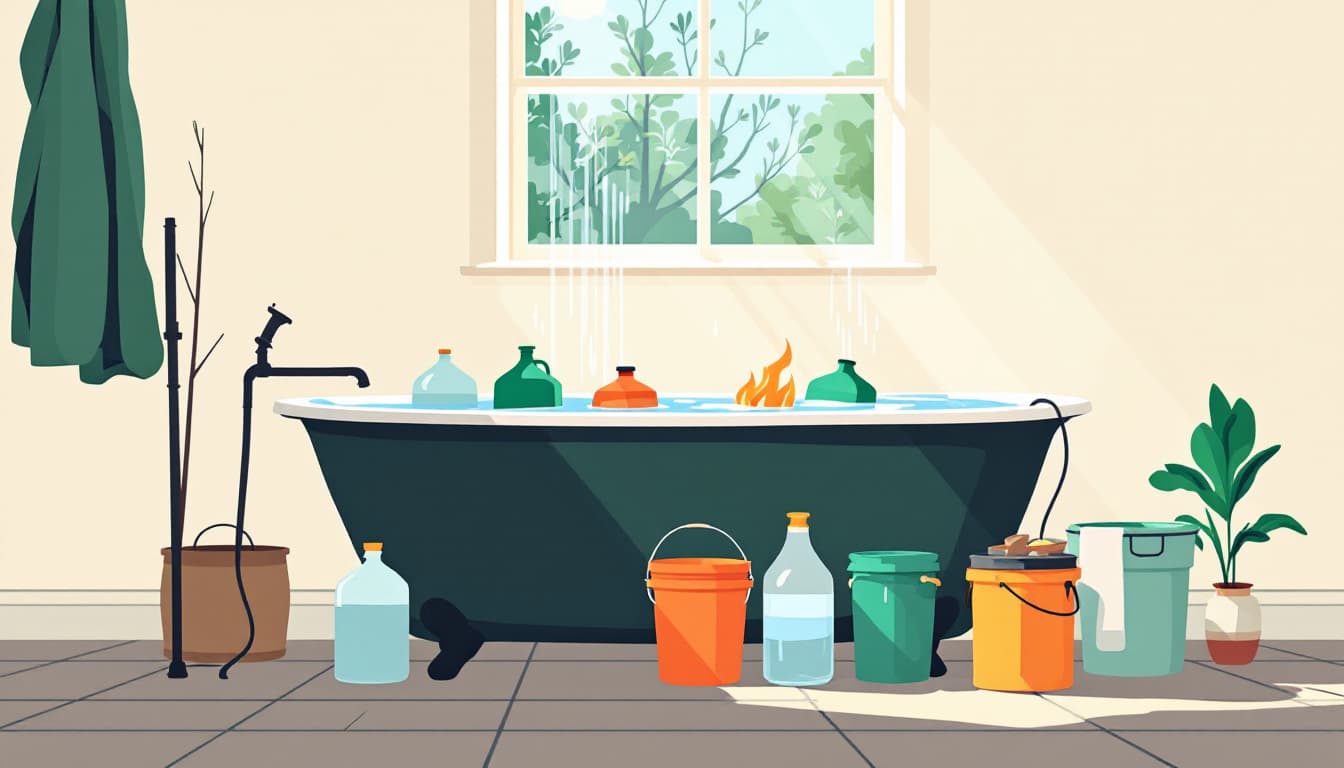
Store a meaningful amount of water before July. FEMA's standard guidance of one gallon per person per day for three days is the floor, not the target. A family of four should have at minimum a two-week supply — roughly 56 gallons — accessible at home. WaterBOB bathtub bladders run under $30 and hold up to 100 gallons from your tap before a restriction kicks in. Rigid 5-gallon food-grade jugs stored in a garage cost roughly $8 each and last years if kept out of direct sunlight.
Audit your outdoor water use now, not in August. Summer irrigation is the first thing utilities target in restriction orders, and it is also the most immediate lever you control. If you have an automatic sprinkler system, check the schedule today and cut it back by 20 percent. That single adjustment could keep you below restriction thresholds while your neighbors scramble. If you are in Yakima, Ellensburg, or Wenatchee, consider whether your lawn is worth the water at all this year.
Check your hot water heater and any whole-house filtration for sediment. During drought years, surface water supplies can carry higher sediment loads as flows concentrate. Municipal systems handle this, but the sediment hits your filters harder and faster. Replacing a whole-house sediment pre-filter now costs a few dollars and thirty minutes. Waiting until August when flow pressure is already irregular costs more, in time and in equipment wear.
If you're on a private well in eastern Washington, have it tested and note the current water level. The Washington State Department of Health recommends annual testing anyway; drought years make it urgent. Well depth and static water level data from your drilling log (available through Ecology's well log database) gives you a baseline to compare against if the well starts running slow by August.
The bigger picture
Four drought years in a row is not a reason to panic or move. It is a reason to close the gap between how you think your water supply works and how it actually works. Most households in Washington have never had to think carefully about water — the state's reputation for rain makes that psychologically easy. That reputation is built on west-side winters, not summer hydrology, and not eastern Washington basin realities.
Durability is the goal. A household that understands its water source, has two weeks of stored water, and has already reduced outdoor irrigation is in a genuinely different position than one that hasn't. None of those steps require significant money or lifestyle change. They require about one afternoon and the willingness to take a four-year trend seriously.