Snowpack in parts of the Washington Cascades came in below normal for the second consecutive year this spring. That number matters to anyone east of the mountains living on irrigation-dependent well water, and it should matter to a broader ring of households in western Washington who assume municipal supply is insulated from drought pressure. It isn't, entirely.
A recent report from AG Information Network of the West flagged water management concerns across the region, focused primarily on agricultural allocations. The agricultural frame is the right one to start with — farmers hold senior water rights and will draw hard on available surface water through July and August — but the downstream effect on household users rarely makes it into the coverage.
What's actually changing for Washington households
Washington allocates water under the prior appropriation doctrine: senior rights holders draw first, junior rights holders curtail when supply tightens. Most residential well owners hold junior rights without knowing it. During a drought year, the Washington Department of Ecology can and does issue curtailment orders in stressed basins, particularly in the Yakima, Okanogan, and upper Columbia drainages. The Yakima Basin has operated under some form of shortage protocol in recent dry years, and households on exempt wells in that region have seen pressure drops.
West of the Cascades, the risk profile is different but not zero. The Puget Sound region draws from snowmelt-fed reservoirs. In a low-snowpack year, those reservoirs enter summer with less buffer. Seattle Public Utilities and Tacoma Water both publish reservoir levels publicly; most households never check them. Stage 1 conservation advisories in the region are not rare in late summer.
There's also the well-owner problem. Washington has roughly 500,000 registered exempt wells statewide, according to Ecology's own estimates. Exempt wells are not metered, not monitored in aggregate, and owners often have no idea of their well's depth relative to the water table. A dry August can drop a shallow well below the pump intake with no warning.
What we'd actually do
Check your water source's current status, this week. Go to the Washington Department of Ecology's Water Resources database and look up your water right or your utility's right. If you're on a municipal system, find your utility's current reservoir or supply level — most post it on their website or publish a monthly report. Knowing whether you're at 90% or 65% of normal storage changes how urgently you plan the rest of this list.
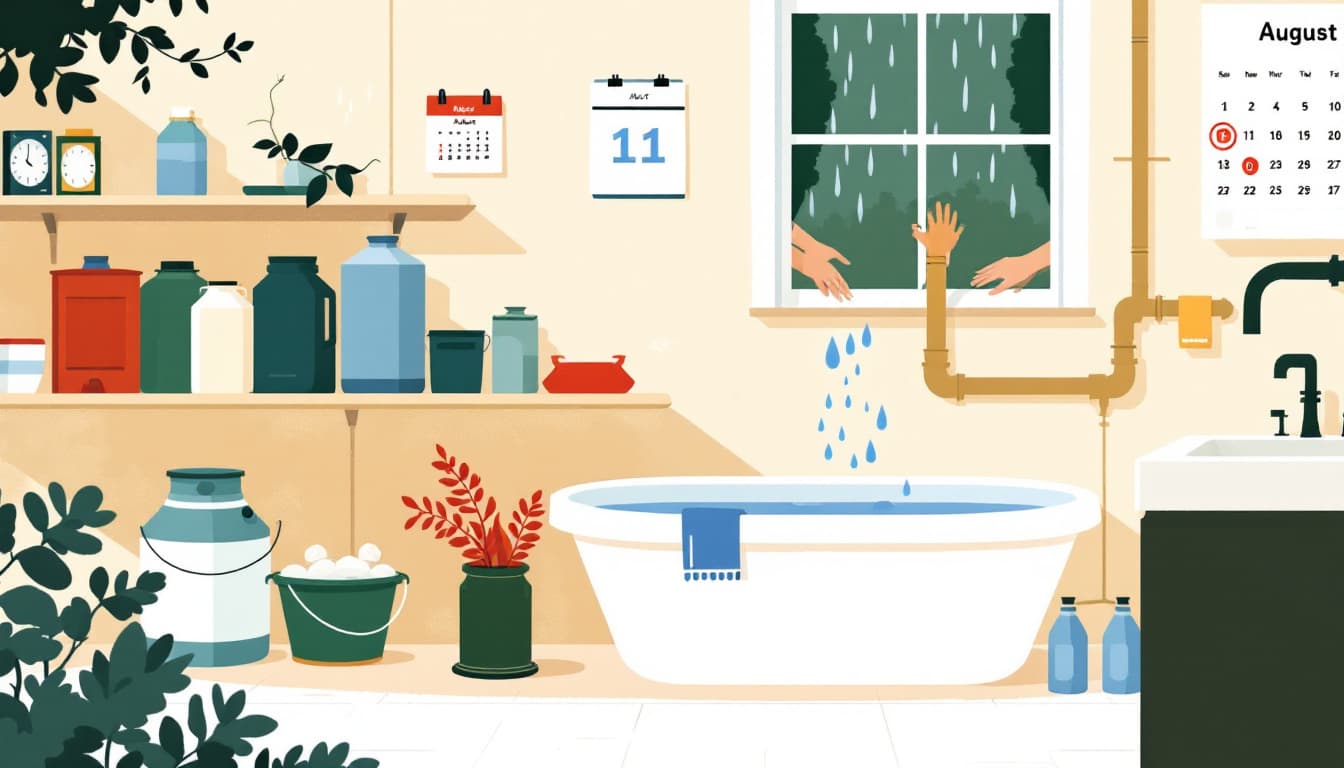
Buy three to five days of stored water per person before July. The standard guidance is one gallon per person per day for drinking and sanitation. A family of four needs a minimum of 12 gallons to cover three days. Food-grade seven-gallon containers cost around $15 each and stack under a utility sink. This is not a doomsday measure; it's the same logic as keeping a spare tank of propane. A curtailment event, a pump failure during peak summer heat, or a wildfire-related contamination advisory can strand you without tap water for 48 to 96 hours in rural Washington.
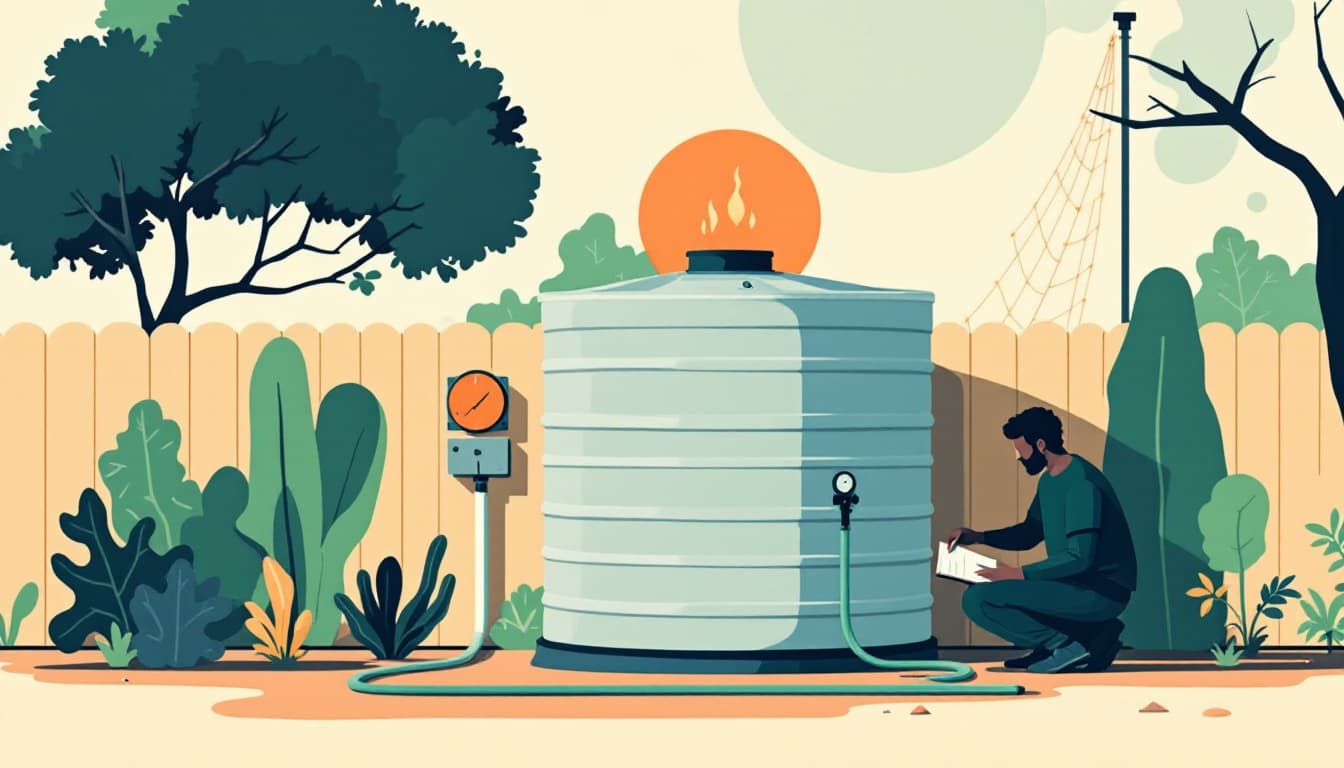
If you're on a private well, schedule a water test and ask about pump depth. A basic potability test through a state-certified lab runs $50–$100 and tells you what's actually in your water. While you have a well contractor on the phone, ask what depth your pump is set at versus the known static water level in your area. If your pump is set within 20 feet of the typical summer water table, you're at real risk of a dry-pump event in a low-recharge year.
Audit your outdoor water use and cut it now, before restrictions force you to. Outdoor irrigation accounts for roughly half of residential summer water demand in dry regions of Washington. Shifting to drip irrigation, watering before 6 a.m., and replacing high-water turf in even a small area meaningfully reduces your draw. If voluntary conservation keeps your utility out of Stage 2 restrictions, you avoid the heavier mandatory cuts that complicate everything from vegetable gardens to fire suppression landscaping.
Know your county's drought declaration status. Washington's governor can declare a drought emergency, which unlocks Ecology's emergency water-use programs and can trigger state assistance for affected water systems. Kittitas, Okanogan, and Chelan counties have been part of prior declarations. Bookmark your county's emergency management page and Ecology's drought page now, before you need them.
The bigger picture
Drought in Washington is not a catastrophe — it's a recurring condition the state has managed unevenly for decades. Agricultural users, tribal water rights, and municipal systems are all navigating competing claims on a finite snowmelt budget. Households are rarely the first call in that negotiation.
The goal is not to stockpile water in a panic. It's to not be the family that gets blindsided by a curtailment notice in August and realizes they have nothing to drink, wash with, or fight a spot fire near the property line. That's a solvable problem, and May is the right time to solve it.