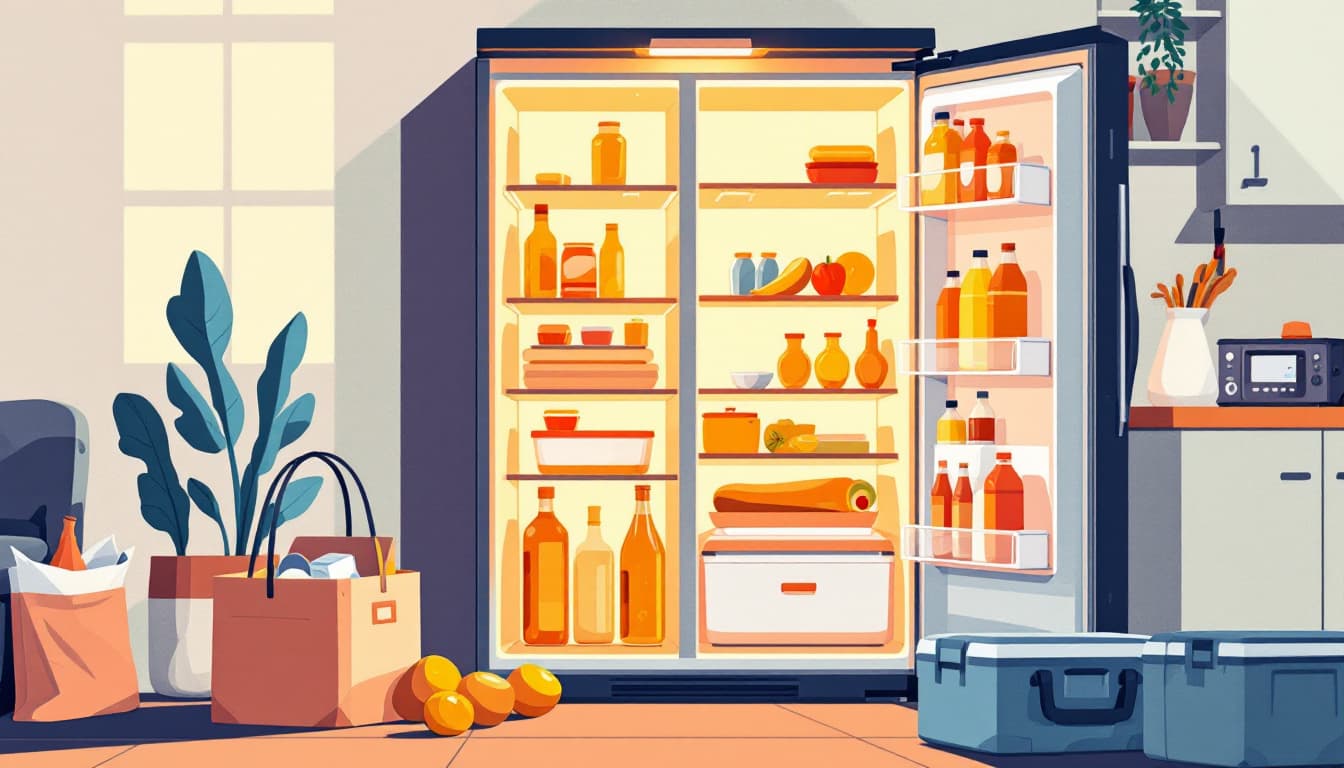
The power goes out on a Tuesday afternoon in late July. It happens — a transformer problem two streets over, nothing dramatic. Most households lose a freezer full of food they're annoyed about. One household on that street has a different calculation to make: there are eleven days of insulin in the refrigerator door, the backup pen has been sitting at room temperature since April because no one tracked when it was opened, and the pharmacy is closed until morning.
This is not a catastrophic scenario. It is a Tuesday. That's the point.
The medication cold chain ends at your front door
The pharmaceutical industry maintains an elaborate temperature-controlled supply chain from manufacturer to distributor to pharmacy. The moment you sign for a prescription and walk out, that chain is your responsibility. For the roughly 8 million American households that depend on refrigerated medications — insulin is the most common, but the category also includes certain biologics for autoimmune conditions, some liquid antibiotics, and a growing list of GLP-1 drugs — this is an underweighted logistics problem sitting inside their home right now.
The vulnerability has a specific shape. It is not "what if the grid goes down for a month." It is much more ordinary than that:
- The average U.S. household experiences somewhere between one and three power interruptions per year lasting more than two hours, according to utility reliability data compiled by the Energy Information Administration.
- A standard refrigerator, unopened, holds safe temperatures for roughly four hours. Open it twice and you've burned through that buffer faster.
- Most temperature-sensitive medications have manufacturer guidance of 28 days at room temperature after first opening — but that window is cumulative and often untracked.
- Insulin in particular degrades faster than most people realize once it's been heat-stressed: it may look identical but deliver inconsistent dosing.
Do the multiplication: if you have someone in your household who uses a refrigerated medication every day, they are fully exposed to this risk several times a year, and most households have no documented plan for it.
Why people underweight this
The preparedness world spends enormous energy on food, water, and security. Medication management gets brief mentions — "store a 30-day supply," which is useful but incomplete for anything that requires refrigeration. You can't just stockpile insulin in a closet.
There's also a psychology of delegation at work. People trust the healthcare system to have handled this. And the healthcare system has — up to the pharmacy counter. After that, the assumption of competence reverses: the system assumes you know what you're doing. The gap between those two assumptions is where the risk lives.
A third factor: the consequences are delayed and ambiguous. If refrigerated medication has been compromised, you often don't know it immediately. Blood sugar runs high; you adjust your dose; you attribute it to diet or stress. The feedback loop is long enough that most people never connect the degradation event to the outcome.
What to do this week
Document your cold-chain medications. Make a list of every refrigerated drug in your household, including the manufacturer's room-temperature stability window (found on the package insert or your pharmacist can tell you in under two minutes). Write the date you opened each one on the packaging with a marker.
Buy a refrigerator thermometer with a min/max memory function. These cost less than $15 at most hardware stores. Check it weekly. You want to know if your fridge spiked to 55°F during a warm night when the door seal is wearing out — not just whether your milk went bad.
Prepare a 48-hour thermal plan, not a 30-day plan. A high-quality insulated cooler with a frozen gel pack maintains safe temperatures (below 46°F) for 24 to 48 hours if kept sealed. Practice the handoff: when does the outage become serious enough to move medications to the cooler? Write it down.
Call your pharmacy about emergency supply. Many states have emergency dispensing laws that allow pharmacists to provide a short supply of critical medications during declared emergencies. Know whether yours does, know your pharmacist's name, and keep that number somewhere other than your phone.
Check your insurance for a "vacation override." Most plans allow a one-time early refill for travel. If you're chronically close to running out, this is a legal, covered buffer you may not be using.
The bigger pattern
Household resilience fails most often not at the dramatic edge cases but at the slow-leak risks that don't announce themselves — the vulnerability you never quite got around to addressing because nothing bad had happened yet. Temperature-sensitive medications are a textbook example: the exposure is real, the math is easy to run, the mitigation is genuinely achievable, and the stakes for the specific household affected are very high.
The four hours your refrigerator buys you is not a crisis. It is a window. The question is whether you know what's in it.