A WESH report this week put Central Florida under dangerous heat advisories, with feels-like temperatures climbing past triple digits. That number — the heat index, not the thermometer — is the one that kills. It reflects what your body actually experiences when humidity prevents sweat from evaporating, which is most of Florida from June through September.
This is not a freak event. It is the baseline condition for about 90 days a year in the I-4 corridor. The reason it warrants attention right now is that household systems — air conditioning units, medications, the power grid, and elderly relatives — fail along predictable and preventable lines. The heat advisory is the signal to audit yours before something breaks.
What's actually changing
Florida's heat isn't getting more dramatic; it's getting longer. The stretch of days where the heat index exceeds 103°F has expanded over recent decades, according to NOAA climate tracking data. That matters for two reasons households rarely account for.
First, air conditioning equipment degrades under sustained load. A unit that runs 14 hours a day in June gets a rest at night. A unit running around the clock for a two-week heat dome does not. Compressors fail. Refrigerant levels that were "good enough" in spring aren't in July. Utility companies in Florida, including Duke Energy Florida and FPL, have historically seen demand spikes during Central Florida heat events that cause rolling brownouts — voltage sags that are harder on HVAC motors than a clean outage.
Second, the households most likely to lose cooling are not always the ones without AC. They're the ones with a landlord who won't fix a struggling unit, a renter who can't afford the electric bill to run it continuously, or an older system that trips the breaker under load.
Medication storage is the other underreported issue. Insulin, certain thyroid medications, and some liquid antibiotics have storage maximums between 77°F and 86°F. A home that hits 88°F in a back bedroom — common when a single-zone system struggles — can degrade a month's supply of medication without the resident noticing.
What we'd actually do
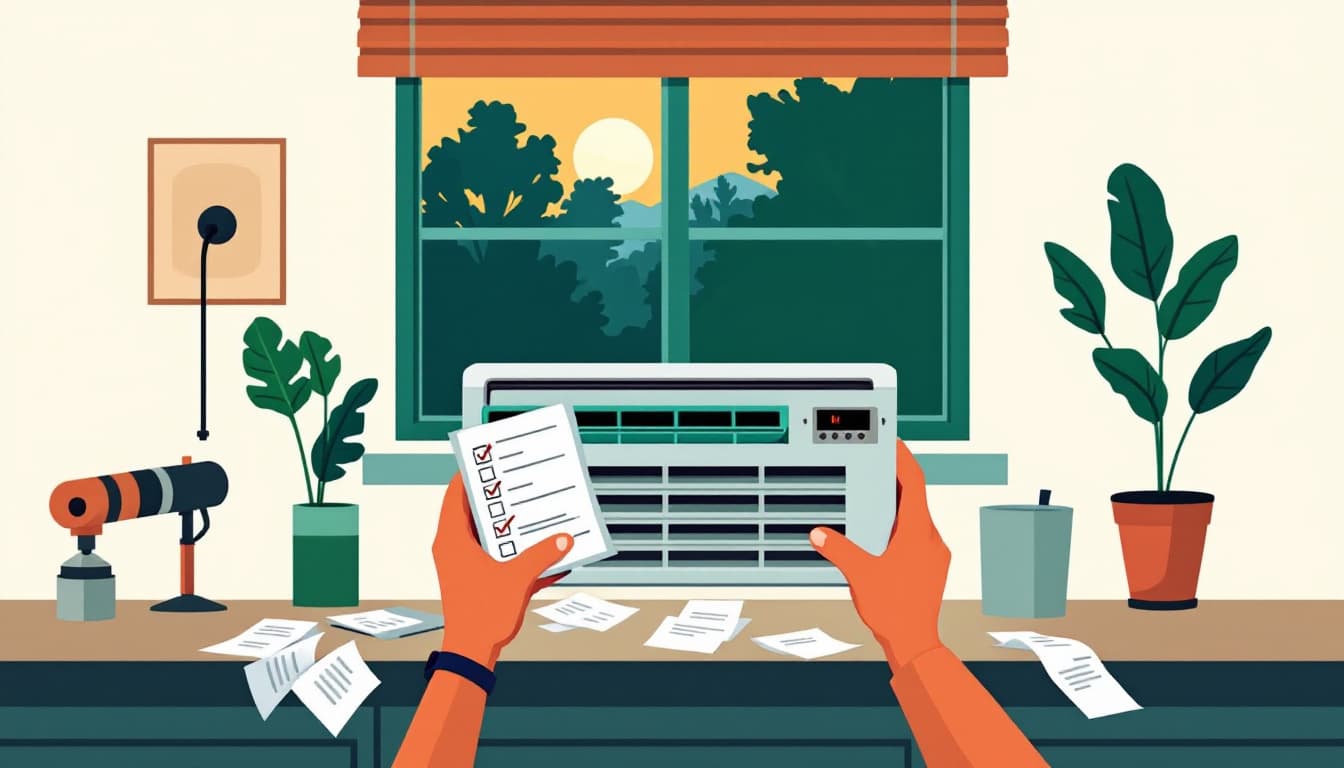
Get your AC filter and coils checked this week, not next month. A dirty evaporator coil forces the compressor to work harder and is one of the leading causes of preventable system failure during heat events. If you haven't had a service call this season, schedule one now. Florida HVAC companies book out fast once a heat advisory hits. A basic tune-up typically runs $80–$150 and is cheaper than an emergency weekend call.
Identify your household's one cool room and make it work. If your central system fails or your bill hits a number you can't pay, a single portable or window unit running in one room where everyone sleeps is a viable fallback. A 8,000–10,000 BTU window unit costs $200–$350 and can cool a 350 sq ft room adequately. Know which room that would be, know what circuit it would run on, and confirm you have or could get the unit before the emergency.
Check medication storage temperatures today. Walk through your home with a cheap indoor thermometer ($10–$15 at any hardware store) and check every room where you store prescriptions. If any room exceeds the labeled storage maximum during the day, move those medications to a cooler location or consider a small insulated medication case. Call your pharmacist if you're unsure whether a medication was already compromised — most will replace insulin damaged by heat with documentation.
Know your county's cooling centers before you need one. Orange, Osceola, Seminole, and Polk counties all operate cooling center programs during declared heat emergencies. Locations and hours change each season. Look them up today, save the page, and share it with any elderly neighbors who may not know the program exists. The county emergency management website is the most reliable source; local news coverage often lags.
Put a battery-powered fan in your emergency kit. A box fan that runs on D batteries or a USB power bank won't replace air conditioning, but it keeps air moving across skin, which meaningfully reduces heat stress. It also buys time if your power goes out and you're waiting for a generator to start or a cooling center to open.
The bigger picture
Florida households that manage heat well share one trait: they treat summer like hurricane season. They don't wait for the advisory to think about the system. They know their equipment's age, their circuit capacity, their neighbors' vulnerabilities, and their fallback options before July arrives.
The goal isn't to armor against catastrophe. It's to stay functional for two more hours, two more days, until conditions ease. That's durability — and it's achievable for most households this week with a service call, a thermometer, and a county website bookmark.