Somewhere in the United States right now, a family is standing in front of an open refrigerator at 11 p.m., watching the temperature climb past 50°F, and doing the math on whether that ground beef is still safe. By morning, they will have thrown out $80 to $150 in food. Within the week, they will have charged a replacement refrigerator — average retail price roughly $1,400 for a standard 20-cubic-foot model — to a credit card they were already carrying a balance on. The episode will cost them, all-in, somewhere between $1,600 and $2,200. None of it was in the budget.
This is not a disaster scenario. It is a Tuesday in July.
The frequency most people get wrong
Refrigerators fail. The average lifespan of a residential unit is around 12 to 15 years, depending on brand and usage. That sounds long enough to feel abstract. It isn't.
Here is the math that changes how you think about it: if your refrigerator has a 12-year expected life, and you assume roughly equal probability across that window, the annual probability of failure in any given year once it's past age 8 is meaningfully higher than 8%. Independent repair data consistently shows that most compressor and sealed-system failures cluster in years 9 through 13. If you own a refrigerator that is 10 years old, you are not in the "this could happen someday" window. You are in the window.
Most households own one. Many own two (a garage unit is common in the Midwest and South). Almost none have earmarked any money toward replacing either.
Why this is a preparedness problem, not just a consumer problem
Preparedness culture tends to focus on low-probability, high-consequence events — earthquakes, extended grid failures, civil disruption. That framing causes most households to systematically underweight the moderate-probability, moderate-consequence events that actually drain household resilience year after year.
A refrigerator failure during a summer heat wave is a compound event. You lose the appliance and you lose the food simultaneously, at the moment when heat makes the food-safety window shortest. If you have a chest freezer as a secondary food-storage unit (as many prepared households do), a refrigerator failure can also create pressure on that freezer as you try to migrate perishables. A power outage of even 24 hours in July can make this worse in ways that cascade.
The preparedness orthodox answer — "get a generator" — misses the point. A generator does not replace a failed compressor. Refrigerators break from mechanical failure far more often than from grid outages. The failure mode most preparedness writing ignores is the one that happens on a perfectly normal Tuesday with full power.
The sinking-fund fix nobody implements
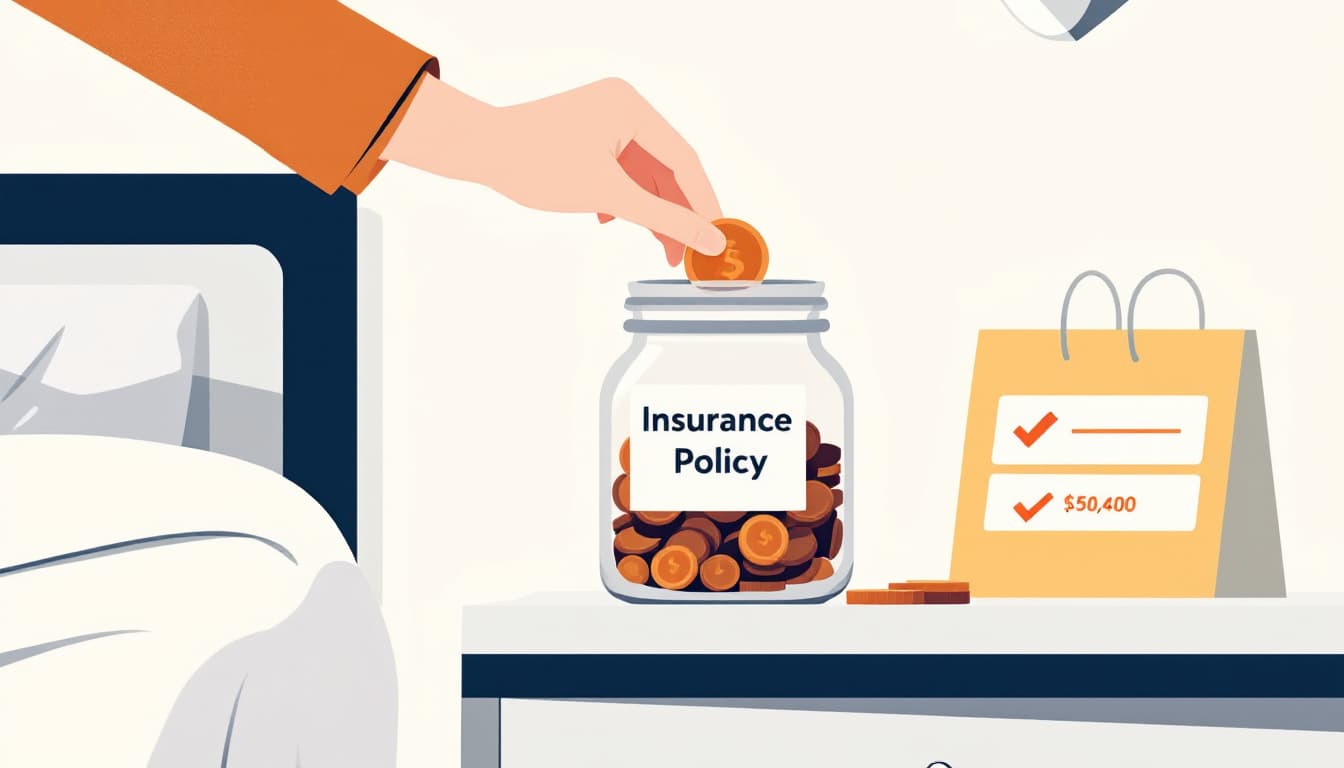
There is a personal-finance tool called a sinking fund: you identify a large, predictable future expense, divide it by the months until you expect to need it, and save that amount monthly. It is completely unglamorous. It works.
A refrigerator that is 8 years old probably has 4 to 6 years of median remaining life. That means you have 48 to 72 months to accumulate $1,400 to $1,800. The monthly target is $20 to $38. That is the cost of two streaming subscriptions. It does not require renegotiating your mortgage. It requires a labeled savings account and an automated transfer.
The reason almost no one does this is that the expense feels hypothetical until it isn't. The moment a refrigerator fails, the decision-making environment is terrible: it's stressful, it's urgent, and retailers know it. Emergency appliance purchases are made with almost no comparison shopping, at full retail, often with financing that carries 26–29% APR. The sinking fund converts a crisis purchase into a planned one.
What to do this week
1. Find your refrigerator's manufacture date. It is on a sticker inside the door or on the back panel. If it's older than 8 years, you are in the higher-risk window.
2. Open a labeled savings account. Most banks and credit unions allow free sub-accounts. Call it "Appliance Replacement." Transfer $50 to start it.
3. Set a monthly automated transfer. Use the rough math: if your refrigerator is 10 years old, assume a 3-year median remaining life. $1,600 ÷ 36 months = $44/month. Automate it.
4. Know your food inventory value. The next time you do a weekly shop, add up roughly what you have in the refrigerator. Most households are carrying $150 to $300 in food. That number should inform how quickly you act when you notice a temperature problem — and whether you have a plan for where that food goes.
5. Write down your repair-vs-replace threshold. As a general rule, if repair costs more than 50% of replacement cost and the unit is more than 8 years old, replacement is usually the better financial decision. Having this rule written down before you're emotional about it matters.
The bigger picture
Resilience is not primarily about surviving catastrophe. It is about not being financially damaged by ordinary bad luck. The median American household does not have $1,000 in liquid savings available for an unexpected expense, according to recurring Federal Reserve survey data. A refrigerator failure is not a rare misfortune. It is a predictable event with a predictable price tag, arriving on an unpredictable day.
The households that come through it without lasting damage are not the ones with the best emergency gear. They are the ones who did the boring math in advance.