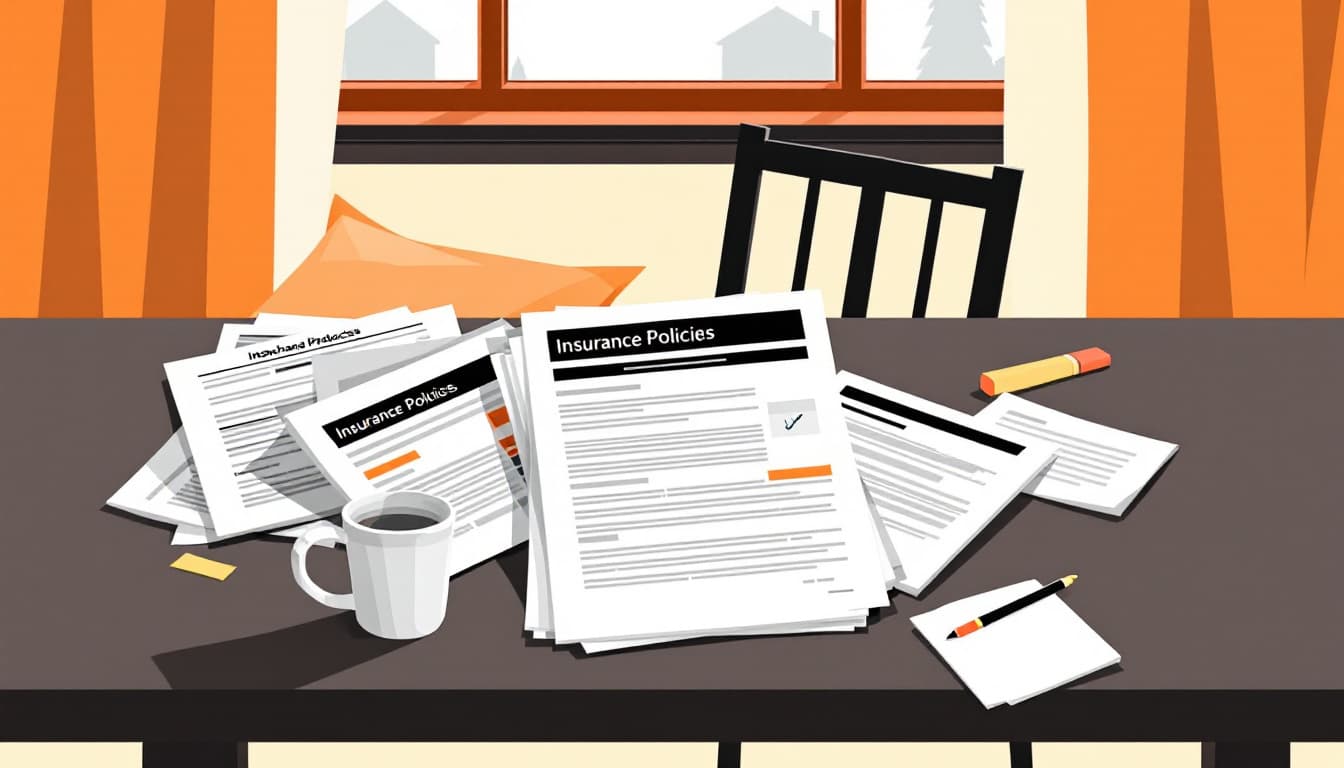
Walk into your filing cabinet — or, more likely, your email inbox — and pull up your homeowner's or renter's insurance policy. Find the deductible line. Now ask yourself an honest question: if something happened tonight, could you write that check by Friday without touching a credit card or calling a family member?
For a significant share of American households, the answer is no. Recent Federal Reserve survey data on household financial fragility consistently shows that a large minority of families could not cover a few hundred dollars in unexpected expenses from savings alone. Meanwhile, deductibles on standard homeowner's policies have been drifting upward for years as insurers manage their own exposure. The gap between what families think they're protected against and what they can actually absorb out-of-pocket is one of the most underexamined vulnerabilities in household resilience planning.
The preparedness community almost never talks about this. It is too busy arguing about freeze-dried food shelf life.
The deductible is not a formality
A deductible is not a minor administrative nuisance. It is the exact dollar amount your household must pay before your insurance does anything. If a water pipe fails and causes $6,000 in damage, and your deductible is $2,500, you are writing a $2,500 check first — during an already stressful situation, probably while dealing with contractors, temporary housing, or a flooded living room.
Some policies add a second layer: percentage-based deductibles for wind or hail damage, calculated against the home's insured value rather than the loss itself. On a home insured for $400,000 with a 2% wind deductible, that's $8,000 before the insurer contributes a dollar. Most homeowners in hurricane-prone or tornado-prone regions carry these structures without fully absorbing what they mean in practice.
Auto policies compound the math. A household with one car, a $1,000 auto deductible, and a $2,500 homeowner's deductible has a theoretical worst-case out-of-pocket exposure of $3,500 in a single bad week. Add a second car and you're over $4,500 before any co-pays or other costs enter the picture.
Why the standard "emergency fund" framing fails here
The conventional advice — save three to six months of expenses in a liquid account — is not wrong, but it frames resilience as an income-replacement problem. You are told to imagine losing your job. That framing nudges people toward a large, distant, psychologically abstract target that many never reach.
The deductible reframe is different. It is specific. It is already written down in a document you signed. It is the number your insurer will hand you on a bad day, and it doesn't care whether you hit your savings milestone.
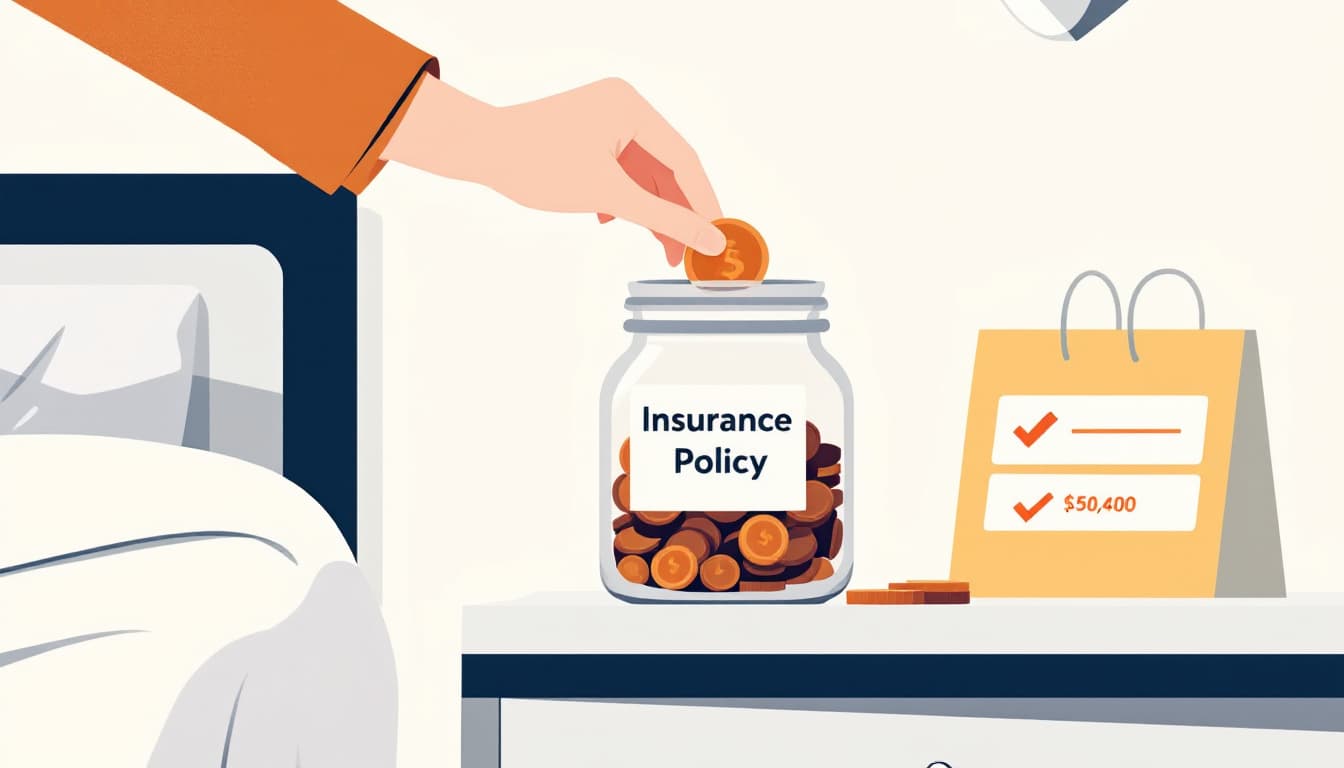
Treating your deductibles as a concrete, stackable savings floor is more motivating and more accurate. Instead of saving toward a vague "rainy day fund," you are saving to cover a liability you have already legally accepted. The number exists. You just need to match it.
This also changes how you think about policy choices. A lower premium with a higher deductible is only a genuine saving if you can fund the gap. Many households trade premium dollars they can see for deductible exposure they cannot actually absorb — a real financial trade that often goes unexamined until it matters.
What to do this week
-
Gather your actual deductible numbers. Pull every active policy — homeowner's or renter's, auto (each vehicle separately), health. Write them on a single piece of paper. This is your household's minimum resilience floor. Most people have never done this.
-
Compare that total to your current liquid savings. Not your 401(k), not a home equity line. Cash or near-cash that you could access in 72 hours without penalty.
-
If the gap is more than $1,000, open a dedicated sub-account and label it. Most banks and credit unions allow free sub-accounts. Label it "deductible reserve" or whatever removes ambiguity. Automate a transfer — even $50 a month starts closing the gap.
-
Review whether your deductible elections still make sense. If you raised a deductible to lower a premium three years ago and have not saved the difference, you made a bet on your own liquidity that hasn't paid off yet.
-
Check for percentage-based deductibles in high-risk zones. If you live in a wind, hail, hurricane, or wildfire region, read the full policy. Many households discover percentage-based deductibles only when filing a claim.
The bigger principle
Resilience is not about worst-case scenarios most of the time. It is about mid-size disruptions that arrive without warning — the kind that insurance exists to soften but cannot fully absorb. The household that can write a $2,500 check on a Thursday without cascading consequences is materially more stable than one that cannot, in ways that compound over years.
The preparedness industry sells the idea that resilience requires special gear, specialized knowledge, or a radical lifestyle shift. Most of it doesn't. Sometimes it requires knowing what number is already written in your filing cabinet, and deciding to meet it.