Business News Nigeria reported this week that WTO Director-General Ngozi Okonjo-Iweala put a number on what a sustained global trade war costs: roughly 7% of world GDP. To put that in context, the 2008–2009 financial crisis shrank global output by about 2%. The 7% figure isn't a worst-case fever dream — it's the WTO's modeled estimate of a fully fragmented trading system, one where major blocs stop exchanging goods efficiently and permanently.
That number lives in macroeconomics. Your household lives somewhere else. Here's how the translation works.
What's actually changing at the household level
GDP compression from trade disruption doesn't arrive as a single event. It arrives as a slow, uneven price creep across categories you buy every month. Electronics, clothing, and appliances are the obvious targets — most of their component chains cross three or four borders before the product reaches a store shelf. But the less-discussed categories are pharmaceuticals and food ingredients.
The FDA has noted for several years that a large share of active pharmaceutical ingredients for generic drugs originates overseas, predominantly in Asia. Trade friction that raises costs or disrupts shipping for those inputs shows up as shortages and price increases at the pharmacy counter, not as a tariff line you can see.
Food is more complex. The U.S. is both a major food exporter and a significant importer of out-of-season produce, specialty items, and processing inputs like citric acid and certain food-grade oils. A fragmented trade environment doesn't empty shelves overnight — but it does create rotating scarcity and price volatility that make household budgeting harder. Recent BLS consumer price data has shown food-at-home inflation running persistently above headline CPI for stretches of the past two years. That pattern doesn't reverse quickly when supply chains are under stress.
The other household exposure is employment. Trade disruption tends to create winners and losers by sector. Manufacturing that competes with imports may benefit from tariff protection; industries that depend on imported inputs or on export markets — agriculture, aerospace, chemicals — face margin compression that eventually shows up in hiring freezes and layoffs. If your household's income depends on one of those sectors, the macro warning has a personal translation.
What we'd actually do
Audit your prescription supply chain this month. Call your pharmacy and ask which of your regular medications are generic, and whether they've seen any supply inconsistencies in the past six months. If a medication is both generic and critical — blood pressure, thyroid, diabetes — ask your doctor whether a 90-day supply is appropriate for you. Many insurance plans allow this and the out-of-pocket difference is small. A 90-day buffer isn't hoarding; it's what most continuity planners recommend as a minimum.
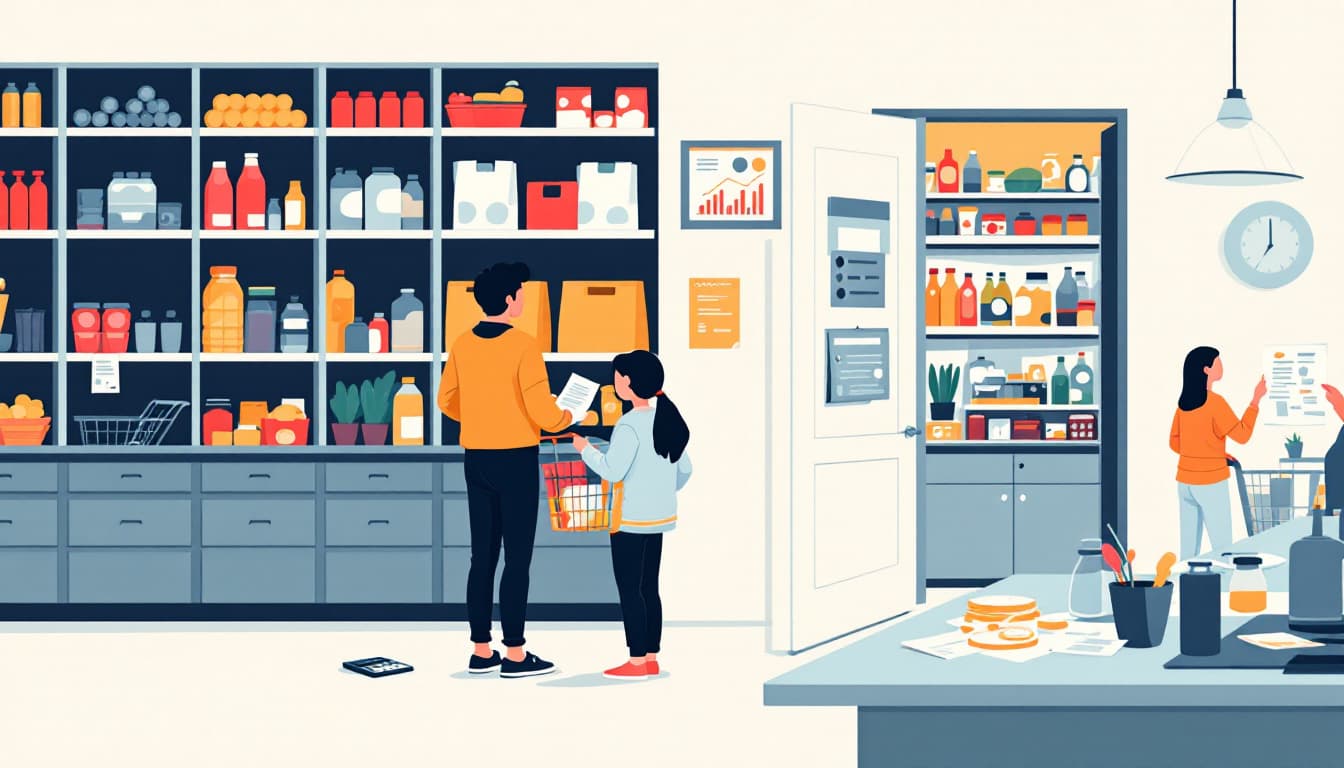
Build a six-week pantry around what you actually eat. Not a bunker. Not freeze-dried buckets. Six weeks of the proteins, starches, and canned goods your family rotates through normally. Price volatility from supply disruption is unpredictable in timing but predictable in direction. Buying shelf-stable food you'll use anyway at today's price is a straightforward inflation hedge. Start with one extra unit of each item you buy weekly until the buffer accumulates.
Map your household's trade-exposure risk at the income level. Look at your employer's customer base and input costs. If the company sells heavily into export markets or relies on imported components, it's worth understanding how their margins hold up under tariff pressure. This isn't a reason to panic — it's a reason to keep your emergency fund at a level that covers genuine income disruption, which most financial planners put at three to six months of expenses.
Reduce single-source dependencies in your supply habits. If you buy one brand of a critical item from one retailer, you're exposed when either the brand or the retailer has a supply problem. For anything you use monthly and can't easily substitute, know two sources and two acceptable alternatives.
Don't confuse the warning with the outcome. The 7% figure is a modeled ceiling, not a forecast. Trade systems are resilient and slow to fragment even under political pressure. The useful takeaway isn't "the economy is collapsing" — it's that the direction of risk is toward higher prices and tighter supply in specific categories, and modest household preparation is cheap insurance against that.
The bigger picture
Okonjo-Iweala's warning is worth taking seriously precisely because it comes from someone whose institution exists to prevent exactly the outcome she's describing. The WTO doesn't issue alarm-level estimates casually. What the 7% figure represents is the cost of the world organizing itself into competing blocs that stop sharing productive specialization — the thing that made consumer prices broadly stable for thirty years.
That era may be ending. It isn't ending all at once, and it isn't ending in a way that makes any single survival purchase the right answer. The right answer is a household that runs lean, buffers its critical supplies, understands its income exposure, and doesn't need to react to every headline. Durability, not readiness for a specific catastrophe.