Picture a water heater. It's twelve years old — the typical lifespan is eight to twelve years, depending on water quality and usage. The pressure relief valve hasn't been tested in years. The anode rod, which slows internal corrosion, has almost certainly dissolved. The unit still works. The water is still hot. So the household keeps ignoring it.
That's not a worst-case scenario. That's Tuesday, in millions of homes across the country.
Deferred maintenance is one of the most underweighted risk vectors in household preparedness, and it doesn't get discussed in prepper circles because it isn't dramatic. There are no shelf-stable food analogies, no grid-down scenarios, no threat maps. It's just a slow leak in household resilience — one that compounds quietly until it doesn't.
The math no one does
A Harvard Joint Center for Housing Studies analysis of housing costs (not a specific report number — this is consistent with publicly available research from that institution) has consistently found that homeowners who spend less than one percent of home value annually on maintenance pay significantly more in reactive repair costs over any ten-year period than those who maintain on schedule. The rough rule of thumb cited by most home economists is to budget one to three percent of home value per year — higher for older homes, lower for new construction.
On a $400,000 home, that's $4,000 to $12,000 annually. Most middle-class households budget zero. They handle things as they break.
The problem isn't that they can't afford the maintenance. The problem is that they can't afford the emergency repair when it arrives — because it rarely arrives alone. A failed water heater in winter often reveals a corroded shutoff valve. A leaking roof usually exposes rotted sheathing underneath. A furnace that dies during a cold snap takes three to five days to replace in high-demand season, because supply chains for HVAC equipment are not designed for surge conditions.
That gap — between what the repair costs and what the household has liquid to spend right now — is a preparedness failure. It just doesn't feel like one until you're sleeping at a relative's house while your floors dry out.
Why this is a preparedness issue, not just a financial one
Emergency preparedness is usually framed around acute events: the earthquake, the ice storm, the wildfire evacuation. But most real-world household crises are slow-motion. They're the water intrusion that goes unaddressed for two seasons and becomes a mold remediation project. The deferred gutter cleaning that sends water into the foundation during a heavy rain year. The HVAC filter that nobody changed, driving up electricity use by an estimated fifteen to twenty-five percent (a figure consistent with Department of Energy guidance) while slowly degrading air quality.
Each of those scenarios shares a structure: a small, manageable task was skipped, and over time, skipping it changed the risk profile of the home. The household thought it was fine. It wasn't — it was just fine yet.
This is the distinction worth internalizing. A well-maintained home is not just more comfortable. It is more resilient under stress. When a regional weather event happens and the power goes out for thirty-six hours, the household with a functioning backup heat source and a recently serviced generator doesn't face the same risk as the household that's been meaning to get around to it.
Why most households underweight this
There's a cognitive phenomenon sometimes called "invisibility of prevention" — we don't feel the emergencies we successfully avoid. The gutter cleaning that prevents the foundation water intrusion is not experienced as a win. It's experienced as a chore. The catastrophe it prevented remains hypothetical.
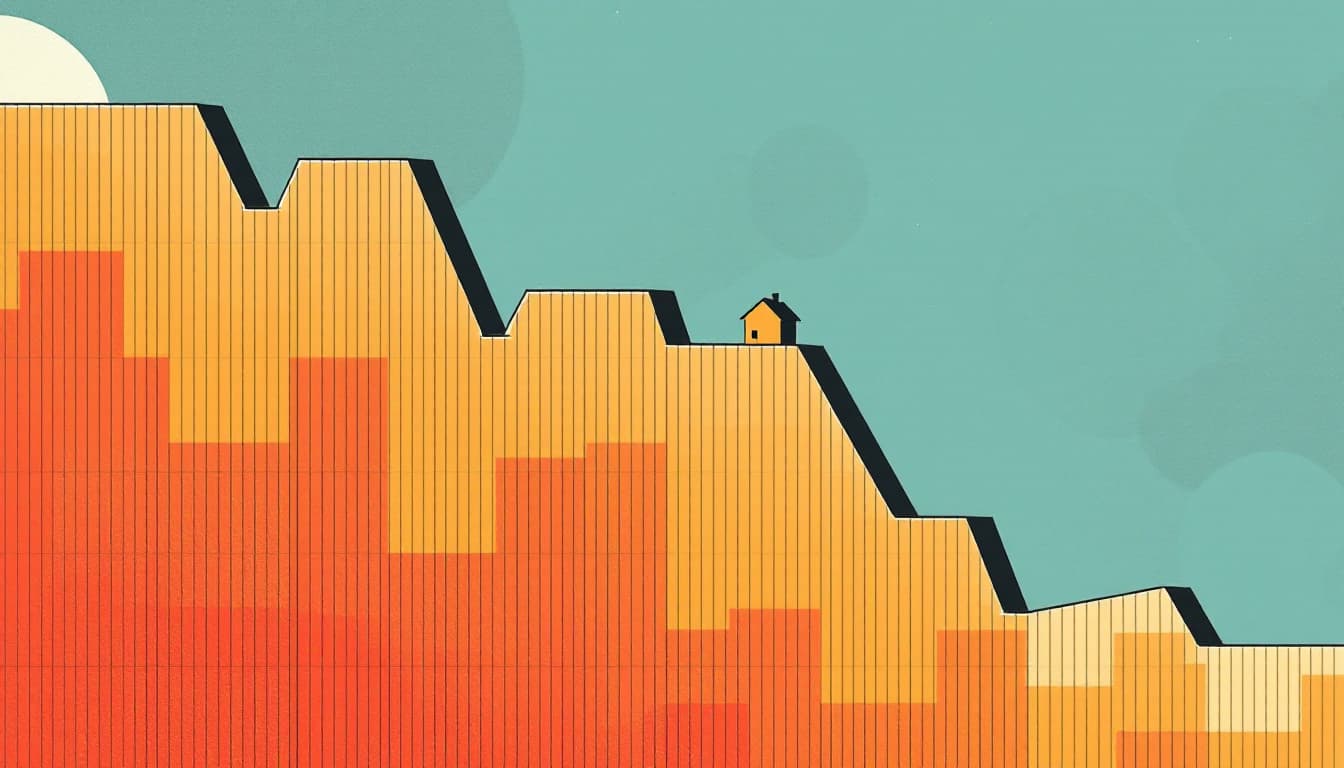
Deferred maintenance compounds this problem: the home keeps working while the deferred items quietly accumulate. The household's experience is one of continuity. The underlying risk curve is not.
There's also a class dimension here that's worth naming without fanfare: middle-class households are often one large repair away from a genuinely stressful financial situation. Not catastrophic — but stressful. A $7,000 HVAC replacement, an $11,000 roof repair, a $3,500 water heater plus remediation costs — these are the numbers that eat emergency funds and drive credit card debt.
What to do this week
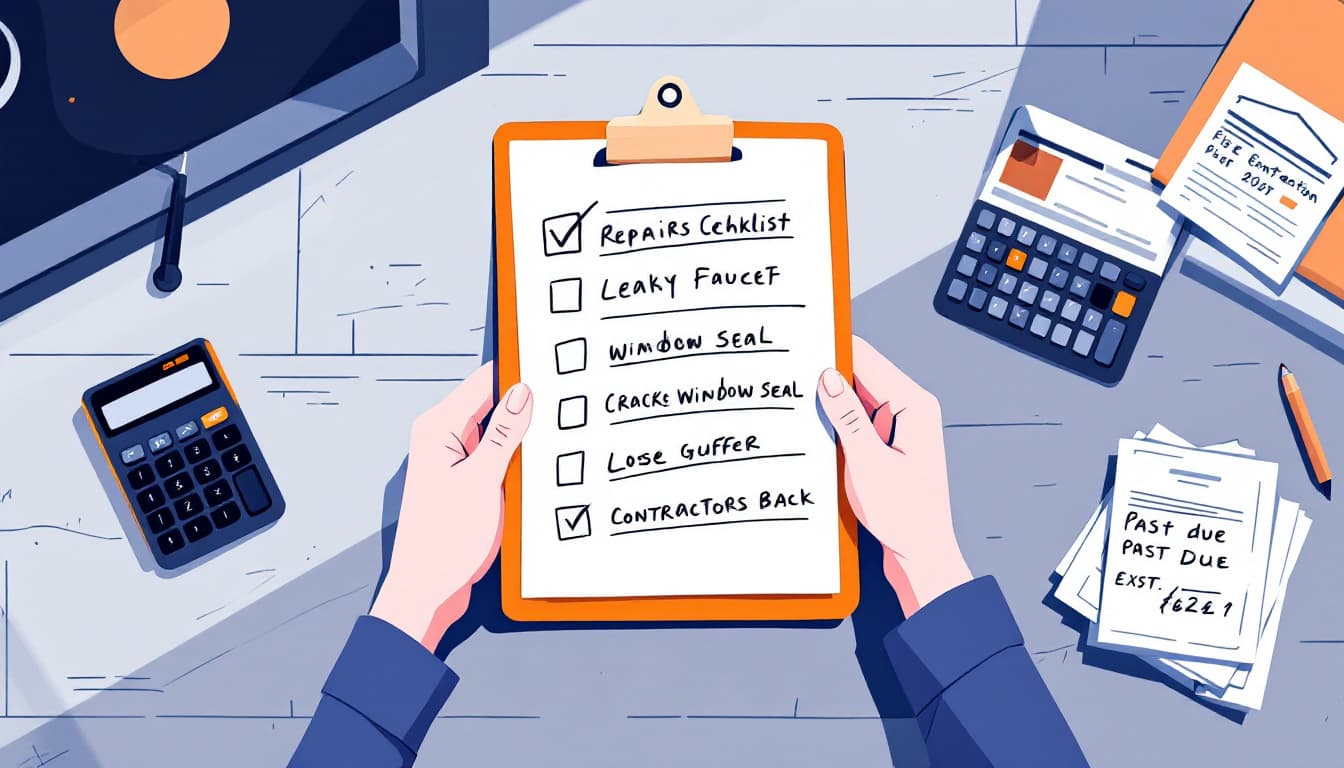
Build your maintenance backlog list. Walk through every major system in your home — HVAC, water heater, roof, gutters, electrical panel, plumbing shutoffs — and write down the last time each was inspected or serviced. You may find you don't know. That's useful information.
Price one item on the list. Not all of them. Pick the oldest or most critical system and get one estimate. The number will feel real in a way that abstract budgeting does not.
Set a quarterly maintenance budget line. Even $100 a month creates $1,200 a year of friction-free capacity for small jobs. The goal is to make maintenance a routine expense rather than an emergency one.
Check the water heater. If it's over ten years old, find the manufacture date (stamped on the data label), test the pressure relief valve (manufacturer instructions vary — look them up), and ask a plumber whether the anode rod is worth checking given your water hardness. This is a $100 to $200 service visit that extends appliance life and reduces flood risk.
The bigger picture
Preparedness culture tends to focus on what you'd do after something goes wrong. The more durable question is what you do consistently so that fewer things go wrong. A well-maintained home isn't a prepper flex — it's a basic structural advantage that compounds over years into real financial and physical resilience.
The water heater in the first paragraph will fail. The question is whether it fails in a way the household absorbs easily, or in a way that cascades.
That answer is almost entirely determined by what happens before anything breaks.