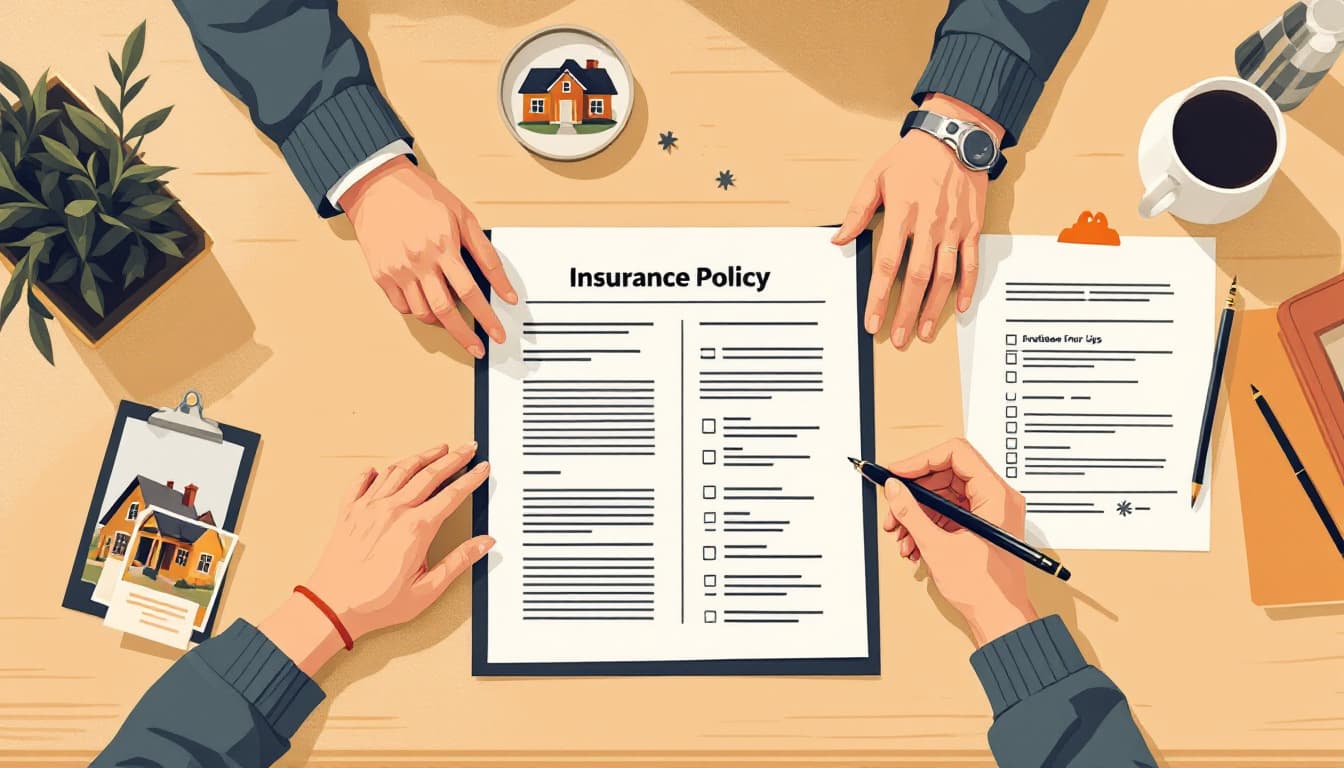
Somewhere in your email history — or a filing cabinet, or a cardboard box — there is a renewal notice you clicked through in under ninety seconds. You confirmed the payment, maybe glanced at the premium, and moved on. Most households do exactly this, every year, for a decade.
That click is quietly doing more damage to your household's resilience than almost any gear gap in your preparedness plan.
The pattern we keep noticing
Across the economic and environmental coverage we've been tracking this year, one structural problem keeps resurfacing: households are well-insured against the risks they think about and dangerously underinsured against the risks they don't.
The pattern looks like this. A family buys a home in 2019. They get homeowners insurance. The premium goes up slightly each year — inflation, carrier pricing — and they keep renewing without revisiting the coverage. Seven years later, construction costs in their ZIP code have risen somewhere between 30 and 50 percent, depending on location and materials. Their dwelling coverage is still based on a 2019 rebuild estimate. If the house burns down, the policy pays out a 2019 number toward a 2026 project.
This is not a hypothetical. It is a routine outcome of auto-renewal culture meeting persistent construction cost inflation. And it compounds: the same household probably hasn't updated their personal property inventory since they moved in, doesn't carry flood coverage because "we're not in a flood zone" (a statement that was more reliable before drainage infrastructure started aging), and has a liability limit that hasn't been reconsidered since their kids were small.
Why most people get this wrong
Insurance feels like a solved problem once you have it. The mental model most households carry is binary: insured or uninsured. But coverage is a spectrum, and the gap between "technically insured" and "actually covered for what this will cost" can be tens of thousands of dollars.
The preparedness community mostly ignores insurance because it doesn't feel tactical. You can't photograph it. It doesn't stack on a shelf. It's a contract with a corporation, which sits uncomfortably alongside the self-reliance ethos that drives a lot of preparedness thinking.
But insurance is, in practical terms, the single highest-leverage financial preparedness tool available to a middle-class household. A three-day power outage costs you maybe $200 in lost freezer contents. An underinsured house fire costs you six figures. No amount of food storage closes that gap.
There's also a timing problem. Most people discover their coverage gaps during a claim — exactly when it's too late to fix them. The audit has to happen before the event, which means it has to happen during a quiet period, as a deliberate act. Summer, when the pace of life shifts slightly and renewal notices often cluster, is a reasonable forcing function.
What to do this week
This isn't a weekend project. It's a few focused hours.
Check your dwelling replacement cost. Call your homeowners carrier and ask what your current dwelling coverage limit is and how they calculated it. Many carriers use automated estimators that haven't kept pace with local construction costs. Ask specifically whether your policy includes extended replacement cost coverage — a buffer, typically 20–50 percent above the dwelling limit, for exactly the scenario where rebuild costs exceed estimates.
Photograph and document your personal property. Walk through your home with your phone, narrating what you own. Upload the video to cloud storage. If you haven't done this since you moved in, your current inventory is fiction.
Look at your flood exposure honestly. FEMA flood maps are updated on a rolling basis, and the criteria have shifted as storm patterns change. Look up your current address on the FEMA Flood Map Service Center. If you're in or near a Zone AE or X500, have a real conversation with an independent insurance agent about whether a separate flood policy pencils out.
Check your auto liability limits. State minimums are almost universally inadequate if you cause a serious accident. The cost difference between minimum liability and a more defensible limit is often smaller than people expect.
Consider an umbrella policy if you don't have one. For households with meaningful assets — a home, retirement accounts, college savings — a personal umbrella policy providing $1 million in additional liability coverage typically runs a few hundred dollars a year. It's one of the better deals in personal finance.
The bigger picture
Preparedness orthodoxy trains households to think about supplies, skills, and self-sufficiency. Those things matter. But the financial architecture underneath your household — the insurance, the emergency fund, the legal documents — is what determines whether a bad event becomes a setback or a catastrophe.
The families who recover fastest from fires, floods, and accidents are rarely the ones with the best gear. They're the ones who did the boring paperwork during a quiet July.