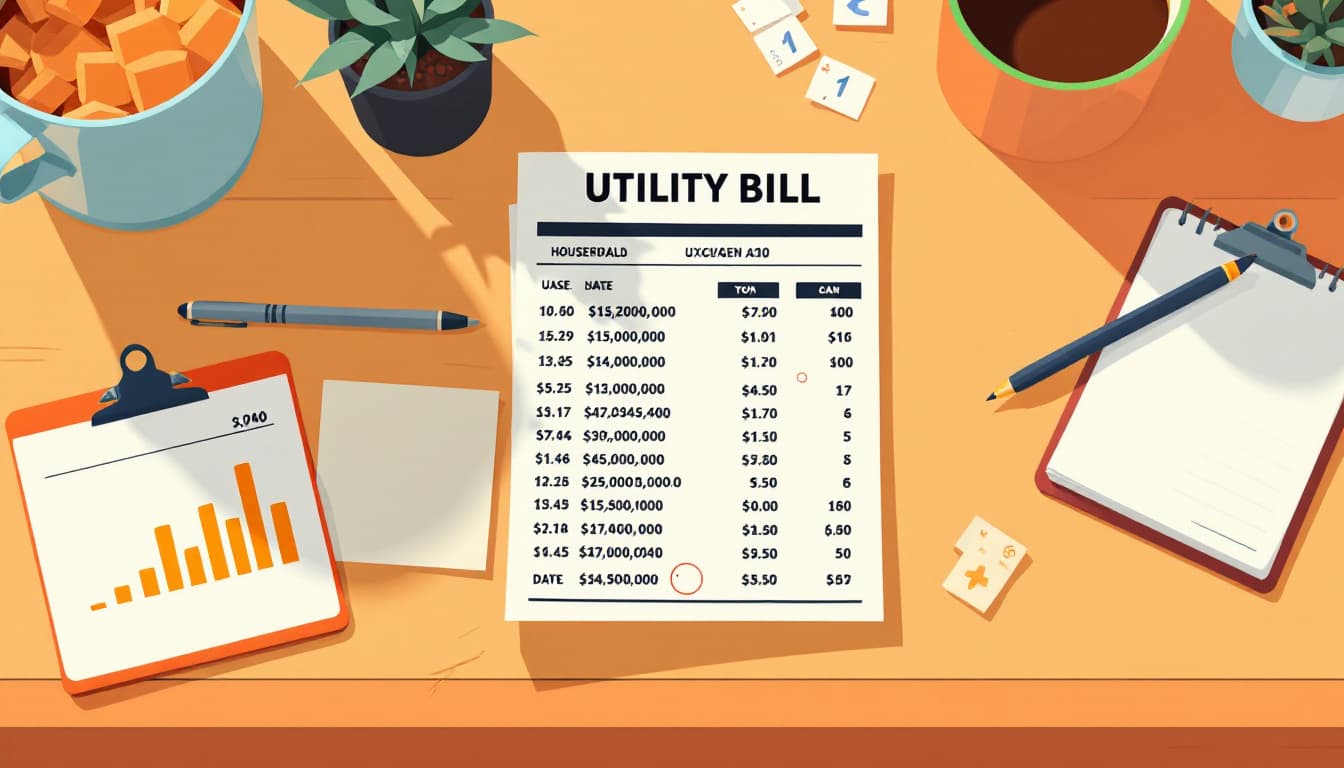
Somewhere around 2019, the average American household crossed a threshold that received almost no coverage: recurring subscription charges — streaming, software, gym memberships, meal kits, cloud storage, news sites — began to collectively exceed what most families spent on utilities. The numbers have only grown since. Recent consumer expenditure survey data suggests the median household now carries somewhere between $300 and $500 in monthly recurring charges, much of it invisible because the charges spread across three or four different credit and debit cards and never appear as a single line in any budget view.
That invisibility is the problem. Not the spending itself.
There is a category error that runs through most personal-finance advice about subscriptions: it treats them as a consumption problem. Cancel what you don't use. Audit quarterly. Marie Kondo your credit card statement. The framework is about thrift — about spending less. That is a fine goal, but it misses why subscriptions are specifically dangerous from a resilience standpoint.
The danger is not their size. It is their rigidity.
When a household income drops — a layoff, a contract that ends, a medical leave, a slow quarter for a freelancer — the first thing most families try to do is cut spending. And most spending, it turns out, is actually cuttable. You eat out less. You defer the car repair. You skip the vacation. These are painful adjustments, but they are immediate. The spending stops the month you decide to stop it.
Subscriptions do not work that way. Some require 30-day notice. Some are annual, billed monthly, with no mid-year exit. Some are tied to a service you actually need — the cloud backup that holds your tax records, the security system that covers your house. Some require you to call a number that is only open Tuesday through Thursday. The aggregate effect is that even a household that responds quickly to an income shock may carry $200–$400 in recurring charges for two to four months after they've decided to cut them. At the household level, that is a $600–$1,600 drag precisely when cash flow is most constrained.
Resilience-minded budgeting calls this a liquidity gap: the distance between the moment you decide to reduce spending and the moment the spending actually stops.
Most preparedness frameworks, to the extent they think about finances at all, focus on the stock of emergency savings — three months, six months, twelve months of expenses. That is the right first question. But the liquidity gap is a second question that rarely gets asked: how fast can your monthly burn rate actually drop if it needs to?
A household with six months of savings and a subscription stack that takes three months to fully unwind has meaningfully less resilience than the raw savings number implies. They have six months of runway, but the first three of those months will be spent at close to full burn. The effective cushion is closer to three and a half months.
The counterintuitive piece is that households with higher incomes tend to have worse liquidity gaps, not better ones. Higher earners accumulate more subscriptions, more annual commitments, more auto-renewing professional memberships — and they accumulate them casually, because no individual charge feels significant. A $14.99 streaming service is not worth thinking about when you are earning $120,000 a year. It becomes worth thinking about in month two of unemployment.
The practical framework is not about cancellation. It is about classification.
Every recurring charge in a household budget belongs to one of three buckets:
Fast-off: can be cancelled immediately with no penalty and no meaningful disruption. Streaming video, most news subscriptions, meal kits, most apps. These charges can theoretically drop to zero within 30 days.
Slow-off: carry exit friction — annual billing cycles, 60-day notice clauses, cancellation fees, or services that require a phone call or written notice. These may take 60–120 days to actually stop.
Load-bearing: services you cannot actually drop without creating a different emergency. Internet access if you work from home. A prescription management service. The backup system for your business files. These are not waste — they are infrastructure — but they should be labeled honestly so you do not fantasize about cutting them when the moment arrives.
The resilience question is whether you know, right now, which bucket each charge lives in. Most households do not. They have a vague sense of their subscriptions but no map of the exit timelines. Building that map is not the same as cancelling anything. It is knowing what your minimum viable burn rate actually is, and how long it takes to reach it.
Six months of emergency savings is a stock. Your liquidity gap is a flow problem. Both matter, and the preparedness conversation has spent twenty years on the stock while largely ignoring the flow.
If you want to put a number on it, spend an hour mapping your recurring charges into those three buckets and add up the slow-off total. Multiply by three. That is the floor of what you will spend in a disruption scenario before your subscriptions actually stop. It should inform how much cash you keep immediately accessible — not invested, not in a high-yield account with a three-day transfer window, but liquid. Our water and food calculator helps with the physical side of that runway math; the financial side belongs in this same conversation.
Resilience is not about spending less. It is about knowing how fast your spending can move.