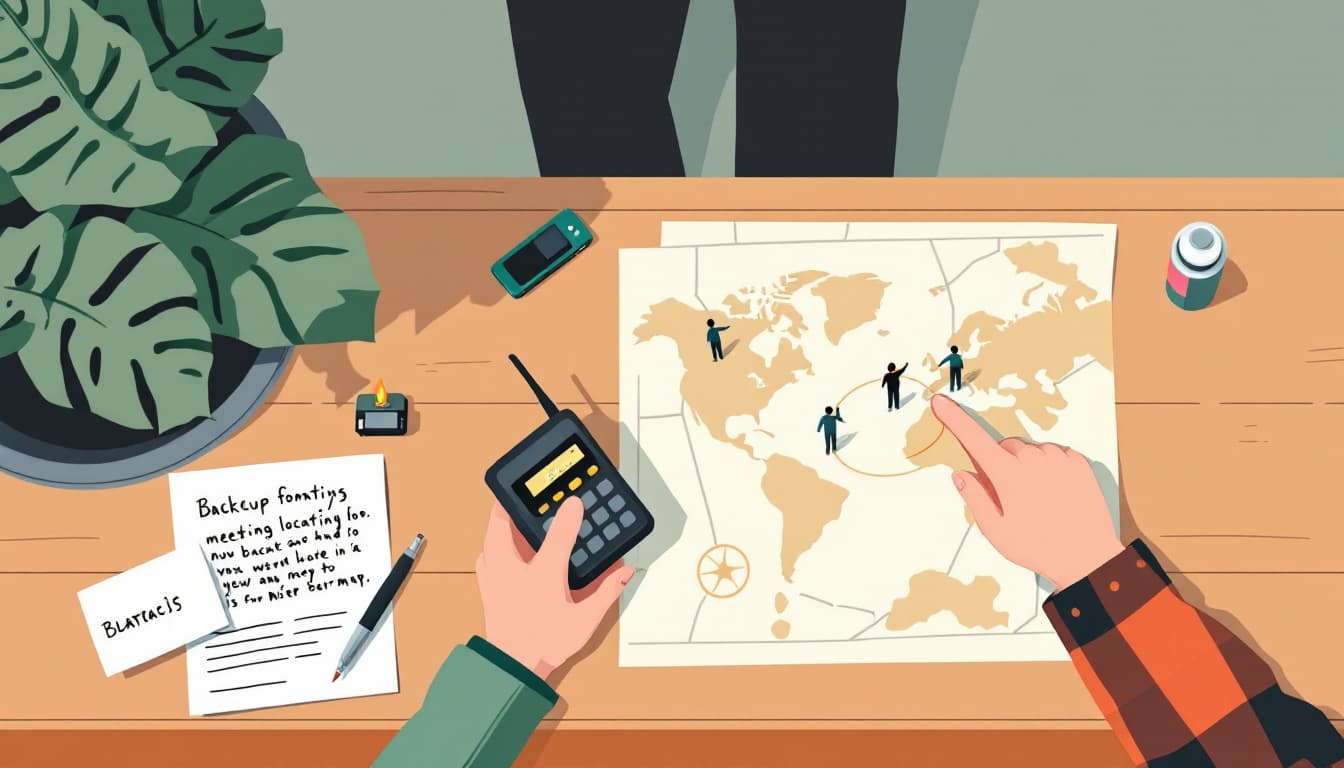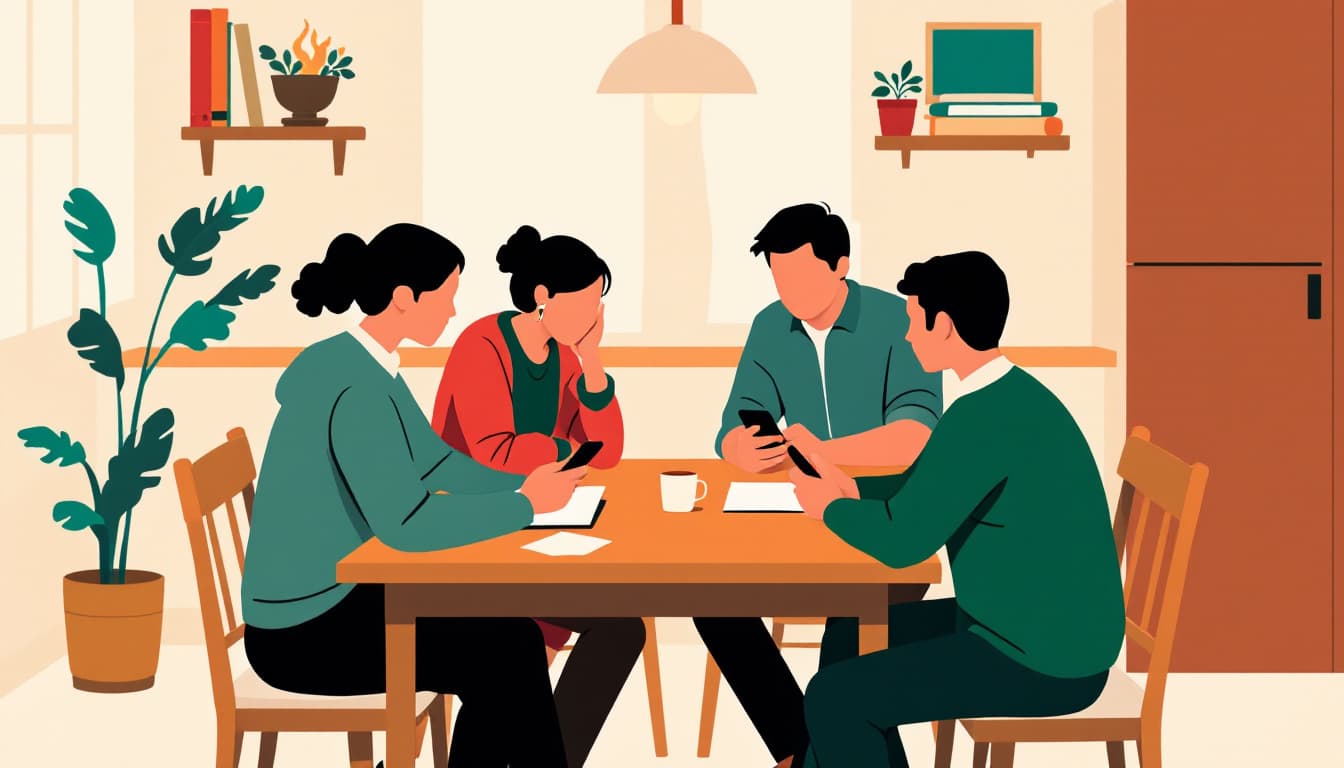
Picture a Saturday afternoon sometime in the last five years. A family — call them reasonably prepared, two working parents, two school-age kids — sits down and writes out an emergency communication plan. They pick an out-of-state contact. They note the school's reunification site. One parent screenshots it, the other tucks a laminated copy into the go-bag. They feel, correctly, that they've done something useful. Then they never touch it again.
This is the dominant mode of emergency communication planning in prepared households, and it has a structural flaw that almost nobody talks about: the plan was tested at the moment of its creation, under zero stress, by the people who wrote it. That is the only test it will ever receive until something actually goes wrong.
The gap between a plan and a working system
The preparedness internet is very good at telling you what to include in a communication plan — out-of-area contact, rally points, ICE numbers, battery-powered radio, the works. It is almost silent on a simpler question: how do you know any of it actually functions?
There's a useful distinction from operational reliability thinking that households almost never apply to themselves. A plan is a document. A system is a plan that has been exercised under conditions close enough to real ones that failure modes have surfaced and been corrected. Emergency managers spend enormous resources on the gap between those two things — tabletop exercises, functional drills, full-scale simulations — precisely because they know the gap is where people die.
Most households treat their communication plan as a document. They have never made the out-of-state contact call to confirm the person is still reachable at that number and actually understands their role. They have never asked their twelve-year-old to demonstrate, unprompted, how they'd reach a parent if cell networks were congested and texts weren't going through. They have never verified that the meeting location they chose — "the library parking lot" — is accessible from both their home and the kids' school without using the same road.
Why this particular orthodoxy is sticky
The conventional preparedness framing puts a heavy emphasis on supplies. Food, water, power, medical — these are all things you can acquire, check off, and point to. A communication plan feels similarly checkable once it's written. But supplies are passive; they either exist in your cabinet or they don't. A communication plan is a coordination mechanism, and coordination mechanisms fail in ways that require practice to discover.
This creates a subtle mismatch. A household that has drilled on nothing but supply acquisition has, in a meaningful sense, prepared for the wrong half of most actual emergencies. FEMA's own post-incident analyses of localized disasters — the kinds of events that affect one neighborhood, not an entire region — consistently find that the families who reunited fastest weren't the ones with the most food stored. They were the ones who had previously practiced finding each other.
The cognitive load during an actual emergency also erodes plan recall in ways that calm document-reading does not predict. Stress degrades the retrieval of recently-learned but untested information far more than it degrades muscle memory or procedurally rehearsed routines. An untested plan is, in neurological terms, closer to a fact you read once than to a skill.
What "testing" actually looks like at household scale
It doesn't require a Saturday-afternoon simulation with name tags. The baseline bar is much lower, and therefore much more achievable: Has every person who appears in your plan been contacted as the plan intends at least once in the last eighteen months? Does your out-of-state contact know their role, or did you simply add their number without asking? Can your oldest child recite the rally point and the backup rally point without looking at the card?
These are questions with yes-or-no answers, which makes them valuable. If the answer to any of them is no, the plan hasn't been tested — it's been written.
One honest exercise: give your plan to your twelve-year-old and a dead phone battery and ask them to walk you through what they'd do in the first thirty minutes after school if a major earthquake hit. Watch what they actually do, not what you assumed they'd do. The gap between those two things is the real state of your household preparedness, and it will tell you more than any supply audit.
The bigger pattern
The preparedness plateau — the point at which more acquisition yields diminishing returns — almost always arrives before households have adequately invested in the coordination layer. Supplies solve for scarcity. A working communication plan solves for separation, which is the more common emergency problem for a family whose members are distributed across a metro area during any given weekday.
The most resilient households aren't the ones with the most depth in their pantry. They're the ones who have run the plan enough times that they're no longer reading from a document when the thing they prepared for finally arrives.