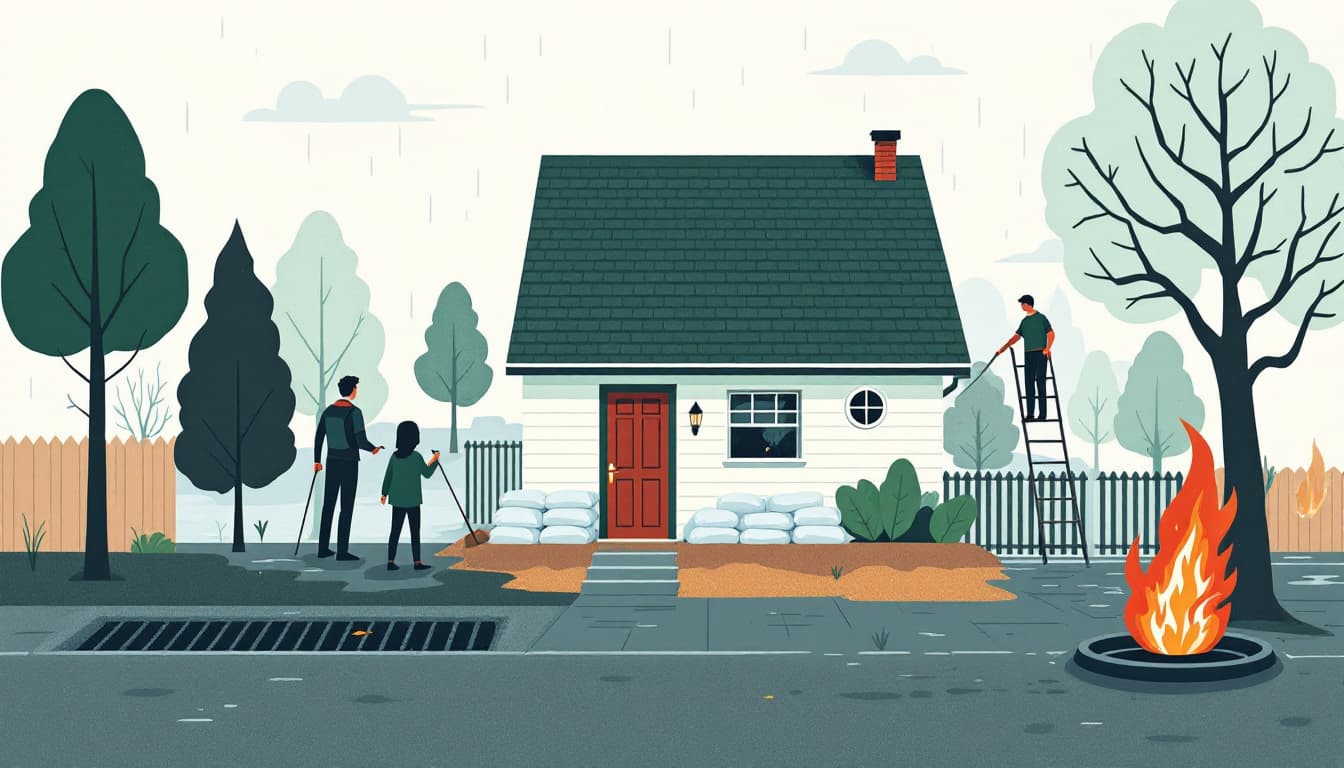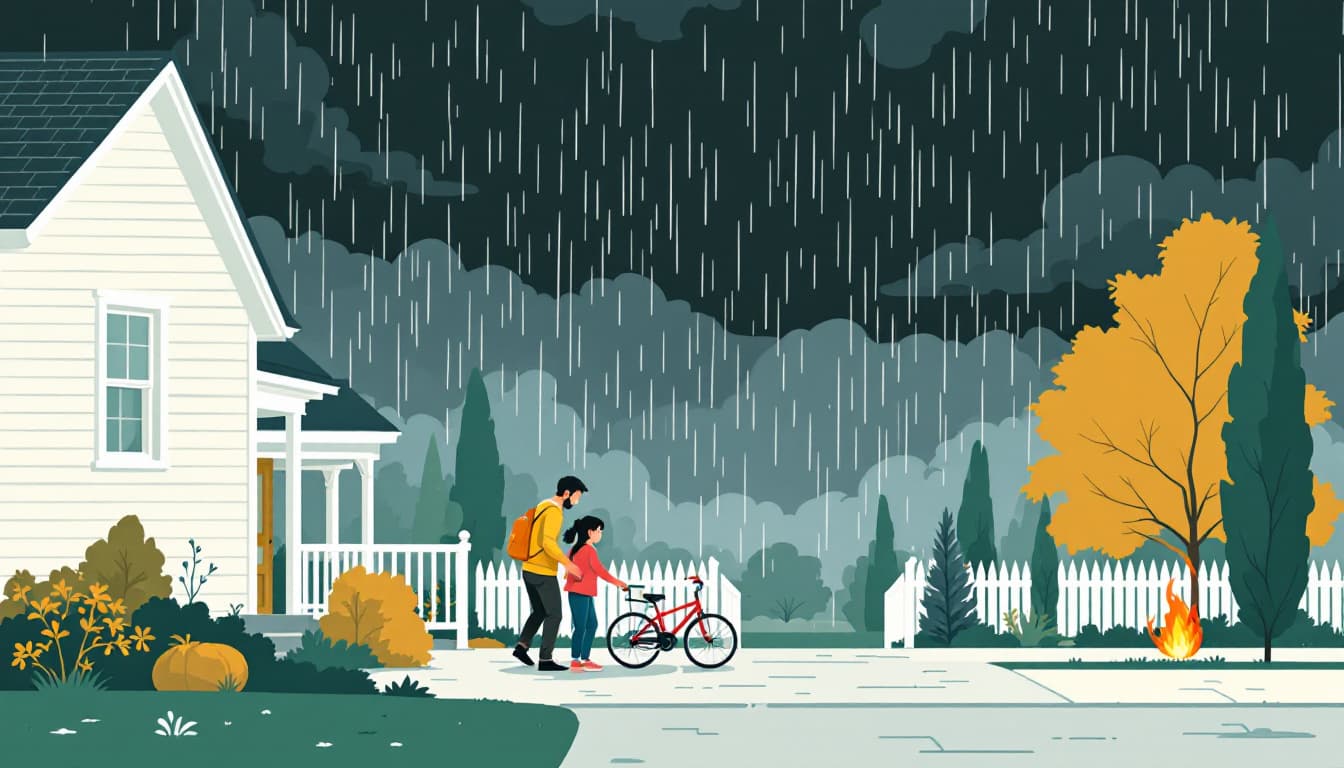
A Flash Flood Warning went up for the San Antonio area this week, according to WOAI. The warning itself isn't the story. The story is that it landed on a Wednesday afternoon in May — peak commute, kids still in school — and most households in the affected area had no pre-made decision about what to do next.
That gap is the actual risk.
What's actually changing
Texas flash flooding is not new, but the pattern of where it hits is shifting in ways that matter for household planning. The Edwards Plateau, which drains directly into San Antonio's watersheds, can funnel rainfall into Bexar County streets faster than most official warning systems can communicate the change. The National Weather Service measures "flash" in minutes to hours. Your family's decision window is often shorter than the warning timeline assumes.
Flood risk in Texas is also poorly mapped at the street level. FEMA flood zone maps — the ones lenders and insurers use — are updated slowly and frequently lag behind actual development patterns. Paved surfaces from new subdivisions accelerate runoff into drainages that were rated low-risk a decade ago. If you bought a home in the last five years in any Texas metro fringe, your FEMA flood zone designation may understate your real exposure. The Texas Water Development Board maintains updated flood planning tools, but most families never look at them.
The other thing worth naming: flood insurance penetration in Texas is low. Recent data from the National Flood Insurance Program consistently shows that a large share of flood-damaged Texas homes — including many outside official floodplains — have no flood coverage. That's a household financial resilience problem, not just a weather problem.
What we'd actually do
Check your address against the Texas Flood Tracker and TWDB's flood viewer this week, not after the next warning. The Texas Water Development Board's flood planning tools and the NWS Advanced Hydrologic Prediction Service both let you look up stream gauge data and inundation maps by address. Spend twenty minutes doing this before storm season peaks in June. What you're looking for: whether any named creek or drainage within a half-mile of your home has flooded in the past ten years, and how quickly. That single data point changes how you plan.
Build a go/stay decision rule before the next warning, not during it. Write down — literally on paper — the two or three conditions under which your household leaves the house during a flash flood warning. Something like: "If NWS issues a Flash Flood Emergency (not just a Warning) for our county, or if water reaches the curb on our street, we leave to [specific address]." Vague plans evaporate under stress. The specific rule doesn't.
Keep a seventy-two-hour bag staged near an interior door, not in the garage. Flooded garages are a common reason Texas families lose access to their go-bags. A backpack with two days of medication, copies of key documents (photo on your phone plus a laminated paper copy), a change of clothes, phone charger, and $200 cash handles the most common flash flood scenario: a night or two displaced at a relative's house or a Red Cross shelter while water recedes.
Verify your car insurance covers flood damage. Standard liability coverage does not. Comprehensive coverage does. Pull up your declarations page and confirm. If you're leasing or financing a vehicle, you likely already have comprehensive — but confirm the deductible. Flood-totaled cars are a recurring financial gut-punch for Texas families after events exactly like the one that triggered this week's warning.
Know your evacuation route's low points. In San Antonio and most Texas cities, the dangerous spots during flash flooding are the low-water crossings — intersections where roads dip to cross drainage channels. TxDOT and local counties post these. Map the ones on your two most likely exit routes now. "Turn Around, Don't Drown" is the slogan, but the practical prep is knowing in advance which streets you won't use.
The bigger picture
Texas averages more flood fatalities per year than any other state, and most of those deaths involve vehicles on flooded roads — not homes swept away in dramatic fashion. The risk is ordinary, fast, and preventable. The households that come through flood events without serious harm aren't the ones with the most gear. They're the ones who made decisions in advance, when there was no adrenaline in the room.
That's the work. Not catastrophe prep. Decision prep.