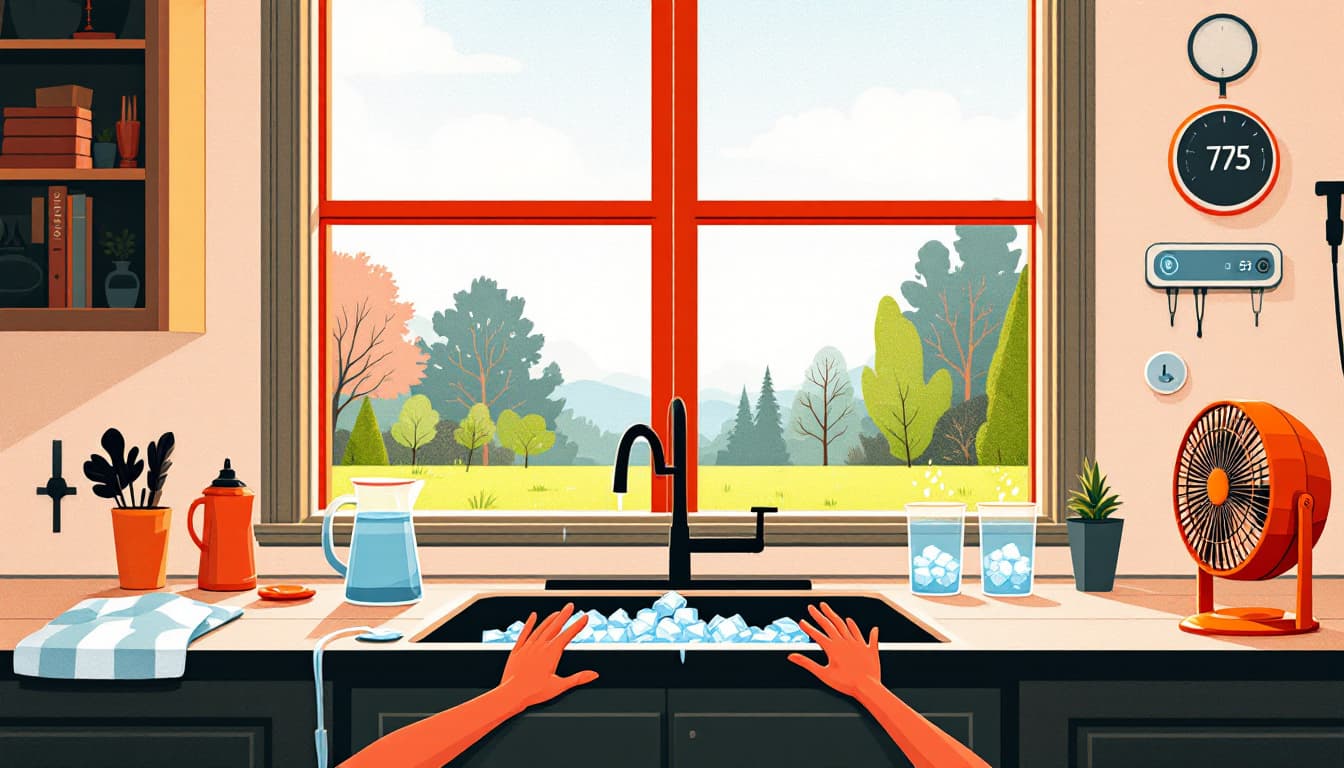
The Great American State Fair — held in the Dallas–Fort Worth area — temporarily shut down operations this summer because outdoor conditions became unsafe for staff and attendees. A CBS News report covering the closure framed it as an unusual disruption. It isn't unusual. It's a preview of what July and August look like in Texas when a heat dome parks over the southern plains, and it's a useful prompt for any household that doesn't yet have a heat-response plan written down.
What actually happened, and why it matters
An organized, staffed, revenue-generating outdoor event with shade structures, water stations, and professional event managers still had to close. That's the data point worth holding onto. If a venue built around crowd management cannot safely operate, a household that loses air conditioning for 18 hours is in a more serious position than most people want to admit.
ERCOT has managed through recent summers without the rolling blackouts of 2021, and weatherization improvements since then are real. But demand records have been broken in consecutive years, and transmission equipment ages faster under sustained heat stress. "The grid is fine" and "the grid is stressed" are both true at the same time, and the distance between them narrows when overnight lows stay above 80°F for a week straight.
Texas also has a geography problem: the state's sheer size means that a family in Laredo, a family in Beaumont, and a family in Amarillo face meaningfully different heat profiles, humidity loads, and grid exposure. What works as a heat plan in the Texas Panhandle — where nights cool down — is insufficient in the Rio Grande Valley or Houston, where they do not.
What we'd actually do
Locate your nearest county cooling center before you need it. Texas counties and municipalities maintain cooling center lists through local emergency management offices and 211 Texas. Look it up now, save the address to your phone, and note the hours. A 10-minute search today beats a frantic one when the power goes out at noon.
Most people treat cooling centers as a last resort for unhoused residents. That's a mistake in framing. They are infrastructure, the same as a backup generator, and they're free. Know where the nearest library, community center, or designated shelter is. If you have elderly parents or neighbors who don't drive, know that too.
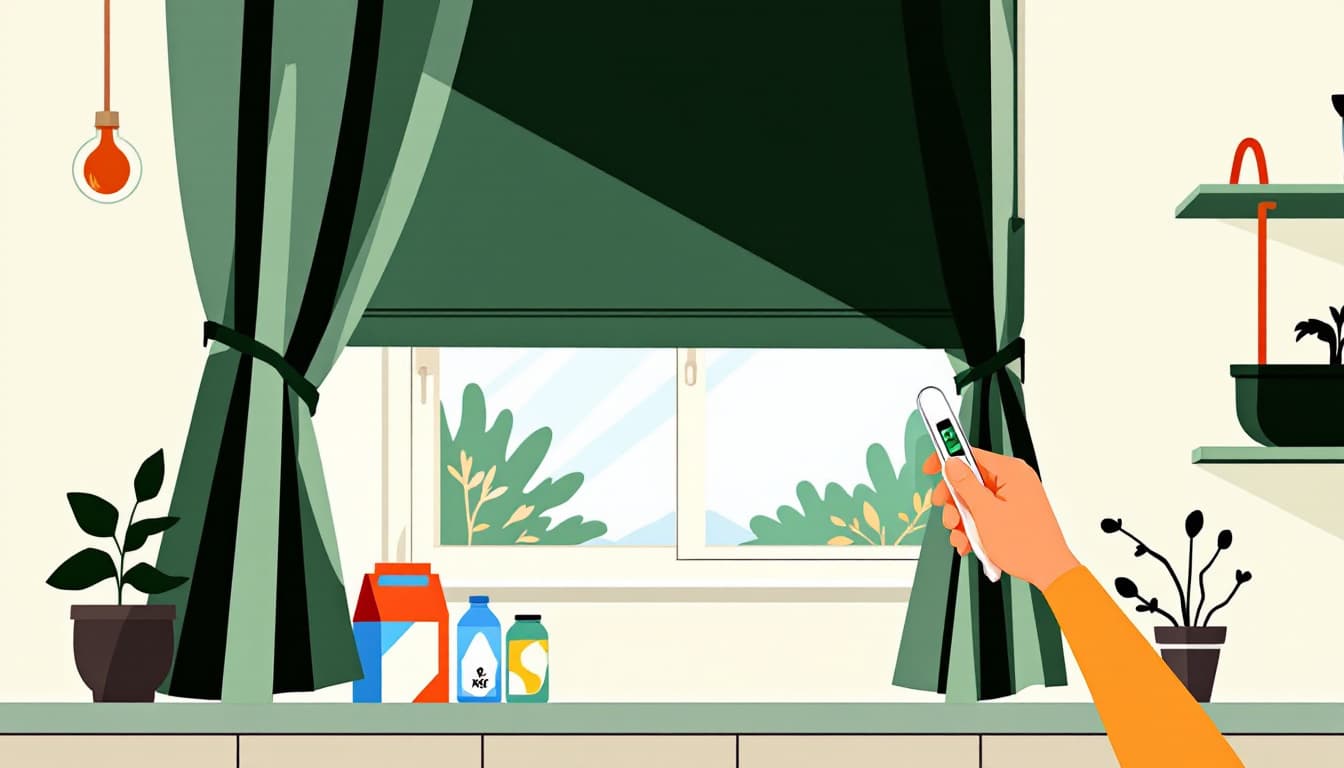
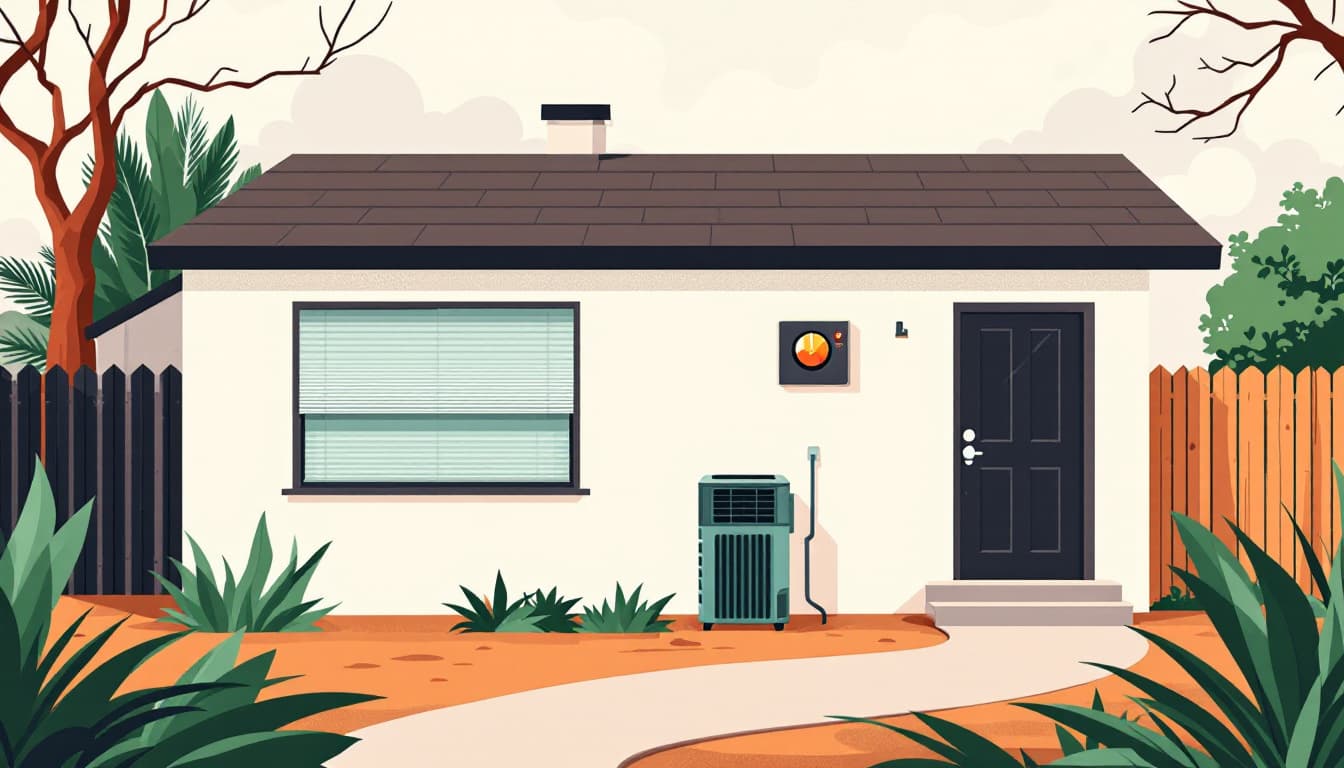
Audit your window unit or HVAC filter this week, not in August. A clogged filter can reduce cooling efficiency enough to tip a borderline system into failure on a 105°F day. Filters are a $10–20 fix. An emergency HVAC service call in July in Texas, if you can get one, runs several hundred dollars and may come with a multi-day wait. Clean or replace the filter now.
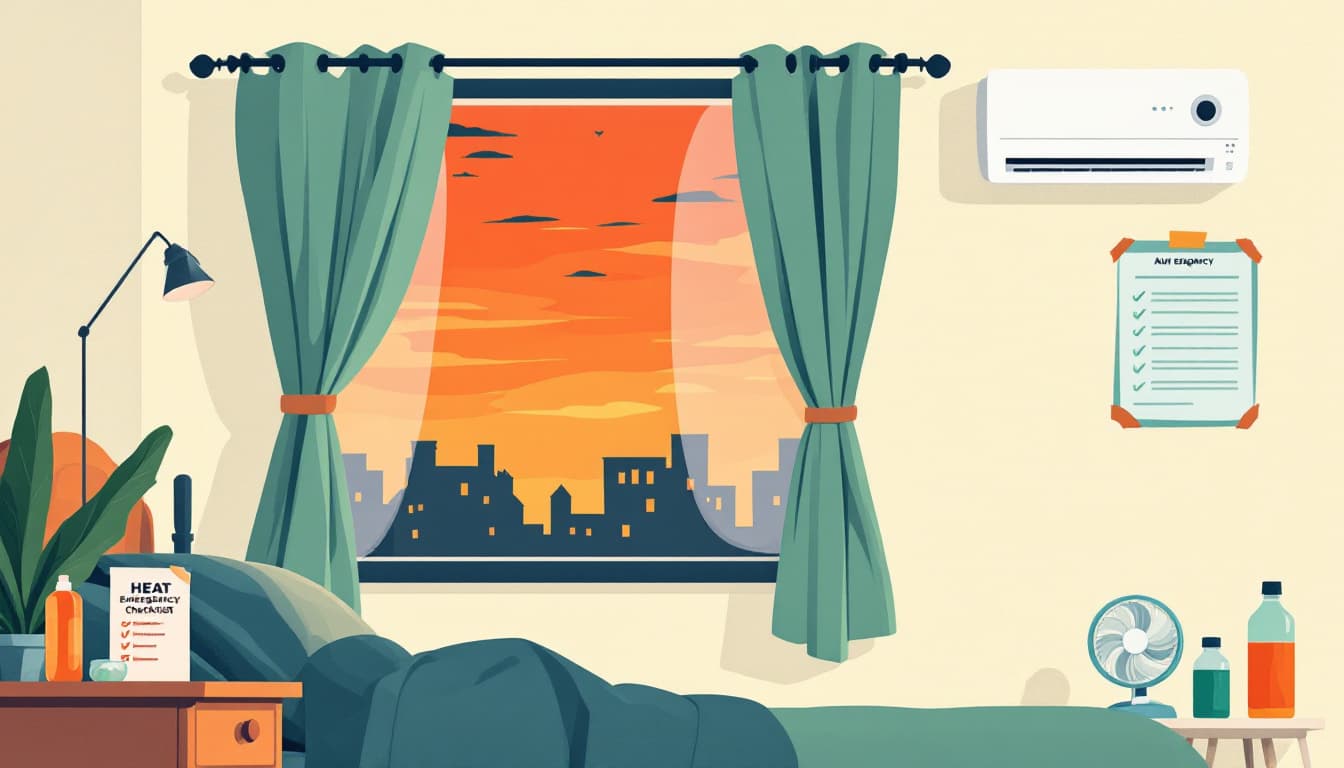
Build a 72-hour heat kit that lives in one bag. This is not a full bug-out bag. It's a kit for sheltering in place without air conditioning for three days. It should include: a battery-powered or USB fan, an electrolyte replenishment supply (tablets or powder, not just bottled water), a battery bank large enough to charge phones twice, a printed list of cooling center addresses, and light cotton clothing for sleeping. The whole kit costs under $60 assembled from existing household items or basic retail purchases.
Identify a "heat anchor" — a household or location you will go to if your home becomes unsafe. This is a friend with a generator, a family member across town, or a hotel within 20 miles. The decision of when to leave should be made in advance, not in the moment when you're already heat-impaired. A simple rule: if indoor temperature reaches 85°F and AC has been out for four hours with no recovery timeline, you leave. Write that threshold down.
Talk to anyone in your household over 65 or under 5 about a daily check-in schedule during heat events. Heat illness progresses quickly and is often not self-detected. A 9 a.m. and 3 p.m. phone check during a heat advisory costs nothing and has prevented deaths. Texas heat advisories are issued by the National Weather Service offices in Fort Worth, San Antonio, Houston, Corpus Christi, Midland, El Paso, Amarillo, and Lubbock — find which office covers your county and follow it directly.
The bigger picture
A state fair closing is a minor disruption. What it illustrates is not. Texas summers now routinely produce conditions that commercial operations, public health officials, and grid operators all treat as hazard events requiring active management. Your household should be doing the same. That doesn't mean buying expensive gear or assuming the worst. It means having a written plan, a designated place to go, and a threshold for acting on it. Durability is the goal — not avoiding discomfort, but not being caught without options when conditions move faster than the forecast.