A report this week from Fox Rio Grande Valley is tracking a combination that South Texas households know well: extreme heat bearing down on the weekend, with scattered rain chances that offer little actual relief. The humidity that comes with those storm cells often makes heat index readings worse, not better. For the Rio Grande Valley, McAllen, Laredo, and surrounding communities, this is not a novelty. It is the season. But "we've been through this before" is not a heat safety plan.
What's actually changing
The pattern that matters is not any single hot weekend. It is the accumulating pressure on households across several weeks. ERCOT, the state's grid operator, has flagged multiple conservation watch periods in recent summers as demand spikes during afternoon heat peaks. That is not a prediction about this weekend specifically — grid conditions shift hour to hour — but it is a structural reality South Texas households should factor into their planning every June through September.
What makes the Rio Grande Valley specifically difficult is the combination of high baseline temperatures, humidity that can push heat index values well above the ambient air temperature, and a population that skews older and lower-income than the state average. Older adults and people with chronic illness lose the ability to thermoregulate more quickly. A household that loses power at 3 p.m. on a 105°F day has a narrow window before interior temperatures become dangerous.
Rain chances in the forecast sound like relief. In practice, brief afternoon thunderstorms in South Texas often spike humidity, drop maybe a quarter inch of rain, and do nothing to reduce overnight lows. If you're banking on a storm to cool your house, you may be waiting for something that doesn't arrive.
What we'd actually do
Identify your household's cooling floor — the minimum cooling you need to stay safe — before the heat arrives. This means knowing which rooms in your house retain cool air longest (usually interior rooms with the least window exposure), and deciding in advance at what indoor temperature you would leave for a cooling center or a family member's home. The Texas Department of State Health Services maintains a list of county emergency management contacts; your local county office can usually direct you to cooling centers that open during heat emergencies. Look this up now, before you need it.
Pre-cool your home aggressively in the morning hours. ERCOT demand peaks between roughly 3 and 7 p.m. If you have a programmable thermostat, set it to cool harder from 6 to 10 a.m., then let the temperature rise a degree or two during peak hours. Your house acts as a thermal mass. Pre-cooling is not comfortable-feeling in the moment, but it buys time if the grid tightens or your unit struggles in peak afternoon heat.
Check your window units and central air filters this weekend, not next month. A clogged filter makes your system work harder and cool less effectively. This takes ten minutes and costs nothing if you already have a replacement filter on hand. If your unit is struggling to hold temperature and it's not the filter, call an HVAC technician before peak season pricing makes that call twice as expensive.
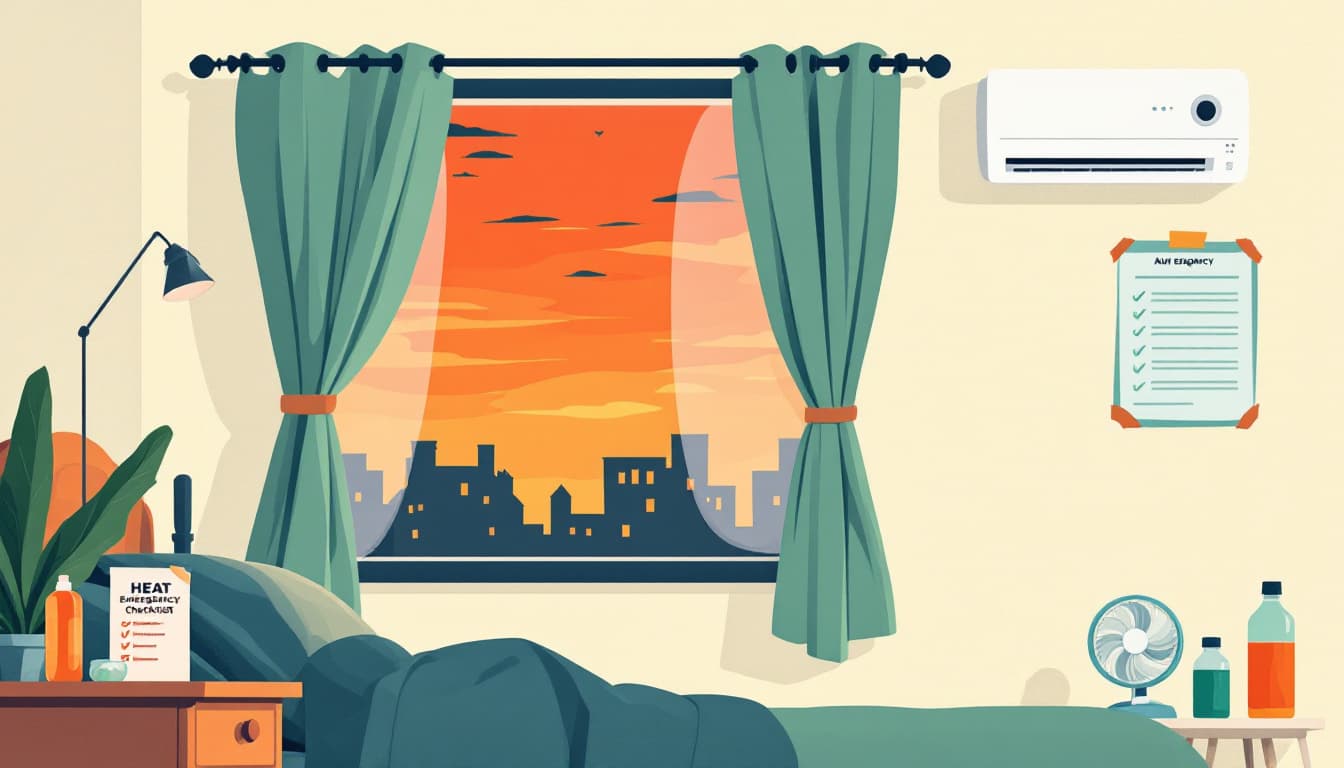
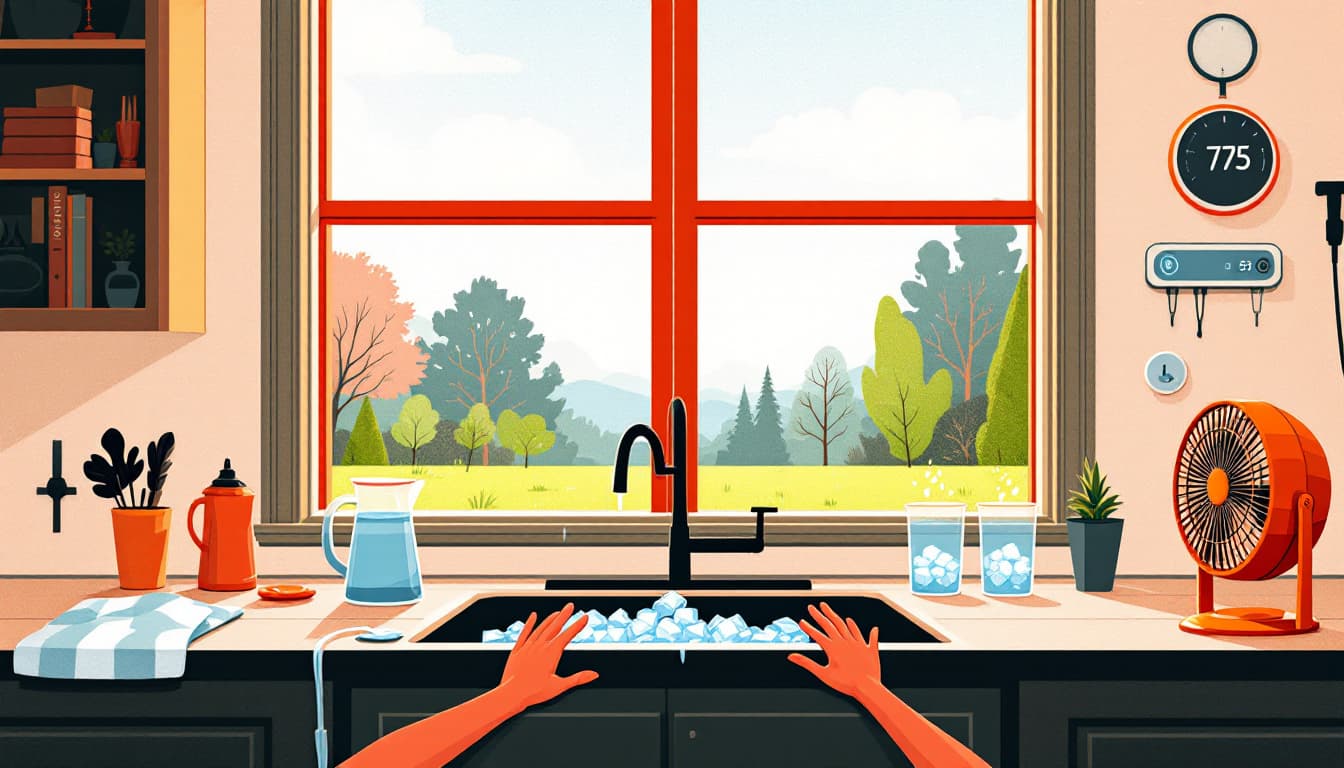
Put together a 72-hour no-power kit that specifically addresses heat, not just general emergencies. Flashlights matter less than battery-powered fans, frozen water bottles (freeze them now while power is on), electrolyte packets, and a plan for where you'll go. A single battery-powered fan won't keep you safe at 108°F, but it buys meaningful time. Electrolytes matter because people in South Texas lose salt through sweat faster than they realize, and drinking plain water without replacing electrolytes can make heat illness worse.
Know your neighbors — specifically the ones who are elderly, live alone, or don't have reliable air conditioning. Heat kills quietly. A wellness check on a neighbor costs nothing and takes five minutes. The 2021 winter storm made clear that Texas communities that fared best had informal networks of people checking on each other. The same logic applies in summer.
The bigger picture
South Texas is not going to stop being hot. The question for households is whether they are passively enduring the season or actively building the small systems that make durability possible — knowing where to go, what to do in the first hours of a power outage, and who in your circle needs support. That's not catastrophizing. It's maintenance. The goal is not to survive a disaster. It's to have so many small things in order that a hot weekend is just a hot weekend.