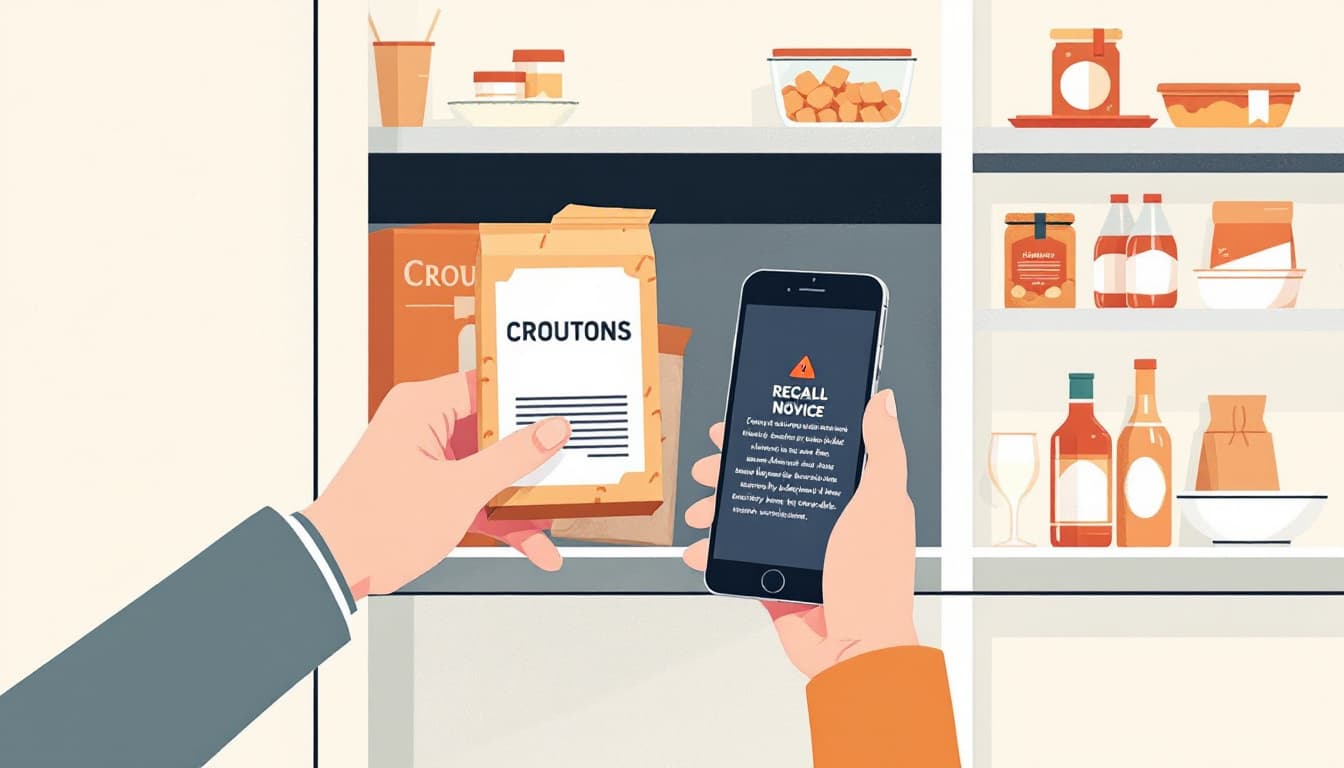
A bag of croutons is not where most Tennessee households expect a food safety problem to begin. But a report this week from WKRN News 2 covers a multistate recall of croutons sold in Tennessee and Kentucky over potential salmonella contamination. The recall is ongoing, and the FDA's recall database is the place to confirm affected lot numbers before you do anything else.
What's actually happening
Salmonella recalls are not rare. The FDA posts dozens per year, and most involve products people would consider "low risk" — dried goods, snack items, things that have been through processing and packaging. That's part of what makes them instructive. The contamination usually enters somewhere in the supply chain before the product reaches its final form, and by the time it's flagged, it has moved through multiple retail locations across multiple states.
This recall touches Tennessee broadly. WKRN's coverage doesn't pin it to specific counties or retail chains, which means households across Middle Tennessee, East Tennessee, and the western part of the state should treat this as a check-your-pantry moment regardless of where they typically shop.
Salmonella symptoms — fever, diarrhea, abdominal cramps — typically appear within 12 to 72 hours of exposure. Older adults, children under five, pregnant women, and anyone immunocompromised face more serious risk. Tennessee's county health departments, including the Nashville Metro Public Health Department and county-level offices under the Tennessee Department of Health, are the right contacts if you're trying to confirm local case counts or get guidance on symptoms.
The core household problem with a recall like this isn't whether you bought the specific product. It's whether you'd actually know if you had. Most families don't track lot numbers on shelf-stable items. A bag of croutons goes into the pantry, gets used a few times, and sits. This is normal. It's also how recalled products stay in homes long after the alert.
What we'd actually do
Check the FDA recall database directly, right now. Go to fda.gov/safety/recalls-market-withdrawals-safety-alerts and search the product name. The database is updated continuously and gives you lot numbers, UPC codes, and the specific retail footprint. WKRN's report is the signal; the FDA page is the source of record.
Don't assume "I haven't gotten sick" means the product is safe. Salmonella contamination in dry goods is uneven — one handful of croutons from a contaminated batch can be fine; the next can be the exposure event. If you have the product and the lot number matches, discard it in a sealed bag and don't rinse it or open the bag at the sink. Cross-contamination from a recalled dry good is a real risk during disposal.
Build a two-minute pantry audit into your monthly routine. This is the practical takeaway most recall coverage skips. Tennessee households that keep even a modest supply of shelf-stable food — a genuine preparedness asset — are also households with more surface area for unnoticed recalls. A monthly five-minute scan of pantry items against the FDA recall list costs nothing and catches the problems that a single news alert won't.
Sign up for FDA MedWatch and USDA FSIS recall alerts by email. Both agencies offer free email notifications for food recalls. This is more reliable than catching a recall through local news coverage, which is often delayed and geographically incomplete. Tennessee residents can also follow the Tennessee Department of Agriculture's consumer protection updates for state-specific food safety notices.
Know your household's risk profile before you need to. If anyone in your home is in a high-risk category for foodborne illness, the calculus on borderline recalls shifts. "It's probably fine" is a reasonable heuristic for healthy adults; it's a less reasonable one for a household with a toddler or an elderly parent.
The bigger picture
A crouton recall does not require a preparedness overhaul. It requires twenty minutes — ten to check the FDA database, ten to set up email alerts you'll actually use. The goal of food preparedness isn't to anticipate every contamination event; it's to build systems that catch problems without requiring heroic effort.
Tennessee households that maintain a well-rotated pantry already have a structural advantage here: they're more likely to have fresh stock and to know what's in it. Rotation discipline, modest as it sounds, is real risk reduction. That's the unglamorous version of food preparedness, and it's the one that actually works.